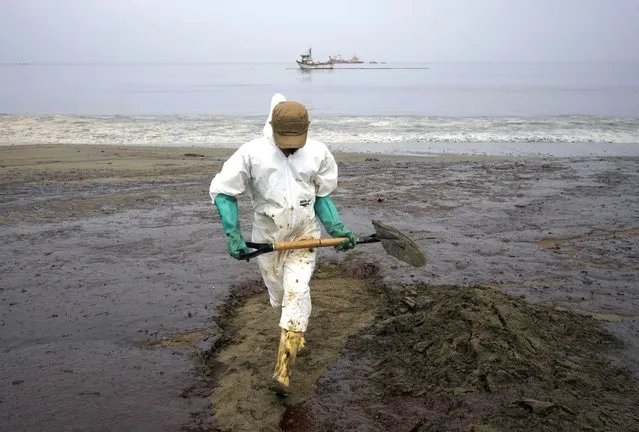
A worker, dressed in a protective suit, cleans Conchitas Beach contaminated by an oil spill, in Ancon, Peru, Thursday, January 20, 2022. The oil spill on the Peruvian coast was caused by the waves from an eruption of an undersea volcano in the South Pacific nation of Tonga. (Photo by Martin Mejia/AP Photo)
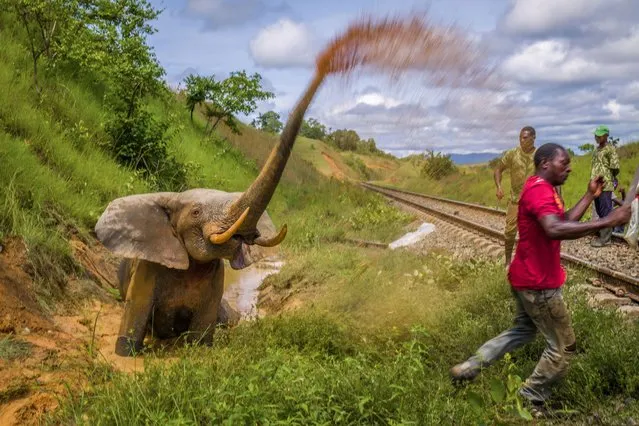
Grand prize winner: environmental photographer of the year 2023; also 1st place in the humanity v nature category; and winner of the 2023 public award. Lopé national park, Gabon, 2021. An angry elephant tries to defend itself after it was hit by a train that crosses paths the animals use within Lopé national park. Park officials decided the elephant was too severely injured to be saved. After it was killed, the park director distributed the meat to local people. As the forest loses its carrying capacity to sustain its megafauna, this kind of human-wildlife conflict is increasing. (Photo by Jasper Doest/Environmental Photography Award)
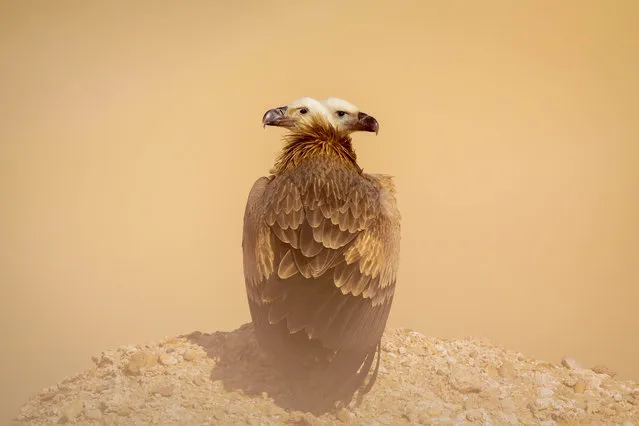
“Double head vulture”. On the day of windy days during raptors migration some people in my country start to catch these tired raptors, so in this day we go to photograph some raptors and we saw these tow tired vultures, so we start to drag them away from the hunters until they reach a good hidden place, to make them safe until they start a new journey. Photo location: Kuwait. (Photo and caption by Mohd Khorshed/National Geographic Photo Contest)
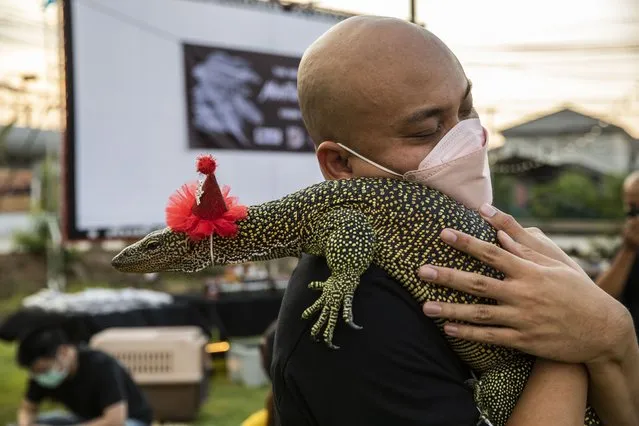
A man hugs his monitor lizard who is wearing a Christmas hat on December 25, 2021 in Bangkok, Thailand. Monitor lizard enthusiasts gather on Christmas Day for a garden party at the Somtum Khun Daeng restaurant and cafe to share their appreciation for their monitor lizards. The event for owners of this controversial Thai pet included important facts and information about monitor lizard care as well as prizes for those who brought their lizard with them. (Photo by Lauren DeCicca/Getty Images)