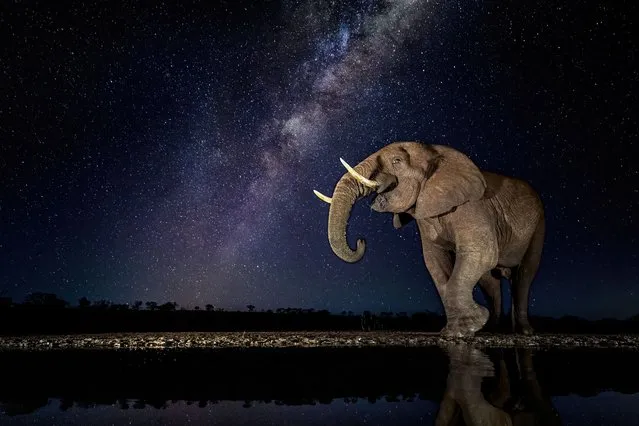
A majestic elephant visits the watering hole at the Zimanga Private Game Reserve in South Africa under the Milky Way in August 2022. (Photo by Sean Weekly/Animal News Agency)
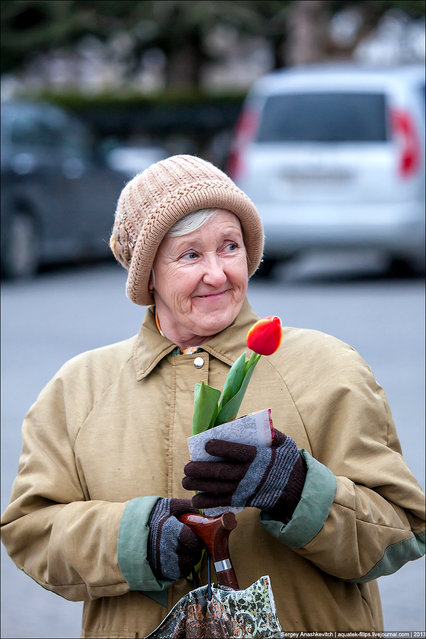
To the woman presented a flower in Sevastopol, Ukraine, on March 8, 2013. Activists presented this day on the street free 155 tulips to women. The police tried to arrest activists for illegal trade as couldn't believe in free distribution of flowers. (Photo by Sergey Anashkevitch)
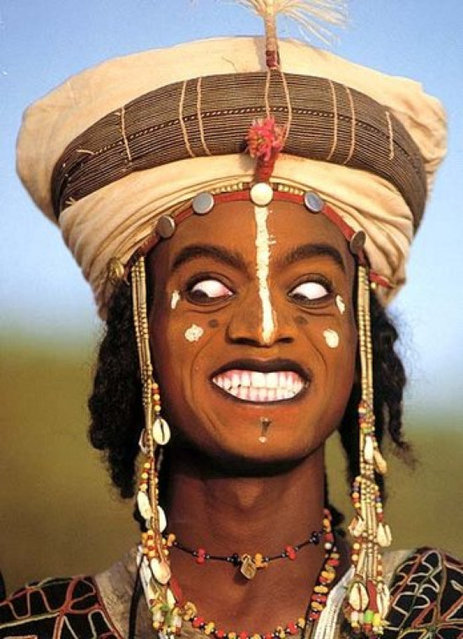
Fula people or Fulani or Fulbe are an ethnic group spread over many countries, predominantly in West Africa, but found also in Central Africa and Sudanese North Africa. African countries where they are present include Mauritania, Ghana, Senegal, Guinea, The Gambia, Mali, Nigeria, Sierra Leone, Benin, Burkina Faso, Guinea Bissau, Cameroon, Côte d'Ivoire, Niger, Chad, Togo, the Central African Republic, Liberia, and as far as Sudan and Egypt in the East. Fula people form a minority in every country they inhabit, but in Guinea they represent a plurality of the population (40%).
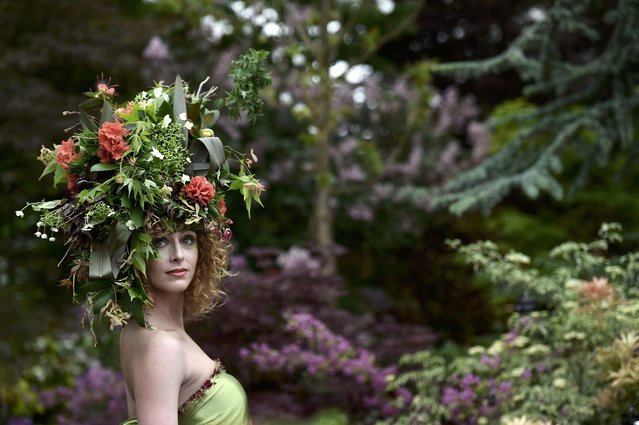
A model wears a floral head dress as she promotes a chain of garden centres at the Royal Horticultural Soceity's Chelsea Flower Show in London, Britain, May 18, 2015. (Photo by Toby Melville/Reuters)
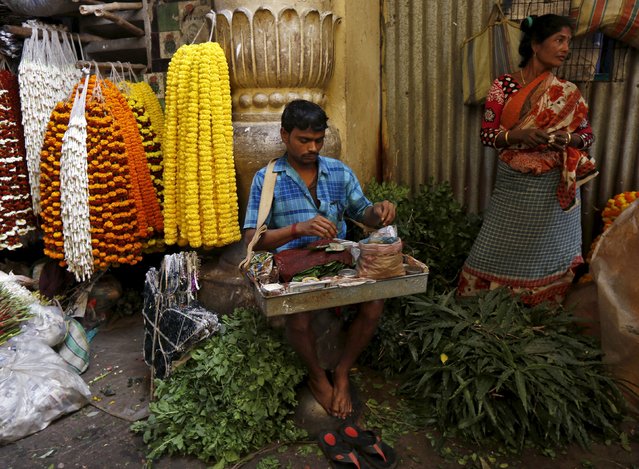
A vendor prepares paan, a betel nut-based chewable stimulant at a flower market in Kolkata, India, January 18, 2016. (Photo by Rupak De Chowdhuri/Reuters)
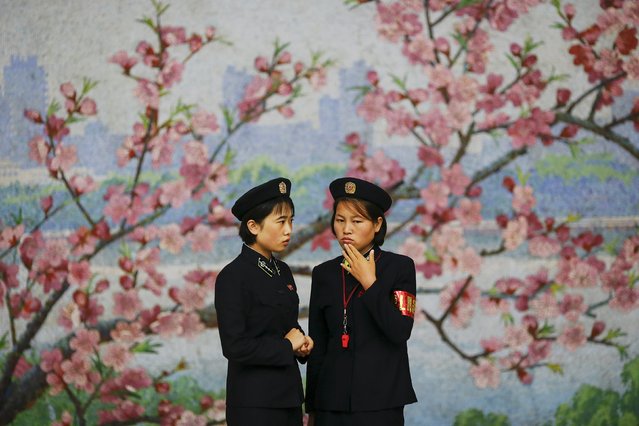
Two railway workers chat in front of a flower mural inside a subway station visited by foreign reporters during a government organised tour in Pyongyang, North Korea October 9, 2015. (Photo by Damir Sagolj/Reuters)
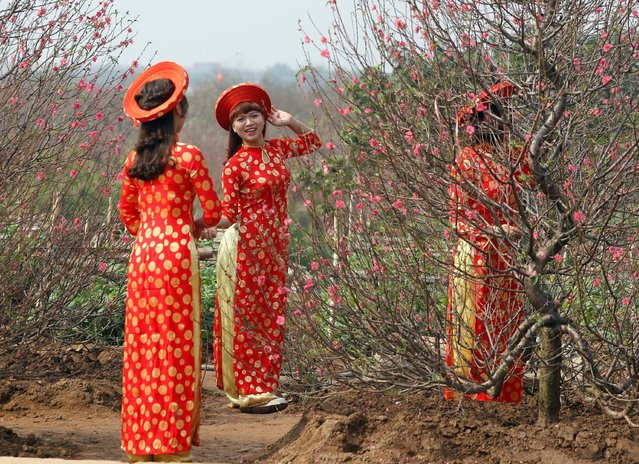
Women, wearing traditional “ao dai” dress, pose for a photo next to peach blossom flowers ahead of Vietnamese “Tet” (the lunar new year festival) in a field in Hanoi January 22, 2017. (Photo by Reuters/Kham)
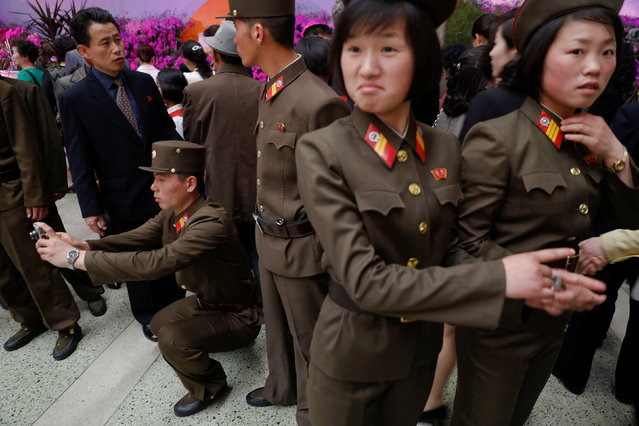
Soldiers pose for a photo during the flower exhibition marking the 105th birth anniversary of the country's founding father, Kim Il Sung in Pyongyang, North Korea April 16, 2017. (Photo by Damir Sagolj/Reuters)