Loading...
Done
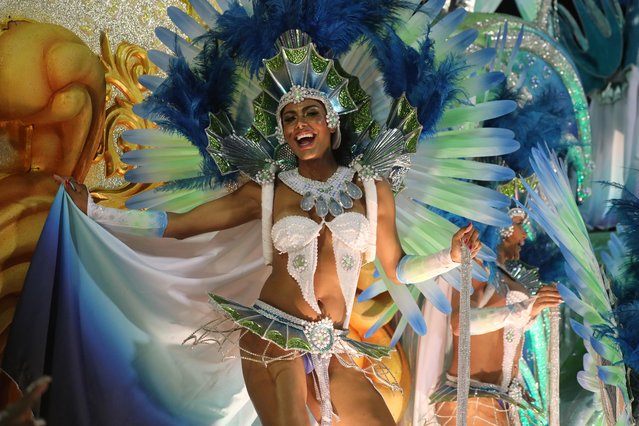
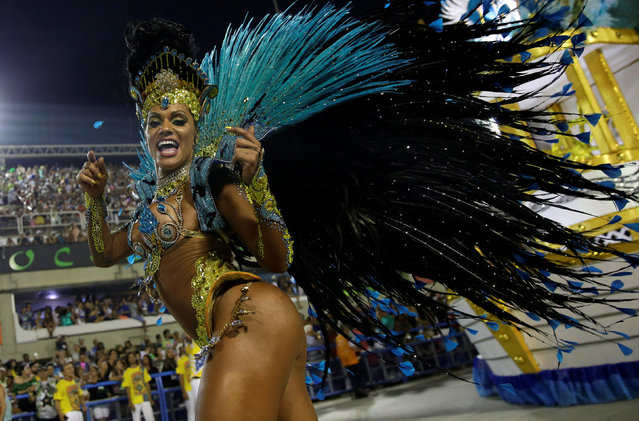
A reveller from Unidos da Tijuca samba school performs during the second night of the carnival parade at the Sambadrome in Rio de Janeiro, Brazil, February 28, 2017. (Photo by Ricardo Moraes/Reuters)

A reveller from Unidos da Tijuca samba school performs during the second night of the carnival parade at the Sambadrome in Rio de Janeiro, Brazil, February 28, 2017. (Photo by Ricardo Moraes/Reuters)
Details
02 Mar 2017 00:06:00
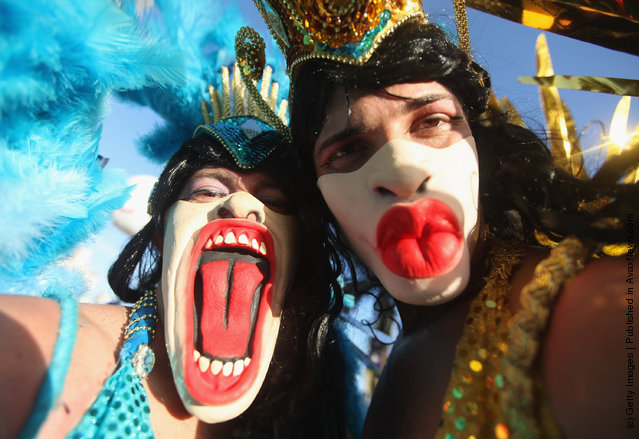
Brazilian revelers pose during Carnival celebrations along Ipanema beach in Rio de Janiero

Brazilian revelers pose during Carnival celebrations along Ipanema beach on February 18, 2012 in Rio de Janiero, Brazil. (Photo by Mario Tama/Getty Images)
Details
19 Feb 2012 12:48:00
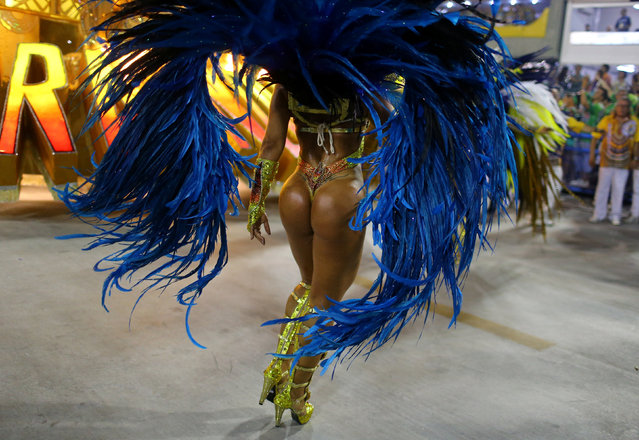
A Beija-Flor samba school member performs during the second night of the Carnival parade at the Sambadrome in Rio de Janeiro, Brazil on February 25, 2020. (Photo by Sergio Moraes/Reuters)

A Beija-Flor samba school member performs during the second night of the Carnival parade at the Sambadrome in Rio de Janeiro, Brazil on February 25, 2020. (Photo by Sergio Moraes/Reuters)
Details
28 Feb 2020 00:03:00
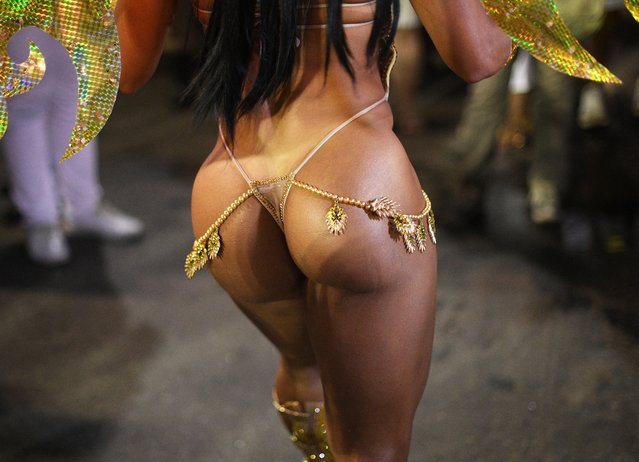
A reveller performs during the first night of carnival parade at the Sambadrome in Rio de Janeiro, Brazil on February 23, 2020. (Photo by Carl de Souza/AFP Photo)

A reveller performs during the first night of carnival parade at the Sambadrome in Rio de Janeiro, Brazil on February 23, 2020. (Photo by Carl de Souza/AFP Photo)
Details
27 Feb 2022 04:55:00
A reveller from Uniao da Ilha samba school performs during the second night of the carnival parade at the Sambadrome in Rio de Janeiro, Brazil February 27, 2017. (Photo by Pilar Olivares/Reuters)

A reveller from Uniao da Ilha samba school performs during the second night of the carnival parade at the Sambadrome in Rio de Janeiro, Brazil February 27, 2017. (Photo by Pilar Olivares/Reuters)
Details
02 Mar 2017 00:04:00
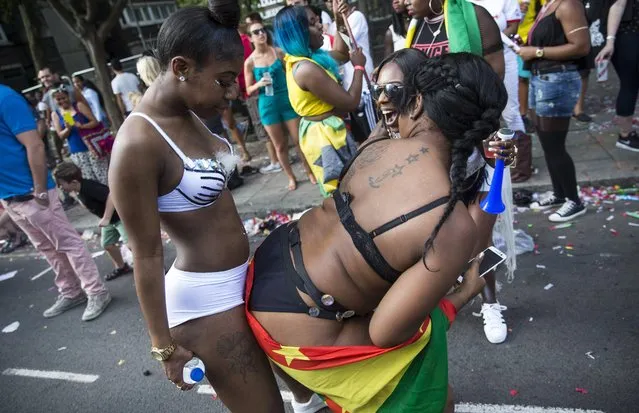
Revellers dance at Notting Hill Carnival on August 29, 2016 in London, England. The Notting Hill Carnival, which has taken place annually since 1964, is expected to attract over a million people. The two-day event, started by members of the Afro-Caribbean community, sees costumed performers take to the streets in a parade and dozens of sound systems set up around the Notting Hill streets. (Photo by Jack Taylor/Getty Images)

Revellers dance at Notting Hill Carnival on August 29, 2016 in London, England. The Notting Hill Carnival, which has taken place annually since 1964, is expected to attract over a million people. The two-day event, started by members of the Afro-Caribbean community, sees costumed performers take to the streets in a parade and dozens of sound systems set up around the Notting Hill streets. (Photo by Jack Taylor/Getty Images)
Details
30 Aug 2016 12:08:00
Participants pass an egg using their mouths during a religious ritual as they play the role of traditional fighters in a parade during the Popo (Mask) Carnival of Bonoua, in the east of Abidjan, April 18, 2015. The carnival has its origins in the changes that Aboure youths in Bonoua introduced to the annual festival of yams. (Photo by Luc Gnago/Reuters)

Participants pass an egg using their mouths during a religious ritual as they play the role of traditional fighters in a parade during the Popo (Mask) Carnival of Bonoua, in the east of Abidjan, April 18, 2015. The carnival has its origins in the changes that Aboure youths in Bonoua introduced to the annual festival of yams. (Photo by Luc Gnago/Reuters)
Details
20 Apr 2015 13:36:00
On August 31, 2012, a long filament of solar material that had been hovering in the sun's atmosphere, the corona, erupted out into space at 4:36 p.m. EDT. The coronal mass ejection, or CME, traveled at over 900 miles per second. The CME did not travel directly toward Earth, but did connect with Earth's magnetic environment, or magnetosphere, causing aurora to appear on the night of Monday, September 3. (Photo by NASA/GSFC/SDO)

On August 31, 2012, a long filament of solar material that had been hovering in the sun's atmosphere, the corona, erupted out into space at 4:36 p.m. EDT. The coronal mass ejection, or CME, traveled at over 900 miles per second. The CME did not travel directly toward Earth, but did connect with Earth's magnetic environment, or magnetosphere, causing aurora to appear on the night of Monday, September 3. (Photo by NASA/GSFC/SDO via The Atlantic)
Details
14 Sep 2012 09:01:00