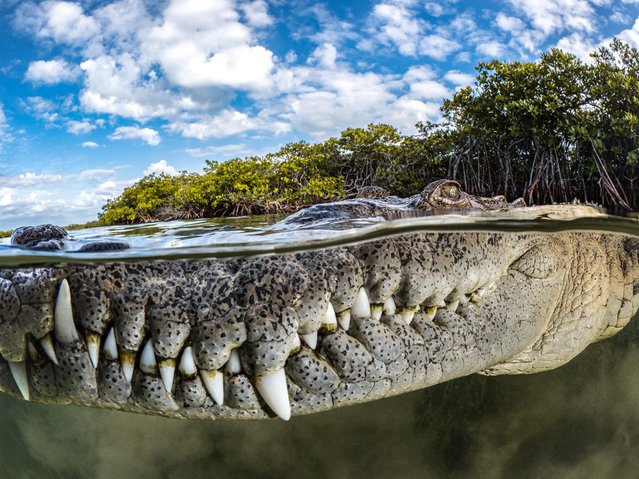
Guardian of the Mangroves – Overall Winner. Tanya Houppermans, Cuba. A curious American crocodile (Crocodylus acutus) swims right up to Tanya, at Gardens of the Queen (Jardines De La Reina), an archipelago off the coast of Cuba. It has been strictly protected since 1996, and is one of the most untouched marine ecosystems in the world. “The healthy population of American crocodiles is down to the pristine condition of the mangroves and I wanted to capture close ups of this gentle giant in its natural habitat. I hope this image can illustrate that protecting areas like this is so critical”. (Photo by Tanya Griffin Houppermans/Mangrove Photographer of the Year)
A woman holds a sign that reads in Spanish “Sеx education to decide, contraceptives to avoid abortion”, as she jumps with another woman as part of the Global Day of Action for access to legal, safe and free abortion, outside the parliament in Caracas, Venezuela, Tuesday, September 28, 2021. (Photo by Ariana Cubillos/AP Photo)
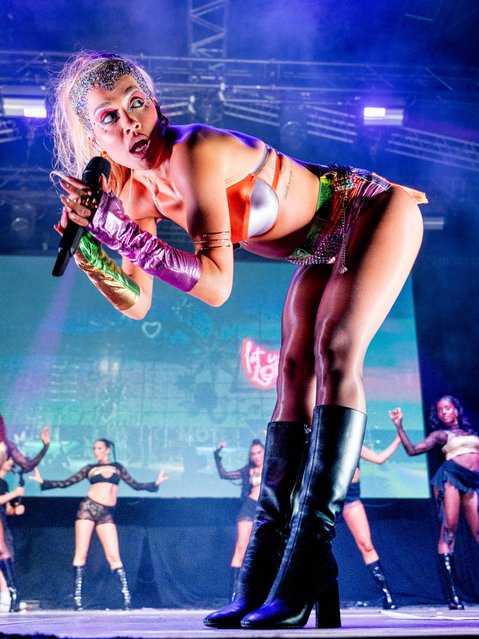
British singer-songwriter Rita Ora performs during Manchester Pride 2024 on August 24, 2024 in Manchester, England. (Photo by Shirlaine Forrest/Getty Images)
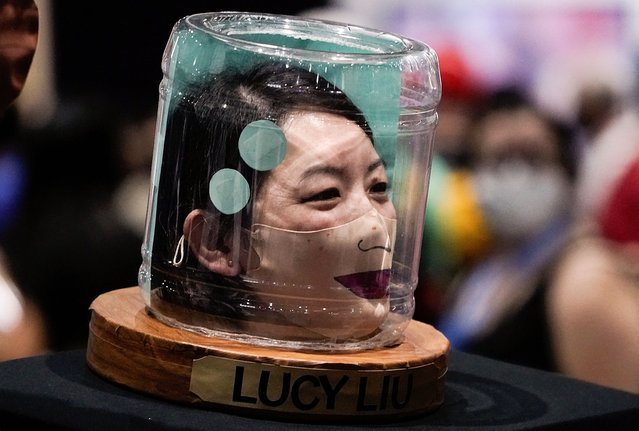
A cosplayer dressed as the actress Lucy Liu, as depicted in the animated series Futurama, poses for a photo at Comic-Con International in San Diego, California, U.S., July 23, 2022. (Photo by Bing Guan/Reuters)
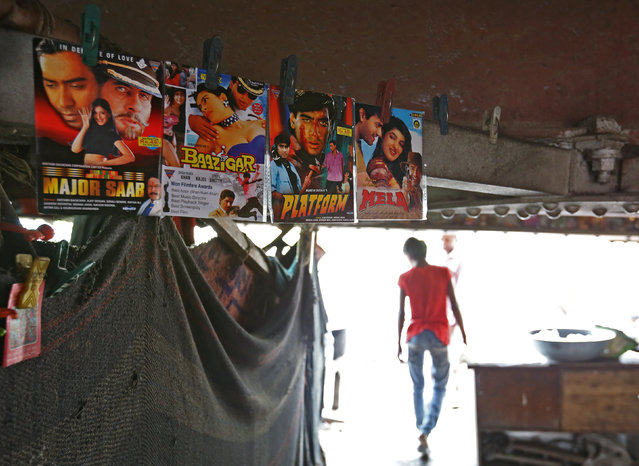
Films that are being screened are advertised in a makeshift cinema located under a bridge in the old quarters of Delhi, India May 25, 2016. A makeshift cinema hall under a 140-year-old bridge in the Indian capital is allowing poor rickshaw pullers and migrant labourers to escape daily hardship and sweltering heat into a world of Bollywood song, dance and romance. With the rusty iron floor of the bridge as its ceiling and some old rags acquired on the cheap from a nearby crematorium serving as curtains and floor mats, the cinema shows four films a day. (Photo by Cathal McNaughton/Reuters)
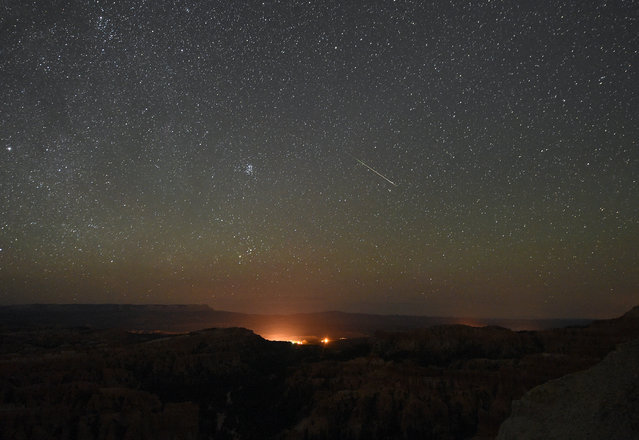
A Perseid meteor streaks across the sky above Inspiration Point early on August 12, 2016 in Bryce Canyon National Park, Utah. The annual display, known as the Perseid shower because the meteors appear to radiate from the constellation Perseus in the northeastern sky, is a result of Earth's orbit passing through debris from the comet Swift-Tuttle. (Photo by Ethan Miller/Getty Images)