Loading...
Done


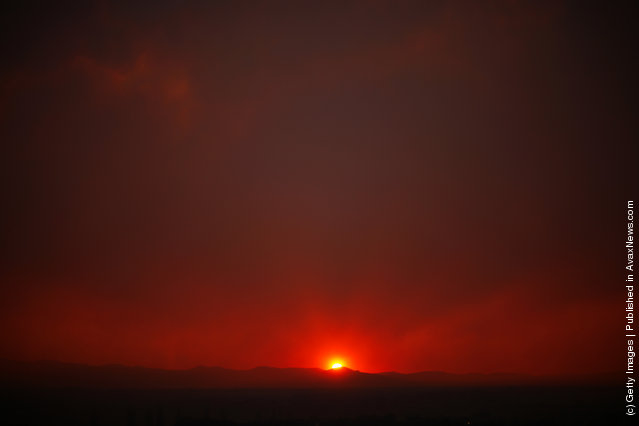
Sunset is seen through smoke from the Wallow fire June 8, 2011 in Springerville, Arizona. Hundreds of thousands of acres have burned in eastern Arizona prompting evacuations by residents. Smoke loomed over the twin towns of Eager and Springerville, home to about 7,000 people north of the fire. (Photo by Eric Thayer/Getty Images)
Details
09 Jun 2011 10:42:00
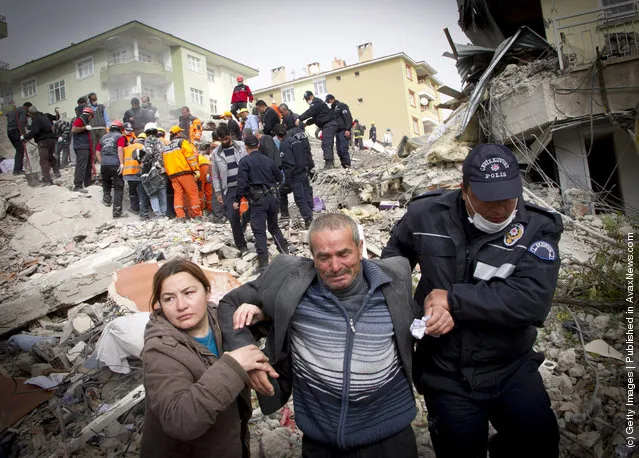
Earthquake in Van, Turkey

Relatives of an earthquake victim are led away from ruins by a Policeman, on October 25, 2011 in Van, Turkey. Media are reporting more than 400 people have been killed in the 7.2 earthquake that struck in Eastern Turkey on October 23. The earthquake has left up to 40,000 people homeless in almost freezing conditions. (Photo by Ahmad Halabisaz/Getty Images)
Details
27 Oct 2011 11:53:00
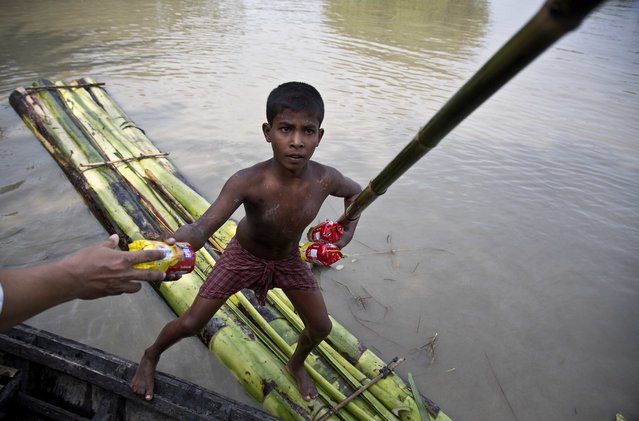
A flood affected boy on a makeshift banana raft collects biscuit packets distributed by a government official from a boat in Pokoria village, east of Gauhati, north eastern Assam state, India, Monday, August 14, 2017. Heavy monsoon rains have unleashed landslides and floods that killed dozens of people in recent days and displaced millions more across northern India, southern Nepal and Bangladesh. (Photo by Anupam Nath/AP Photo)

A flood affected boy on a makeshift banana raft collects biscuit packets distributed by a government official from a boat in Pokoria village, east of Gauhati, north eastern Assam state, India, Monday, August 14, 2017. Heavy monsoon rains have unleashed landslides and floods that killed dozens of people in recent days and displaced millions more across northern India, southern Nepal and Bangladesh. (Photo by Anupam Nath/AP Photo)
Details
22 Aug 2017 07:48:00
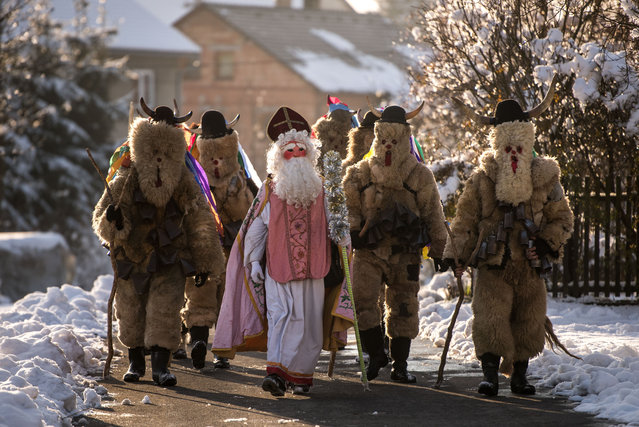
A participant Saint Nicholas parade walks from house to house dressed in the traditional devil and Nicholas costumes in Francova Lhota district of Zlin, Czech Republic on December 3, 2017. This type of parade is one of the most popular age old tradition in a few villages in Wallachia region (eastern part of Czech Republic). Saint Nicholas walks the streets going from house to house three days and Saint Nicholas gives sweets to children and the devils get up to mischief. (Photo by Lukas Kabon/Anadolu Agency/Getty Images)

A participant Saint Nicholas parade walks from house to house dressed in the traditional devil and Nicholas costumes in Francova Lhota district of Zlin, Czech Republic on December 3, 2017. This type of parade is one of the most popular age old tradition in a few villages in Wallachia region (eastern part of Czech Republic). Saint Nicholas walks the streets going from house to house three days and Saint Nicholas gives sweets to children and the devils get up to mischief. (Photo by Lukas Kabon/Anadolu Agency/Getty Images)
Details
05 Dec 2017 09:07:00
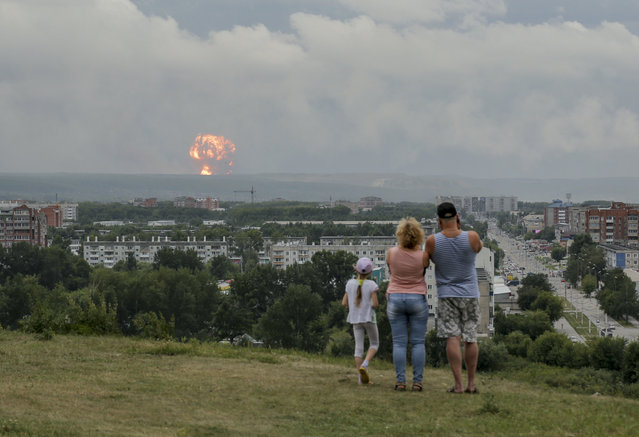
In this photo taken on Monday, August 5, 2019, a family watches explosions at a military ammunition depot near the city of Achinsk in eastern Siberia's Krasnoyarsk region, in Achinsk, Russia. Russian officials say powerful explosions at a military depot in Siberia left 12 people injured and one missing and forced over 16,500 people to leave their homes. (Photo by Dmitry Dub/AP Photo)

In this photo taken on Monday, August 5, 2019, a family watches explosions at a military ammunition depot near the city of Achinsk in eastern Siberia's Krasnoyarsk region, in Achinsk, Russia. Russian officials say powerful explosions at a military depot in Siberia left 12 people injured and one missing and forced over 16,500 people to leave their homes. (Photo by Dmitry Dub/AP Photo)
Details
14 Jan 2020 00:05:00
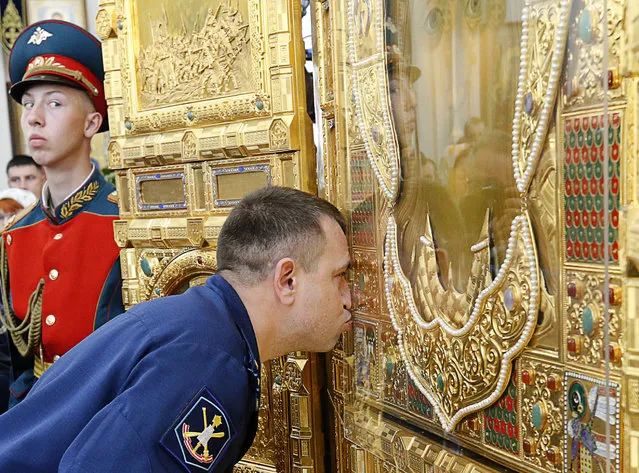
A serviceman kisses the main icon for the Russian Armed Forces' main cathedral, delivered at the Church of Our Lady the Healer in Rostov-On-Don, Russia on May 15, 2018. The Russian Armed Forces' main cathedral is to be built in Patriot Military Park in Kubinka outside Moscow by 2020, the year of the 75th anniversary of the victory of the Soviet Red Army over Nazi Germany in the 1941-45 Great Patriotic War, the Eastern Front of World War II. (Photo by Valery Matytsin/TASS)

A serviceman kisses the main icon for the Russian Armed Forces' main cathedral, delivered at the Church of Our Lady the Healer in Rostov-On-Don, Russia on May 15, 2018. The Russian Armed Forces' main cathedral is to be built in Patriot Military Park in Kubinka outside Moscow by 2020, the year of the 75th anniversary of the victory of the Soviet Red Army over Nazi Germany in the 1941-45 Great Patriotic War, the Eastern Front of World War II. (Photo by Valery Matytsin/TASS)
Details
17 May 2019 00:07:00
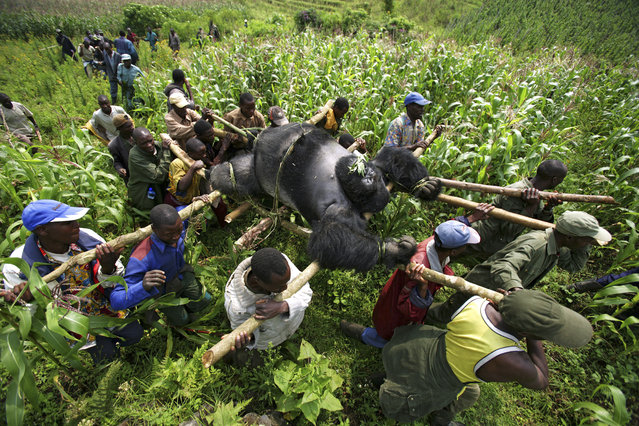
2008 Visa d'or Feature: Brent Stirton. Conservation Rangers from an Anti-Poaching unit work with locals to evacuate the bodies of four Mountain Gorrillas killed in mysterious circumstances in the park,  July 24, 2007, Virunga National Park, Eastern Congo. (Photo by Brent Stirton/Exclusive by Getty Images)

Jean-François Leroy launched Visa Pour l’Image, the international photojournalism festival, in Perpignan in 1989. Before heading up the festival, Leroy was shooting reportage for the agency Sipa Press and also working for Photo-Reporter, Le Photographe, Photo-Revue and Photo Magazine. He is the chairman of the company Images Evidence. Photo: 2008 Visa d'or Feature: Brent Stirton. Conservation Rangers from an Anti-Poaching unit work with locals to evacuate the bodies of four Mountain Gorrillas killed in mysterious circumstances in the park, July 24, 2007, Virunga National Park, Eastern Congo. (Photo by Brent Stirton/Exclusive by Getty Images)
Details
27 Aug 2013 10:42:00
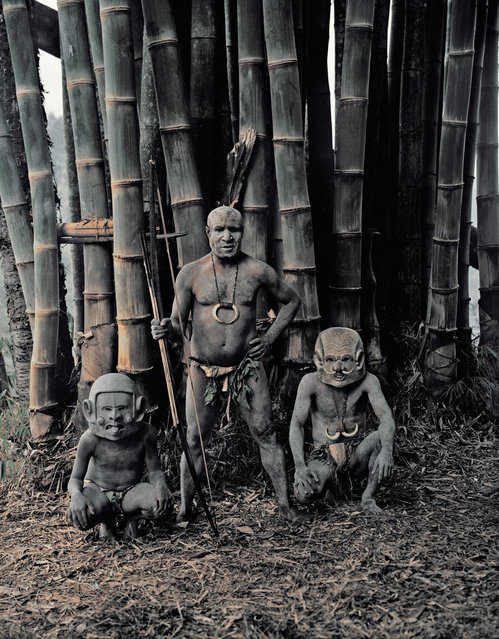
“Asaro from the Eastern Highlands”. The mudmen could not cover their faces with mud because the people of Papua New Guinea thought that the mud from the Asaro river was poisonous. So instead of covering their faces with this alleged poison, they made masks from pebbles that they heated and water from the waterfall, with unusual designs such as long or very short ears either going down to the chin or sticking up at the top, long joined eyebrows attached to the top of the ears, horns and sideways mouths. (Jimmy Nelson)

“Asaro from the Eastern Highlands”. The mudmen could not cover their faces with mud because the people of Papua New Guinea thought that the mud from the Asaro river was poisonous. So instead of covering their faces with this alleged poison, they made masks from pebbles that they heated and water from the waterfall, with unusual designs such as long or very short ears either going down to the chin or sticking up at the top, long joined eyebrows attached to the top of the ears, horns and sideways mouths. (Photo and caption by Jimmy Nelson)
Details
20 Oct 2013 08:54:00