Loading...
Done
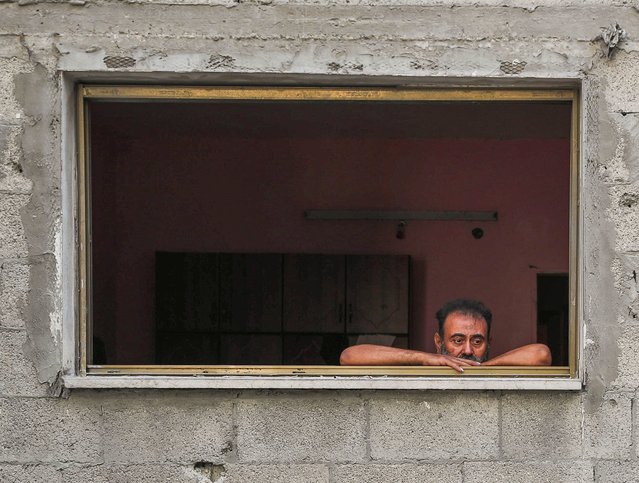
A man looks out of a window as Palestinians inspect the site and search for casualties of an overnight Israeli air strike on a house at al-Shati (Beach) refugee camp, in Gaza City, on July 15, 2025. (Photo by Mahmoud Issa/Reuters)

A man looks out of a window as Palestinians inspect the site and search for casualties of an overnight Israeli air strike on a house at al-Shati (Beach) refugee camp, in Gaza City, on July 15, 2025. (Photo by Mahmoud Issa/Reuters)
Details
15 Aug 2025 03:21:00
In this July 30, 2014 photo, neighbors help gravely injured Mohammed al-Selek, 39, wounded by an Israeli mortar strike as he lays next to the body of Palestinian journalist Rami Reyan who was killed, in the Shijaiyah neighborhood of the northern Gaza Strip. Al-Selek's life changed forever last July 30, when the shells slammed into his home killing all his three children, his father and six other relatives. (Photo by Adel Hana/AP Photo)

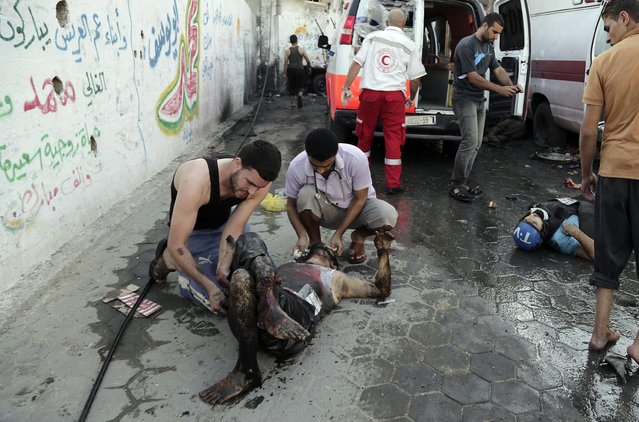
In this July 30, 2014 photo, neighbors help gravely injured Mohammed al-Selek, 39, wounded by an Israeli mortar strike as he lays next to the body of Palestinian journalist Rami Reyan who was killed, in the Shijaiyah neighborhood of the northern Gaza Strip. Al-Selek's life changed forever last July 30, when the shells slammed into his home killing all his three children, his father and six other relatives. A year later, al-Selek, who lost his leg during the airstrike, still struggles to recover and come to terms with his family's loss in the 50-day Israel-Hamas war. (Photo by Adel Hana/AP Photo)

Details
07 Jul 2015 11:28:00
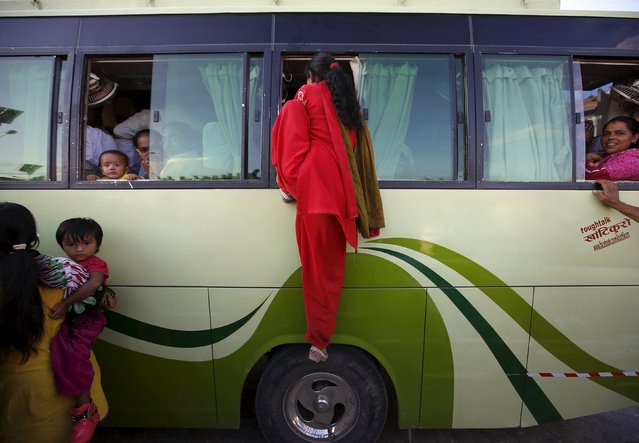
A passenger (C) climbs through the window of an overcrowded bus as limited public transportation operates in the city during the ongoing fuel crisis in Kathmandu, Nepal October 9, 2015. Nepal is considering air-lifting fuel, possibly from Bangladesh, as supply routes from India stay blocked by protesters opposing its new constitution, a short-term solution ahead of a key festival even as the government talks to China for help. (Photo by Navesh Chitrakar/Reuters)

A passenger (C) climbs through the window of an overcrowded bus as limited public transportation operates in the city during the ongoing fuel crisis in Kathmandu, Nepal October 9, 2015. Nepal is considering air-lifting fuel, possibly from Bangladesh, as supply routes from India stay blocked by protesters opposing its new constitution, a short-term solution ahead of a key festival even as the government talks to China for help. (Photo by Navesh Chitrakar/Reuters)
Details
12 Oct 2015 08:04:00
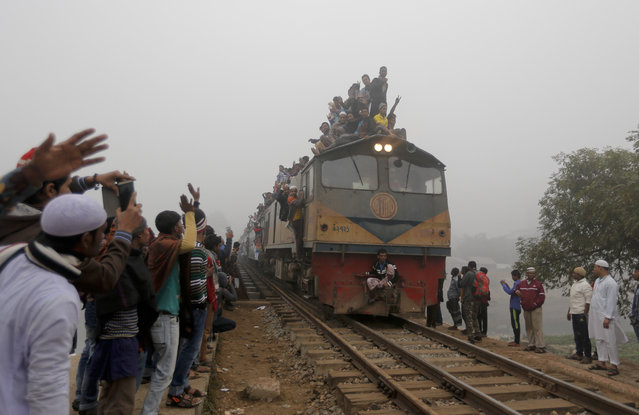
Bangladeshi Muslim devotees arrive in an over-crowded train to attend the final day of an Islamic congregations' first phase in Tongi, 20 kilometers (13 miles) north of  Dhaka, Bangladesh, Sunday, January 10, 2016. The second phase of the annual event, one of the world's largest congregations of Muslims is scheduled to begin Friday. (Photo by A.M. Ahad/AP Photo)

Bangladeshi Muslim devotees arrive in an over-crowded train to attend the final day of an Islamic congregations' first phase in Tongi, 20 kilometers (13 miles) north of Dhaka, Bangladesh, Sunday, January 10, 2016. The second phase of the annual event, one of the world's largest congregations of Muslims is scheduled to begin Friday. (Photo by A.M. Ahad/AP Photo)
Details
11 Jan 2016 13:51:00
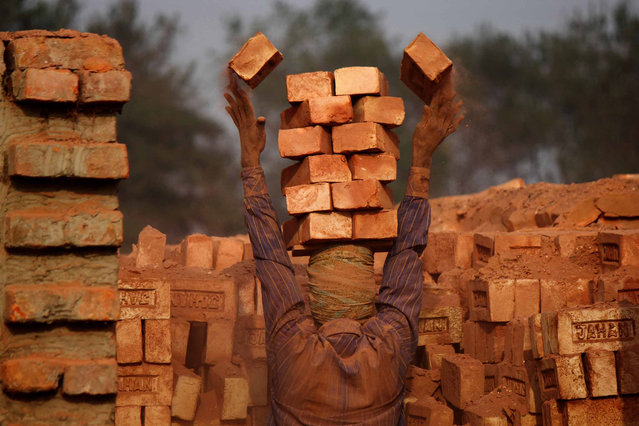
CGAP Photo Contest – South Asia Regional Winner: Bricks Worker, Bangladesh. A private enterprise worker is working at a brick field. These small businesses are creating new job opportunities for many poor people. (Photo by Moksumul Haque)

The shoemaker in Turkey, the potato seller in Vietnam, and the weaver in Bolivia are among the billions of low-income entrepreneurs who make the world go round. They are also the type of people who can benefit significantly from microfinance. Every year, the Consultative Group To Assist The Poor (or CGAP) hosts a photo contest asking entrants to submit photos based around the idea of microfinance.The purpose of the contest is to give amateur and professional photographers a chance to show the different ways that poor households manage their financial lives and make their lives better through financial inclusion. Photo: South Asia Regional Winner – “Bricks Worker”, Bangladesh. A private enterprise worker is working at a brick field. These small businesses are creating new job opportunities for many poor people. (Photo by Moksumul Haque)
Details
14 Aug 2014 10:58:00
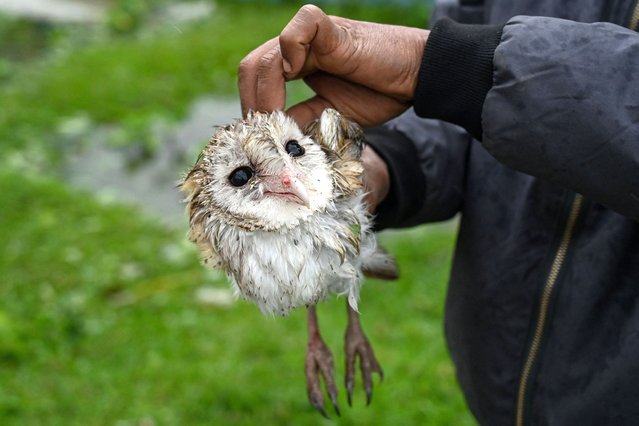
A local resident rescues a baby owl after Cyclone Mocha's crashed ashore, in Kyauktaw in Myanmar's Rakhine state on May 14, 2023. Cyclone Mocha crashed ashore in Myanmar and southeastern Bangladesh on May 14, 2023, uprooting trees, scattering flimsy homes in Rohingya displacement camps and bringing a storm surge into low-lying areas. (Photo by Jack Taylor/AFP Photo)

A local resident rescues a baby owl after Cyclone Mocha's crashed ashore, in Kyauktaw in Myanmar's Rakhine state on May 14, 2023. Cyclone Mocha crashed ashore in Myanmar and southeastern Bangladesh on May 14, 2023, uprooting trees, scattering flimsy homes in Rohingya displacement camps and bringing a storm surge into low-lying areas. (Photo by Jack Taylor/AFP Photo)
Details
18 May 2023 03:21:00
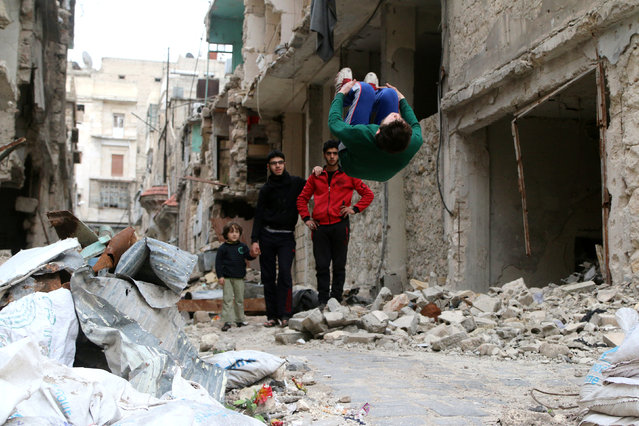
Gymnast Ahmad al-Sawas performs gymnastic moves near damaged buildings in the rebel-held Bustan al-Qasr neighbourhood of Aleppo, Syria March 26, 2016. As Syrian gymnast Ahmad al-Sawas watched his country fall apart, his Olympic dream collapsed too. The last national champion before the fighting began, he knew that supporting the anti-government side in the five-year-old civil war would prevent him from being selected for the Rio Games. “I chose to be an athlete who participates in the revolution”, said Ahmad, who trains where he can for two hours a day – be it on a mattress on a soccer field, in a local hall or somersaulting off a wall. (Photo by Abdalrhman Ismail/Reuters)

Gymnast Ahmad al-Sawas performs gymnastic moves near damaged buildings in the rebel-held Bustan al-Qasr neighbourhood of Aleppo, Syria March 26, 2016. As Syrian gymnast Ahmad al-Sawas watched his country fall apart, his Olympic dream collapsed too. The last national champion before the fighting began, he knew that supporting the anti-government side in the five-year-old civil war would prevent him from being selected for the Rio Games. (Photo by Abdalrhman Ismail/Reuters)
Details
05 Aug 2016 13:25:00
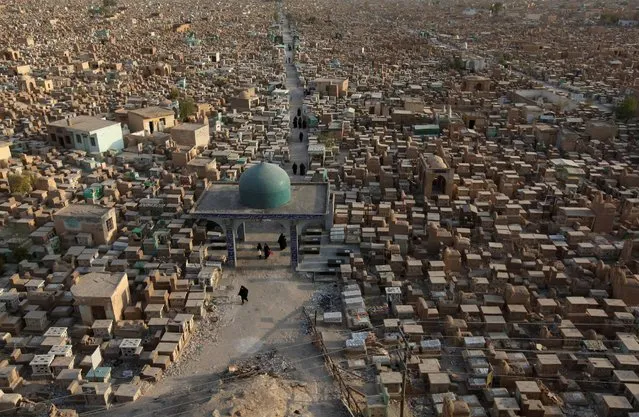
The Wadi al-Salam cemetery, Arabic for “Peace Valley”, is seen in Najaf, south of Baghdad, Iraq August 3, 2016. The world's largest cemetery, in Iraq's Shi'ite holy city of Najaf, is expanding at double its usual rate as Shi'ite militias bury their dead from the war against Islamic State. The Wadi al-Salam cemetery, Arabic for “Peace Valley” has a special place in the hearts of Shi'ite Muslims as it surrounds the Mausoleum of their first imam, Ali Bin Abi Talib, a cousin and son-in-law of Prophet Mohammad. (Photo by Alaa Al-Marjani/Reuters)

The Wadi al-Salam cemetery, Arabic for “Peace Valley”, is seen in Najaf, south of Baghdad, Iraq August 3, 2016. The world's largest cemetery, in Iraq's Shi'ite holy city of Najaf, is expanding at double its usual rate as Shi'ite militias bury their dead from the war against Islamic State. The Wadi al-Salam cemetery, Arabic for “Peace Valley” has a special place in the hearts of Shi'ite Muslims as it surrounds the Mausoleum of their first imam, Ali Bin Abi Talib, a cousin and son-in-law of Prophet Mohammad. (Photo by Alaa Al-Marjani/Reuters)
Details
24 Aug 2016 11:38:00