Loading...
Done
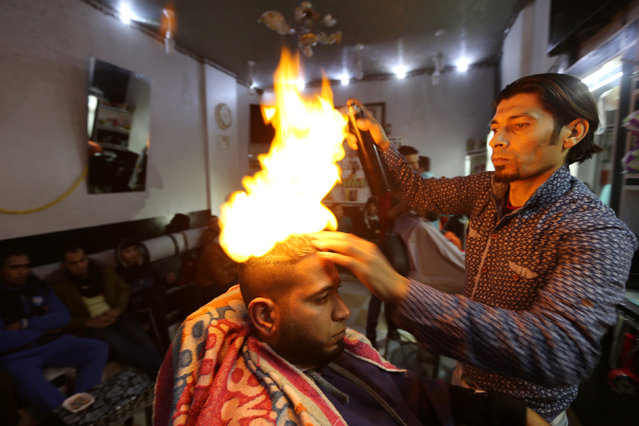
Palestinian barber Ramadan Odwan styles and straightens the hair of a customer with fire at his salon in Rafah, in the southern Gaza Strip February 2, 2017. In Ramadan Odwan's barbershop in Gaza, hair isn't just blow-dried, it's blowtorch-dried. “People have gone crazy about it, many people are curious to go through the experience and they are not afraid”, he told Reuters. “People here love adventures”. Odwan, 37, is not the first stylist in the world to use flame to straighten hair, but his craft is unique in the Gaza Strip. In his salon in the southern Gaza town of Rafah, Odwan applied what he described as a protective liquid coating to a customer's hair – he declined to disclose its contents – before aiming for the head and pressing the button on a small blowtorch. “I control how long I apply fire, I keep it on and off for 10 seconds or 15 seconds. It is completely safe and I have not encountered any accident since I started it two months ago”, Odwan added. Odwan charges 20 shekels ($5.20) for a haircut and fire-straightening. A barber for the past 18 years, he said part of the reason he uses the technique is to show that Palestinian barbers are as “professional as those out there around the world”. (Photo by Ibraheem Abu Mustafa/Reuters)

Palestinian barber Ramadan Odwan styles and straightens the hair of a customer with fire at his salon in Rafah, in the southern Gaza Strip February 2, 2017. In Ramadan Odwan's barbershop in Gaza, hair isn't just blow-dried, it's blowtorch-dried. “People have gone crazy about it, many people are curious to go through the experience and they are not afraid”, he told Reuters. “People here love adventures”. (Photo by Ibraheem Abu Mustafa/Reuters)
Details
11 Feb 2017 00:05:00
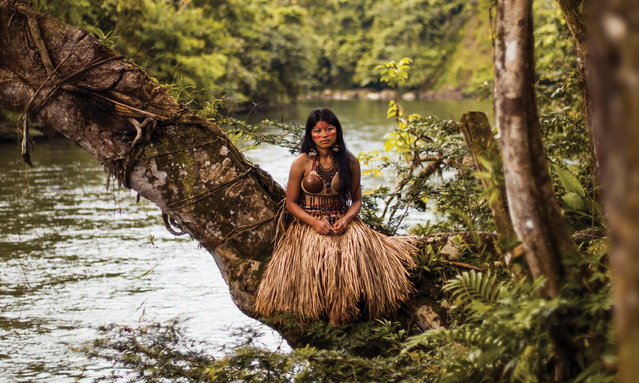
Ecuador: “More and more tribes of Amazonia are starting to adopt modern clothes for everyday life. But they are still keeping their traditional clothes for important events. I photographed this young woman in her wedding outfit”. (Photo by Mihaela Noroc/The Guardian)

Photographer Mihaela Noroc travelled the world from Ethiopia to the US and from Guatemala to France in search of natural and authentic beauty. She introduces some of the inspiring women she met on her journey. Here: Ecuador. “More and more tribes of Amazonia are starting to adopt modern clothes for everyday life. But they are still keeping their traditional clothes for important events. I photographed this young woman in her wedding outfit”. (Photo by Mihaela Noroc/The Guardian)
Details
27 Sep 2017 08:29:00
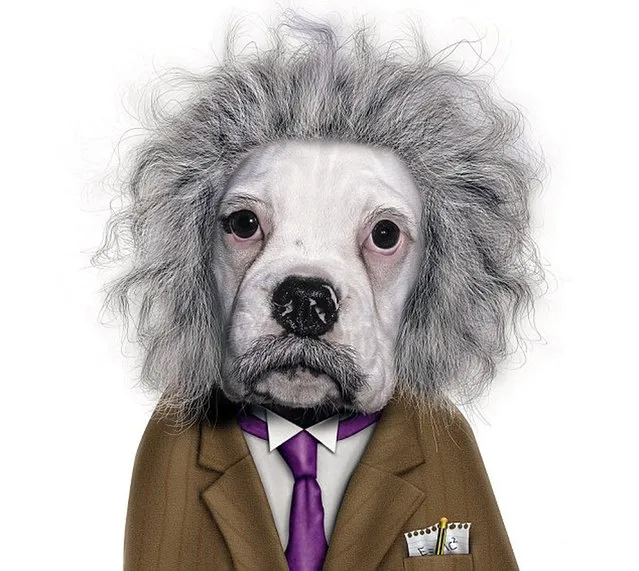
animals famous

The kiddipops has these animal celebrity portraits in a diary and they have always given us a giggle. The company behind them is ‘Takkoda‘- the name is derived from the Sioux word meaning ‘Friend to all’. The company was started by two couples with a love of animals; who see pets as being big personalities, not as ‘chocolate box’ images. Takkoda is all about funny images of our favourite friends. They photograph real pets in their homes and capture their natural expressions in their natural state! Later they develop their characters by dressing them up digitally to bring out their iconic personalities.
Details
07 Jul 2012 06:22:00
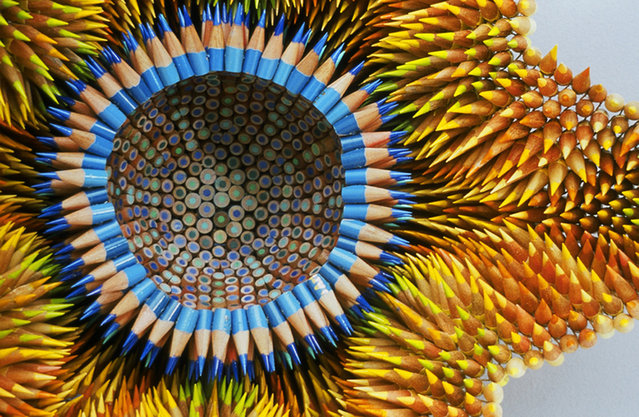
Pencil Sculptures - by Jennifer Maestre

Jennifer Maestre (born 1959 in Johannesburg, South Africa) is a Massachusetts-based artist, internationally known for her unique pencil sculptures.
She derives most of her inspiration from the form and texture of the sea urchin. To make the pencil sculptures, Jennifer makes use of a variety pencils, nails and stitching. She takes hundreds of pencils, cuts them into small 1-inch sections, drills a hole in each section, sharpens them all and sews them together.
Details
22 Aug 2012 13:16:00
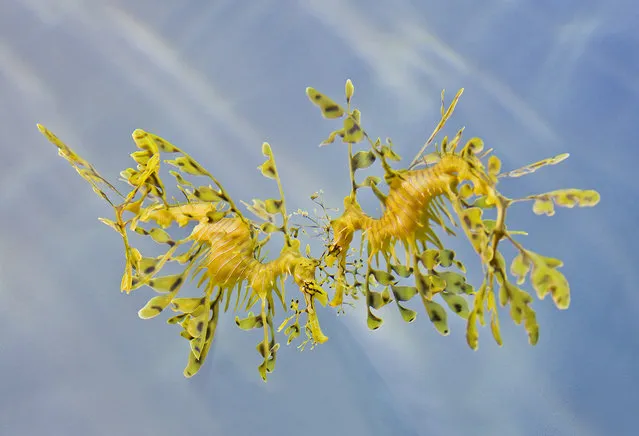
Leafy sea dragon

The leafy seadragon or Glauert's seadragon, Phycodurus eques, is a marine fish in the family Syngnathidae, which also includes the seahorses. It is the only member of the genus Phycodurus. It is found along the southern and western coasts of Australia. The name is derived from the appearance, with long leaf-like protrusions coming from all over the body. These protrusions are not used for propulsion; they serve only as camouflage. The leafy seadragon propels itself by means of a pectoral fin on the ridge of its neck and a dorsal fin on its back closer to the tail end. These small fins are almost completely transparent and difficult to see as they undulate minutely to move the creature sedately through the water, completing the illusion of floating seaweed.
Details
05 Sep 2012 08:51:00
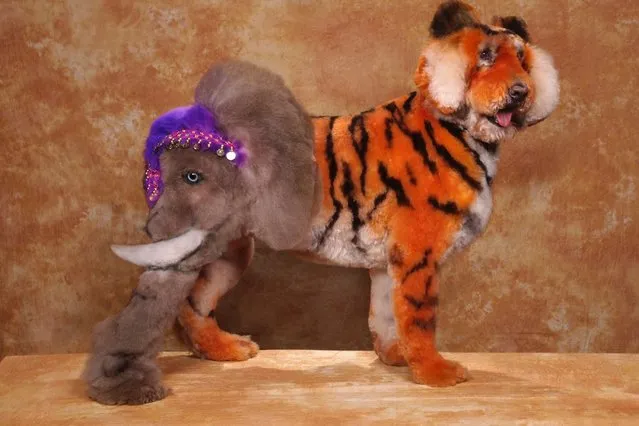
A dog with a half tiger and half elephant design at a creative grooming competition in Hershey, Pennsylvania. (Photo by Ren Netherland/Barcroft Media)

Anamal photographer Ren Netherland travels thousands of miles across America to creative dog grooming competitions every year. He captures the dogs with their striking designs – which include characters from Disney, Star Wars and Sesame Street.

Photo: A dog with a half tiger and half elephant design at a creative grooming competition in Hershey, Pennsylvania. (Photo by Ren Netherland/Barcroft Media). P.S. To see the first part, use please the “Creative dog grooming” tag.
Details
23 Jun 2013 07:16:00
Google & Adidas – Talking Shoe

The shoe works similarly to a fitness tracking device, using an accelerometer, gyroscope, Bluetooth and other off-the-shelf technologies to analyze the wearer’s movements and offer motivating and timely commentary. It might tell you to get going if you’ve been idle for too long or cheer you on if it senses you being very active. Its comments can be posted to Google+ by the user, sent to real-time ad units, or broadcast via onboard speakers.
Details
13 Mar 2013 11:49:00
Goldwell Open Air Museum: Last Supper

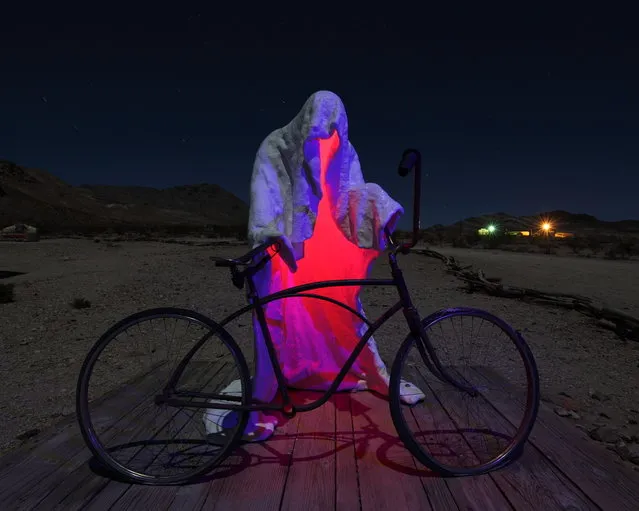
Just outside of a Nevada ghost town, Rhyolite, is the Goldwell Open Air Museum. The museum was created by a group of Belgian artists and consists of seven outdoor sculptures dramatically using the Mojae Desert as a backdrop. The Last Supper, created by the late artist Charles Szukalski, is a piece that was due to last only a couple of years but withstood time and nature since 1984. Men from the local community were covered in linen and plaster to create the eerie forms, reminiscent of Da Vinci's last supper. It is a truly unique environment and piece of art in the great American desert.
Details
03 Feb 2013 13:13:00