Loading...
Done


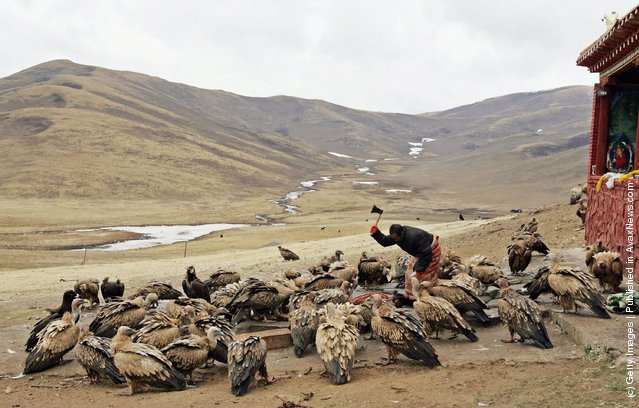
“Sky burial or ritual dissection was once a common funerary practice in Tibet wherein a human corpse is cut in specific locations and placed on a mountaintop, exposing it to the elements or the mahabhuta and animals – especially to birds of prey. The location of the sky burial preparation and place of execution are understood in the Vajrayana traditions as charnel grounds. In Tibet the practice is known as jhator, which literally means, «giving alms to the birds»”. – Wikipedia

Photo: A burial master chops bones of a body to feed vultures during a celestial burial ceremony on April 19, 2006 in Dari County of Guoluo Prefecture, Qinghai Province, northwest China. Celestial burial is a traditional funeral of Tibetan people, which began in the 7th century. (Photo by China Photos/Getty Images)
Details
18 Jun 2011 12:12:00
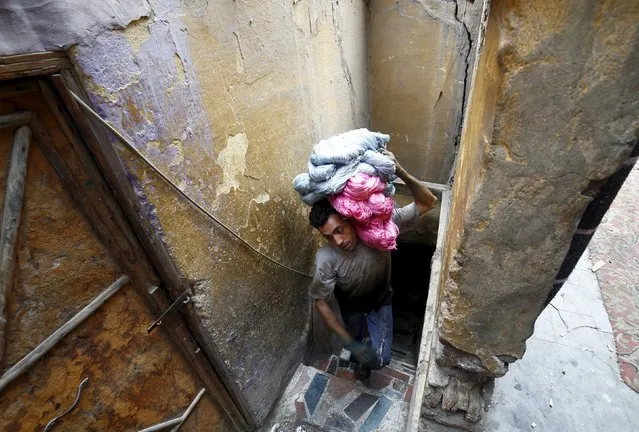
Mohamed Mostafa, 35, carries dyed yarns at a dye workshop in old Cairo, Egypt, March 17, 2016. (Photo by Amr Abdallah Dalsh/Reuters)

Mohamed Mostafa, 35, carries dyed yarns at a dye workshop in old Cairo, Egypt, March 17, 2016. Egypt's hard currency crisis and competition from modern factories in Asia and at home threaten one of the last dye workshops in Egypt. But one of its owners takes comfort in the trade's ancient resilience. Mohamed Mostafa boasts that the profession dates back 3,000 years, so it can survive anything. (Photo by Amr Abdallah Dalsh/Reuters)
Details
09 Apr 2016 13:26:00
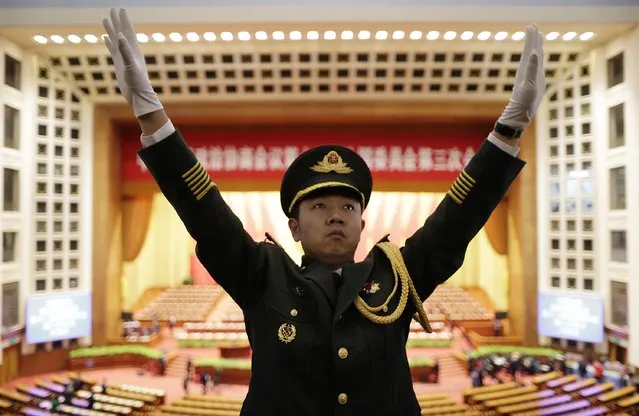
A military band conductor practices during rehearsal ahead of the opening session of Chinese People's Political Consultative Conference (CPPCC) at the Great Hall of the People in Beijing, March 3, 2015. REUTERS/Jason Lee

A military band conductor practices during rehearsal ahead of the opening session of Chinese People's Political Consultative Conference (CPPCC) at the Great Hall of the People in Beijing, March 3, 2015. REUTERS/Jason Lee
Details
06 Mar 2015 09:10:00
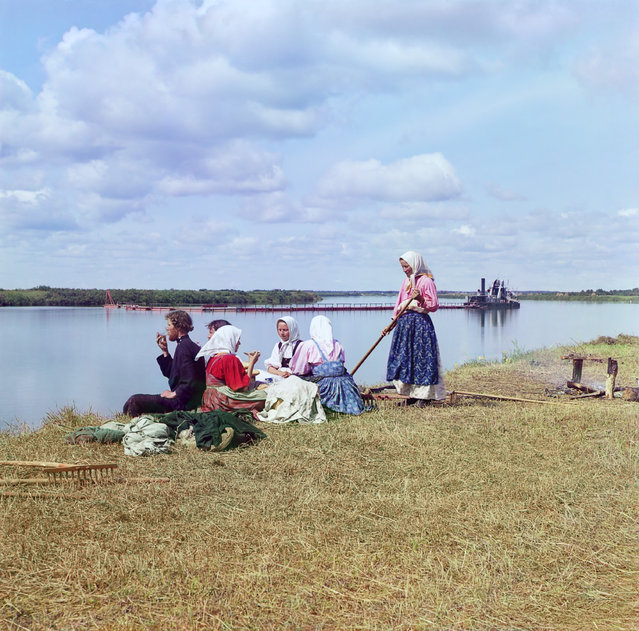
Photos by Sergey Prokudin-Gorsky. Dinner during haying. Russian Empire, Novgorod province, county Cherepovets, 1909

“Sergey Mikhaylovich Prokudin-Gorsky (August 30 1863 Russian Empire – September 27, 1944 Paris, France) was a Russian chemist and photographer. He is best known for his pioneering work in color photography of early 20th-century Russia”. – Wikipedia

Photo: Dinner during haying. Russian Empire, Novgorod province, county Cherepovets, 1909. (Photos by Sergey Prokudin-Gorsky via US Library of Congress and Prokudin-Gorsky.org)

P.S. All pictures are presented in high resolution. To see Hi-Res images – just TWICE click on any picture. In other words, click small picture – opens the BIG picture. Click BIG picture – opens VERY BIG picture (if available; this principle works anywhere on the site AvaxNews). Enjoy.
Details
24 Jul 2012 12:03:00
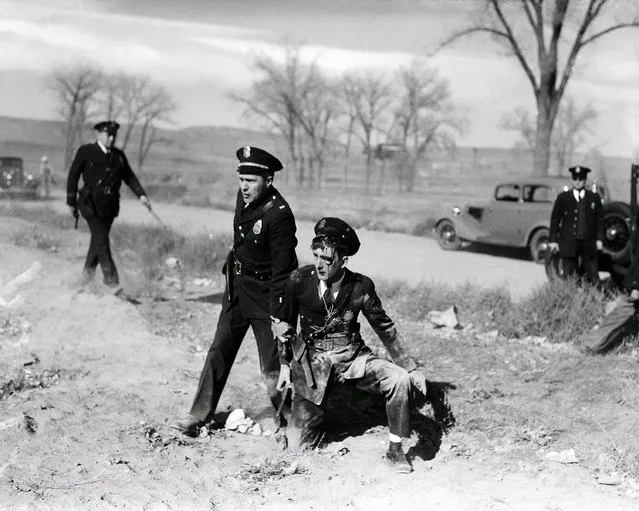
A fellow officer comes to the aid of injured patrolman C.V. Satt, who was pelted with rocks and beer bottles during a clash between police and relief demonstrators in Denver September 23, 1935. (Photo by Henry G. Eisenhand/AP Photo)

A fellow officer comes to the aid of injured patrolman C.V. Satt, who was pelted with rocks and beer bottles during a clash between police and relief demonstrators in Denver September 23, 1935. (Photo by Henry G. Eisenhand/AP Photo)
Details
24 Sep 2015 10:57:00
An Zi, is squashed amongst other commuters in a subway train on his way to work in Beijing, China, November 12, 2015. An, a movie producer, moved to Dongsanqi village in Changping this year. His commute to work can take about 2 hours, with transportation costs topping 200 yuan a month, or about a fifth of his monthly rent. (Photo by Jason Lee/Reuters)

An Zi, is squashed amongst other commuters in a subway train on his way to work in Beijing, China, November 12, 2015. An, a movie producer, moved to Dongsanqi village in Changping this year. His commute to work can take about 2 hours, with transportation costs topping 200 yuan a month, or about a fifth of his monthly rent. (Photo by Jason Lee/Reuters)
Details
28 Nov 2015 08:00:00
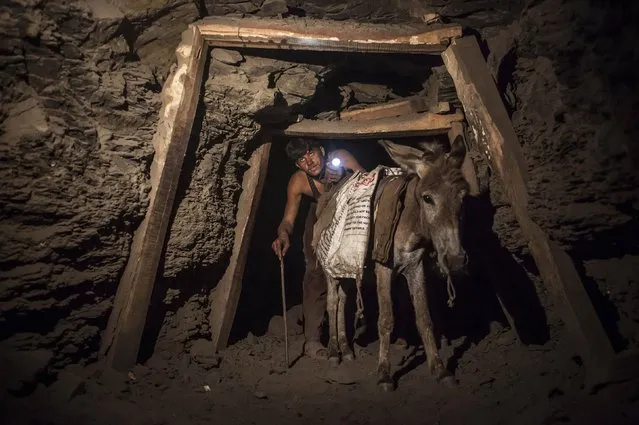
A miner with a donkey makes his way through the low and narrow tunnel leading out of a coal mine in Choa Saidan Shah in Punjab province, April 29, 2014. Workers at this mine in Choa Saidan Shah dig coal with pick axes, break it up and load it onto donkeys to be transported to the surface. (Photo by Sara Farid/Reuters)

A miner with a donkey makes his way through the low and narrow tunnel leading out of a coal mine in Choa Saidan Shah in Punjab province, April 29, 2014. Workers at this mine in Choa Saidan Shah dig coal with pick axes, break it up and load it onto donkeys to be transported to the surface. Employed by private contractors, a team of four workers can dig about a ton of coal a day, for which they earn around $10 to be split between them. The coalmine is in the heart of Punjab, Pakistan's most populous and richest province, but the labourers mostly come from the poorer neighbouring region of Khyber Pakhtunkhwa. (Photo by Sara Farid/Reuters)
Details
03 Aug 2014 07:35:00
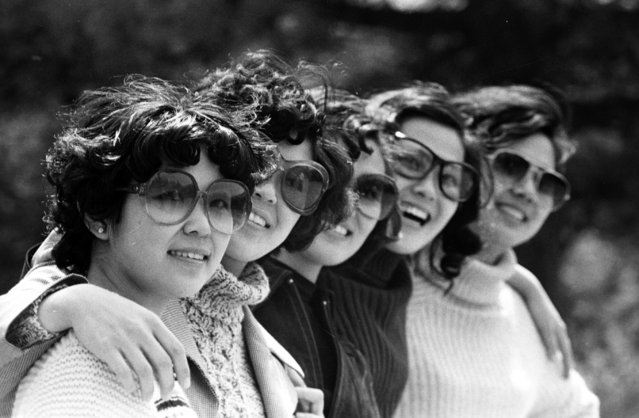
Women wearing sunglasses pose for a group photo at a park in Beijing in 1980. (Photo by Reuters/China Daily)

Women wearing sunglasses pose for a group photo at a park in Beijing in 1980. (Photo by Reuters/China Daily)
Details
13 Nov 2014 13:47:00