Loading...
Done
The Machines Of The Isle Of Nantes

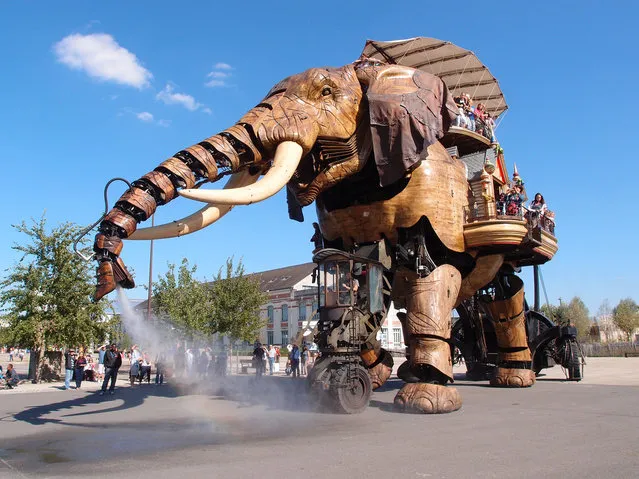
Due to the influence of Sci-Fi movies, many of us have an obsession with giant robots. How cool would it be to ride a gigantic robotic dinosaur or elephant? It would be even cooler to control one! Regretfully, the modern technologies are not yet sophisticated enough to fulfill this dream. Pierre Orefice and François Delarozière, however, came very close. These two artists have made it their goal to turn Nantes, France, into a hot tourist destination spot for people who love robots. In their project of Machines de l'île in Nantes, they have created a whole park of robotic monstrosities, ranging from a giant 3 story high elephant to a 2 meter long centipede crawling on a rail track.
Details
05 Jan 2015 13:21:00
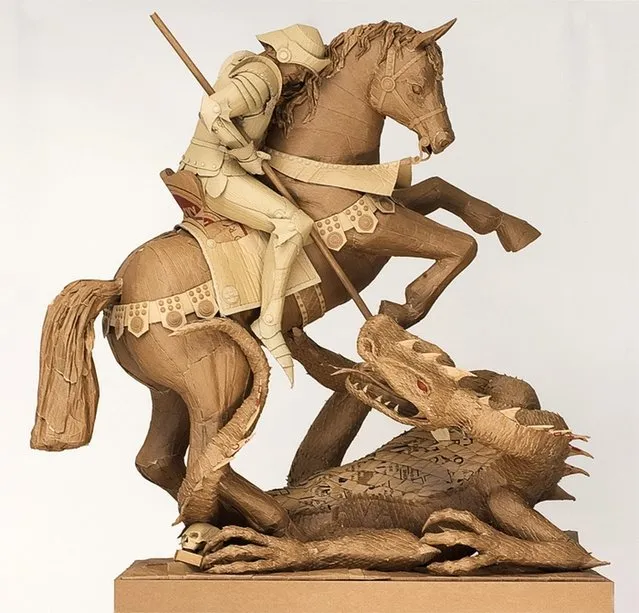
Cardboard Sculptures By Chris Gilmour

Chris Gilmour is one of those people that can turn unexpected things, which most of us would simply discard as trash, into astounding works of art. By taking simple cardboard packaging and other recycled items, he was able to create intricate replicates of various large items, paying close attention to even the smallest details. His cardboard sculptures include everything from vehicles (motorbikes, cars, bicycles) to religious symbols. Some people may find it sacrilege to create religious icons out of trash, which includes toothpaste, condoms, etc.; however, art should not be bound by prejudice and bigotry of close-minded individuals. (Photo by Chris Gilmour)
Details
27 Jan 2015 11:59:00
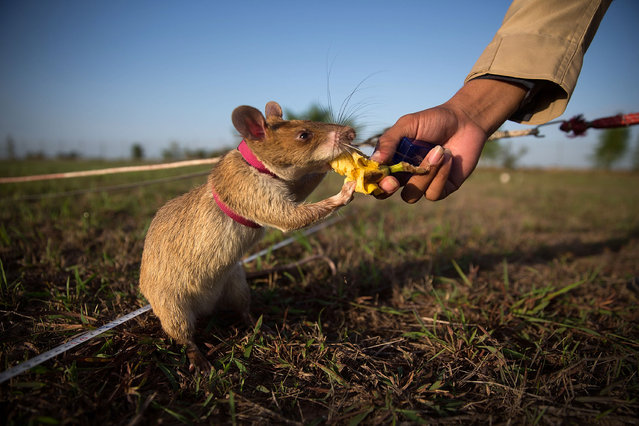
A mine detection rat is given banana as a reward after successfully identifying an inactive mine on July 2, 2015 in Siem Reap, Cambodia. (Photo by Taylor Weidman/Getty Images)

A mine detection rat is given banana as a reward after successfully identifying an inactive mine on July 2, 2015 in Siem Reap, Cambodia. The Cambodian Mine Action Center (CMAC) working with the Belgian NGO APOPO has recently begun testing the feasability of using large mine detection rats from Tanzania to help clear fields of mines and unexploded ordnance in one of the most bombed and mined countries in the world. (Photo by Taylor Weidman/Getty Images)
Details
03 Jul 2015 13:31:00
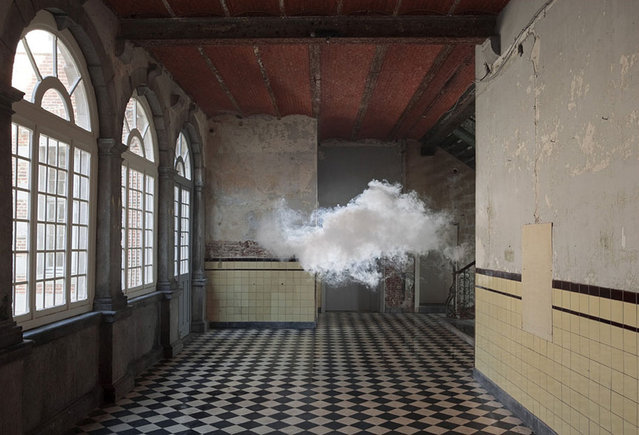
Berndnaut Smilde Creater Clouds

Dutch artist Berndnaut Smilde is interested in the ephemeral -- impermanent states of being which he documents through photographs. For Nimbus II, he used a smoke machine, combined with moisture and dramatic lighting to create a hovering indoor cloud in the empty setting of a sixteenth-century chapel in Hoorn, a small town in Holland. “I imagined walking into a museum hall with just empty walls. The place even looked deserted. On the one hand I wanted to create an ominous situation. You could see the cloud as a sign of misfortune. You could also read it as an element out of the Dutch landscape paintings in a physical form in a classical museum hall.”
Details
25 Dec 2012 12:31:00
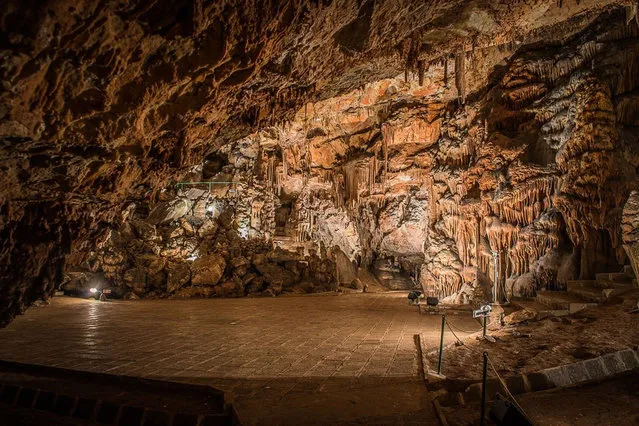
Saeva Dupka Cave

Saeva dupka (Bulgarian: Съева дупка) is a cave in Northern Bulgaria near the village of Brestnitsa, Lovech Province (43°2′N 24°11′E). Its five halls and 400 metres of corridors offer some of the most beautiful cave formations in the country. Besides that the cave has hosted many Choral music performances, thanks to the excellent acoustic conditions. Saeva dupka was named after two brothers Seyu and Sae who used it as a hiding place during the Ottoman occupation of Bulgaria. Recent excavations have showed the cave was inhabited since Roman times. Currently Saeva dupka is one of the 100 Tourist Sites of Bulgaria.
Details
20 Feb 2013 11:30:00


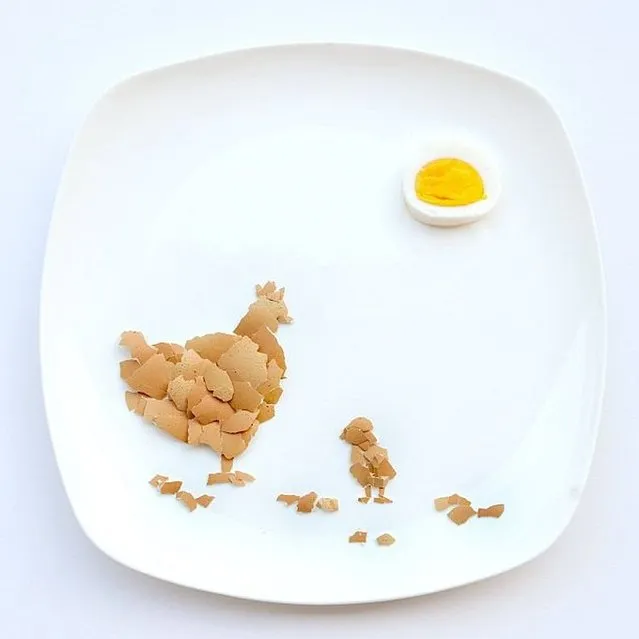
Hong Yi is a Malaysian architect and artist whose impressive portfolio includes work for Chicago’s Union Station, the Melbourne Hall of Music, and alternative medium portraits using coffee stains or tea bags. Her unorthodox approach to creation has led her to her most recent blog project. Over the course of 31 days, Hong Yi (who also goes by Red) will post art pieces made from food. So far, the pieces range from simpler ones of a watermelon sailboat to a complex recreation of Hokusai’s “The Great Wave.”
Details
29 Mar 2013 10:31:00
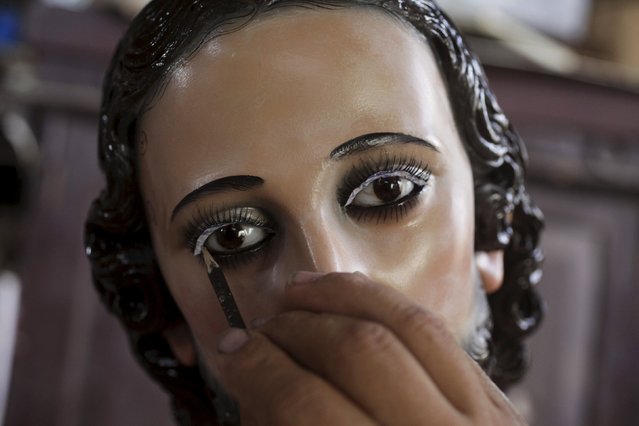
Jose Sabas Gomez pastes eyelashes to a statue of El Jesus Nazareno in his workshop in Apastepeque, El Salvador March 9, 2016. (Photo by Jose Cabezas/Reuters)

Jose Sabas Gomez pastes eyelashes to a statue of El Jesus Nazareno in his workshop in Apastepeque, El Salvador March 9, 2016. Sabas is one of a small number of artists still working on traditional religious art in El Salvador. According to him, there used to be more workshops engaged in the work of restoring statues of saints, but only four remain today as the labor-intensive craft is no longer a popular choice of profession. (Photo by Jose Cabezas/Reuters)
Details
16 Mar 2016 14:14:00
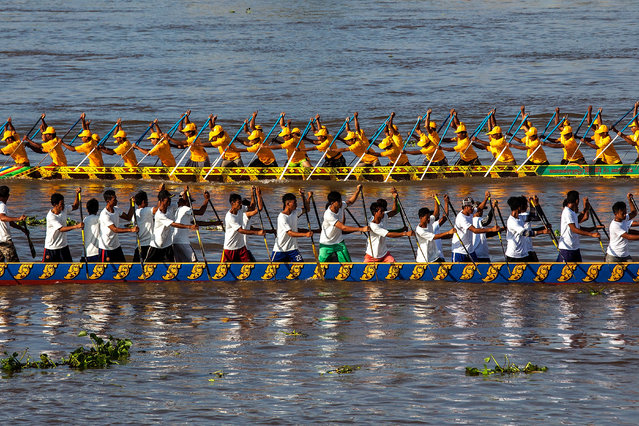
Boat crew members train on the waters of the Tonle Sap River on the morning of the first day of the Water Festival on November 13, 2016 in Phnom Penh, Cambodia. The yearly three-day Water Festival is one of the most important holidays in Cambodia and celebrates the end of the rainy season and the start of the rice harvesting. The Festival also coincides with the Tonle Sap river reversing course, which it does twice a year. Approximately 2 million people are expected to attend this year's festival, during which 259 boats and nearly 20,000 oarsmen will participate in the races. After a fatal stampede resulting in the death of some 353 people during the Water Festival in 2010, it has been cancelled four times over the past five years, with weather used as an official excuse. (Photo by Omar Havana/Getty Images)

Boat crew members train on the waters of the Tonle Sap River on the morning of the first day of the Water Festival on November 13, 2016 in Phnom Penh, Cambodia. The yearly three-day Water Festival is one of the most important holidays in Cambodia and celebrates the end of the rainy season and the start of the rice harvesting. The Festival also coincides with the Tonle Sap river reversing course, which it does twice a year. Approximately 2 million people are expected to attend this year's festival, during which 259 boats and nearly 20,000 oarsmen will participate in the races. After a fatal stampede resulting in the death of some 353 people during the Water Festival in 2010, it has been cancelled four times over the past five years, with weather used as an official excuse. (Photo by Omar Havana/Getty Images)
Details
15 Nov 2016 11:26:00