Loading...
Done
A newly born Yangtze finless porpoise (top) swims with his mother at the Hydrobiology Institute of the Chinese Academy of Sciences

“The finless porpoise (Neophocaena phocaenoides) is one of six porpoise species. In the waters around Japan, at the northern end of its range, it is known as the sunameri. A freshwater population found in the Yangtze River in China is known locally as the jiangzhu or «river pig»”. – Wikipedia

Photo: A newly born Yangtze finless porpoise (top) swims with his mother at the Hydrobiology Institute of the Chinese Academy of Sciences on June 3, 2007 in Wuhan of Hubei Province, China. (Photo by China Photos/Getty Images)
Details
20 Feb 2012 12:23:00
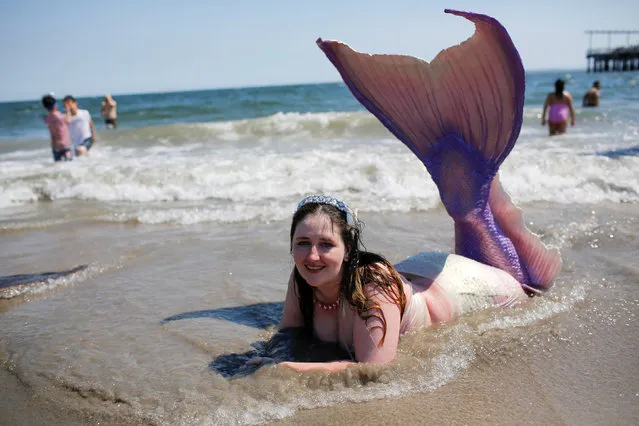
A participant dressed as a mermaid goes to swim in the beach after taking part in the Annual Mermaid Parade in Brooklyn, New York, June 18, 2016. (Photo by Eduardo Munoz/Reuters)

A participant dressed as a mermaid goes to swim in the beach after taking part in the Annual Mermaid Parade in Brooklyn, New York, June 18, 2016. The annual parade, founded in 1983, seeks to bring mythology to life for residents, create confidence in the district and to allow artistic self-expression in public, according to the parade's website. (Photo by Eduardo Munoz/Reuters)
Details
19 Jun 2016 10:26:00
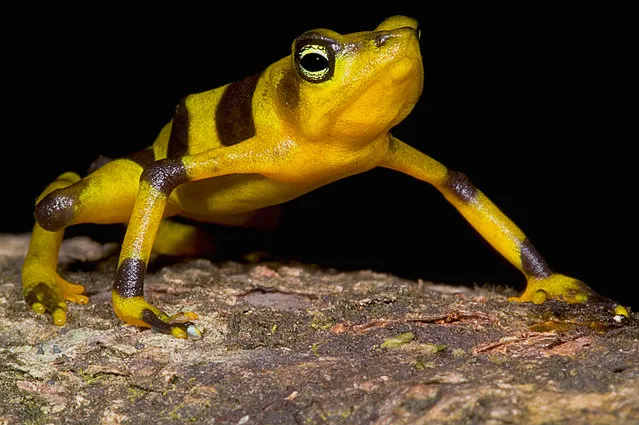
The golden harlequin toad has vanished from the wild, and only a small number live on in captivity. A fungus caused them, and many other amphibians, to die out in their home in Central America. (Photo by Danté Fenolio/The Guardian/Johns Hopkins University Press)

Wildlife photographer Danté Fenolio has headed into areas untouched by sunlight – deep seas, caves and underground – and found creatures that are exploding with colour. Here: The golden harlequin toad has vanished from the wild, and only a small number live on in captivity. A fungus caused them, and many other amphibians, to die out in their home in Central America. (Photo by Danté Fenolio/The Guardian/Johns Hopkins University Press)
Details
20 Jun 2016 12:19:00
Many of the trains and locomotives are British imports and have been eroded by the harsh Bolivian climate. (Photo by Chris Staring/Rex Features/Shutterstock)

Chris Staring photographs a mysterious train graveyard in the heart of southern Bolivia, where the skeletons of British steam locomotives and rail cars rust away on the edge of the world’s largest salt flats. More than 100 rail cars and locomotives can be found in different states of decay in the train graveyard. (Photo by Chris Staring/Rex Features/Shutterstock)
Details
03 Jul 2016 10:46:00
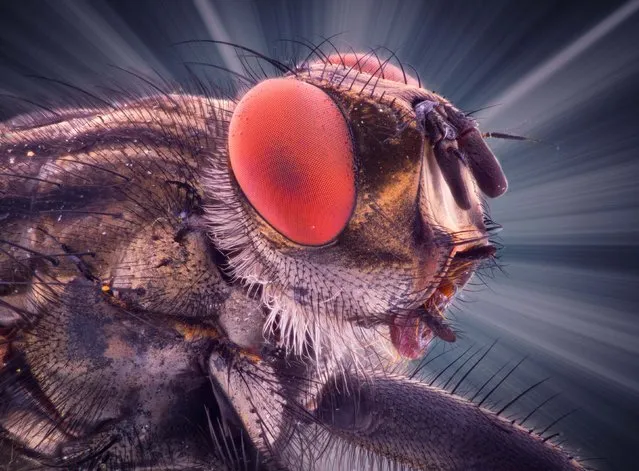
House Fly. (Photo by Kutub Uddin/Caters News)

“Creepy crawlies have become stunning examples of the natural world in these incredible close-up pictures. Photographer Kutub Uddin, 28, snapped the tiny creatures in a forest near his home of Bognor Regis over the course of the summer. Taken in close-up using special macro lenses and filters, he managed to turn house flies, damsel flies and wasps into gorgeous jeweled works of art. Kutub said: “I found the bugs in the forest near where I live when I was taking pictures”. – Cater News
Details
01 Sep 2014 10:29:00
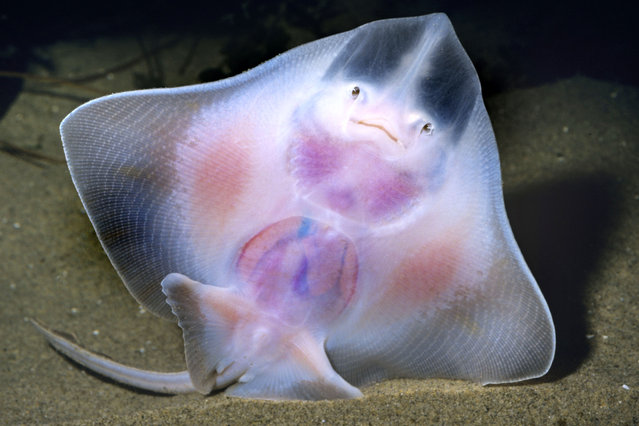
Thornback Skate. (Photo by Ken Lucas/Caters News)

“They're some of the most intriguing and complex creatures on the planet but they really do have nothing to hide – because theyre totally see-through. Transparent animals – creatures with clear glass-like skin – can be found all over the world but their very existence is still shrouded in mystery. The fascinating organisms verge on the invisible and their translucent skin often helps them elude predators”. – Caters News. Photo: Thornback Skate. (Photo by Ken Lucas/Caters News)
Details
04 Sep 2014 08:37:00
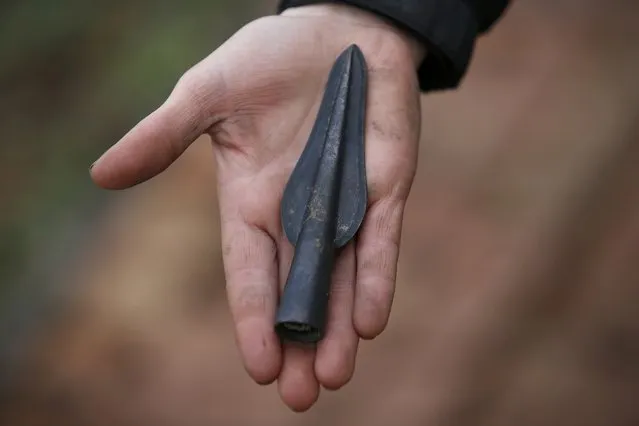
An arrow-head discovered in 2006 by Archaeologists of the University of Cambridge Archaeological Unit, is displayed by one of the team uncovering Bronze Age wooden houses, preserved in silt, from a quarry near Peterborough, Britain, January 12, 2016. (Photo by Peter Nicholls/Reuters)

An arrow-head discovered in 2006 by Archaeologists of the University of Cambridge Archaeological Unit, is displayed by one of the team uncovering Bronze Age wooden houses, preserved in silt, from a quarry near Peterborough, Britain, January 12, 2016. Archaeologists said on Tuesday they had discovered what were believed to be the best-preserved Bronze Age dwellings ever found in Britain, providing an extraordinary insight into prehistoric life from 3,000 years ago. (Photo by Peter Nicholls/Reuters)
Details
14 Jan 2016 08:00:00
Queen of the North (created by Emilie Steele and Sebastian Dell’Uva) is one of the more intense rooms, with the bed surrounded by the head and hands of an icy goddess. (Photo by Asaf Kliger/IceHotel/The Guardian)

Founded in 1989, the Icehotel in Swedish Lapland is built from the snow up each year, using ice from the local river. The rooms are designed by international artists and this year feature spacemen and an ice queen. The hotel has 35 suites, featuring ice carvings designed by 36 different artists from 17 countries. (Photo by Asaf Kliger/IceHotel/The Guardian)
Details
20 Dec 2017 07:11:00