Loading...
Done
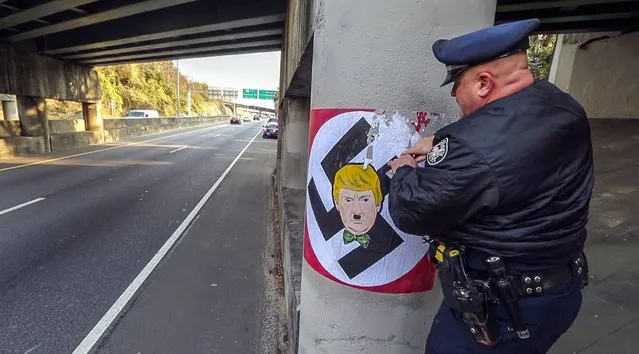
A photo provided by the Atlanta Journal-Constitution shows Atlanta police officer T. R. Coxe removing painted material of a large swastika featuring a likeness of Republican presidential candidate, Donald Trump, along the northbound Buford Highway Connector just south of the Piedmont exit, in Atlanta, Georgia, USA, 09 December 2015. Just days after Donald Trump's call to ban Muslims from entering the United States, someone painted large swastikas featuring the Republican presidential candidate's face on at least two northeast Atlanta bridge supports. (Photo by John Spink/EPA/AJC)

A photo provided by the Atlanta Journal-Constitution shows Atlanta police officer T. R. Coxe removing painted material of a large swastika featuring a likeness of Republican presidential candidate, Donald Trump, along the northbound Buford Highway Connector just south of the Piedmont exit, in Atlanta, Georgia, USA, 09 December 2015. Just days after Donald Trump's call to ban Muslims from entering the United States, someone painted large swastikas featuring the Republican presidential candidate's face on at least two northeast Atlanta bridge supports. The symbol, which includes a cartoon of Trump sporting a Hitler-like mustache, was painted along the Buford Highway Connector. A second, similar image was found on a concrete bridge support on nearby Piedmont Road. Trump said in a statement released on 07 December that there should be a total and complete shutdown of Muslims entering the United States. (Photo by John Spink/EPA/AJC)
Details
11 Dec 2015 11:49:00
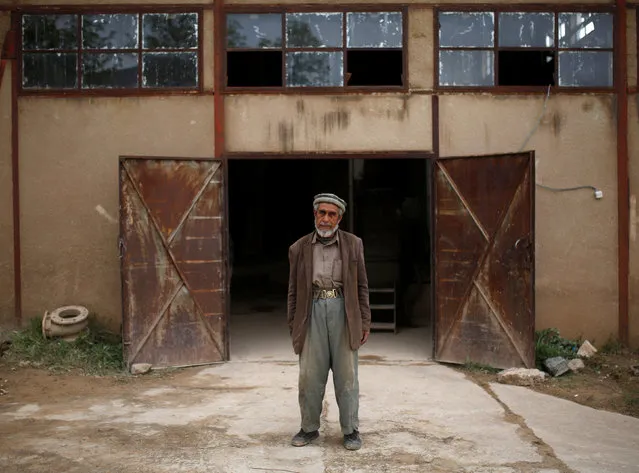
A worker at the Jabal Saraj cement factory poses for a photograph in Jabal Saraj, north of Kabul, Afghanistan April 19, 2016. (Photo by Ahmad Masood/Reuters)

A worker at the Jabal Saraj cement factory poses for a photograph in Jabal Saraj, north of Kabul, Afghanistan April 19, 2016. In an area desperately short of industry and jobs, local workers hope that the relaunch of the plant in Jabal Saraj, built by Czech engineers in 1957 and closed down by the Taliban in 1995, can show that Afghanistan's shattered industry can climb back to its feet after decades of war and destruction. But the outdated state-owned plant some 75 kilometres outside Kabul also shows how far it has to go before that promise can be achieved and there are serious questions over whether it has a viable future unless a new, modern facility is built to replace it. (Photo by Ahmad Masood/Reuters)
Details
31 May 2016 11:29:00
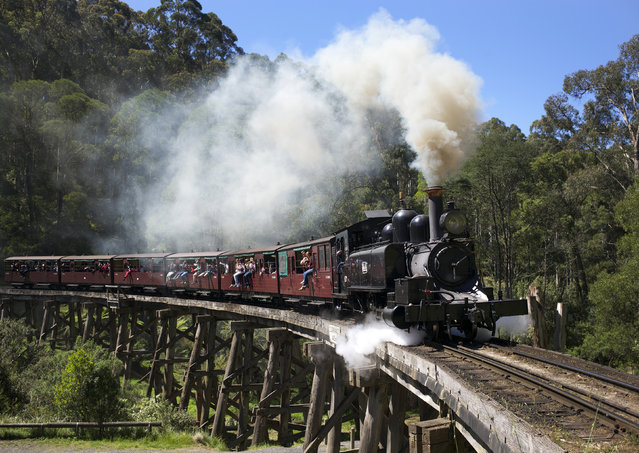
A Puffing Billy steam train hauled by locomotive 14A crosses the Monbulk Creek trestle after leaving Belgrave station near Melbourne, October 20, 2014. (Photo by Jason Reed/Reuters)

A Puffing Billy steam train hauled by locomotive 14A crosses the Monbulk Creek trestle after leaving Belgrave station near Melbourne, October 20, 2014. While the discovery of steam power 200 years ago powered the Industrial Revolution, the world long ago shunted most steam trains onto the sidings of history. (Photo by Jason Reed/Reuters)
Details
04 Nov 2014 12:21:00
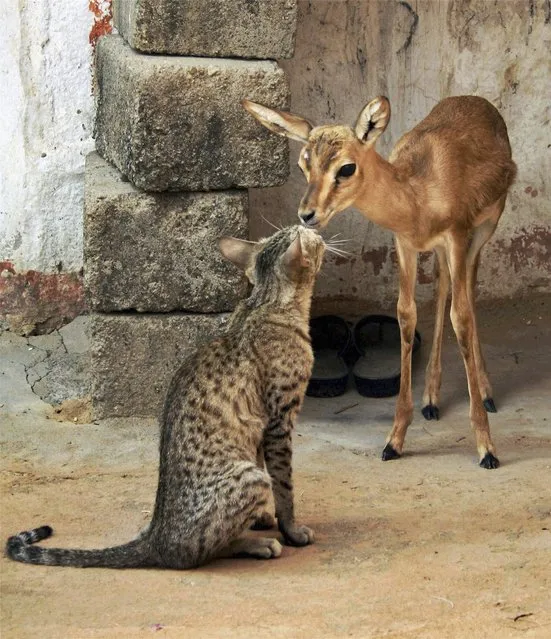
In this Wednesday, May 23, 2012 photograph, a young deer and a cat share a moment in Feench village near Jodhpur, Rajasthan state, India

In this Wednesday, May 23, 2012 photograph, a young deer and a cat share a moment in Feench village near Jodhpur, Rajasthan state, India. (Photo by AP Photo)
Details
16 Jun 2012 11:07:00
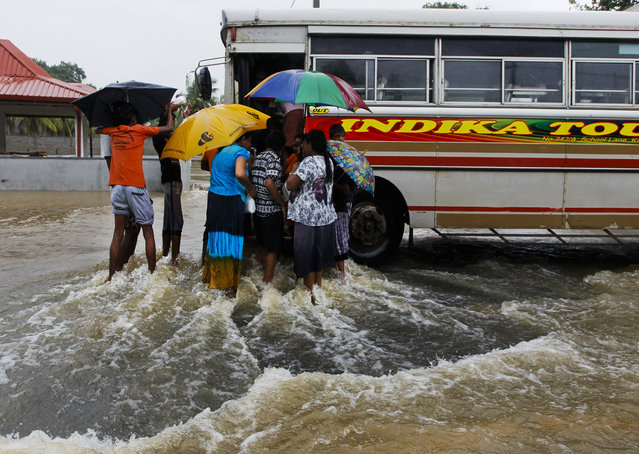
Sri Lankan flood victims flock around a bus to receive food parcels on a inundated road in Colombo, Sri Lanka, Tuesday, May 17, 2016. The Disaster Management Center said that 114 homes have been destroyed and more than 137,000 people have been evacuated to safe locations as heavy rains continue. (Photo by Eranga Jayawardena/AP Photo)

Sri Lankan flood victims flock around a bus to receive food parcels on a inundated road in Colombo, Sri Lanka, Tuesday, May 17, 2016. The Disaster Management Center said that 114 homes have been destroyed and more than 137,000 people have been evacuated to safe locations as heavy rains continue. (Photo by Eranga Jayawardena/AP Photo)
Details
18 May 2016 14:31:00
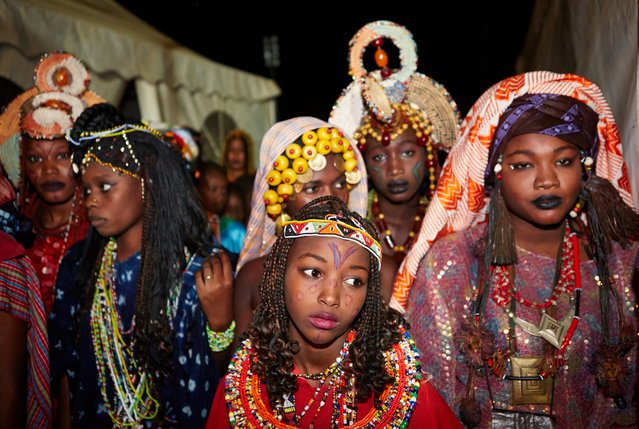
Dancers wait to perform on stage. (Photo by Andy Hall/The Observer)

Photographer Andy Hall joins the thousands of fans from west Africa who have gathered for Baaba Maal's annual Blues du Fleuve festival in Senegal. Here: Dancers wait to perform on stage. (Photo by Andy Hall/The Observer)
Details
04 Jan 2016 08:03:00
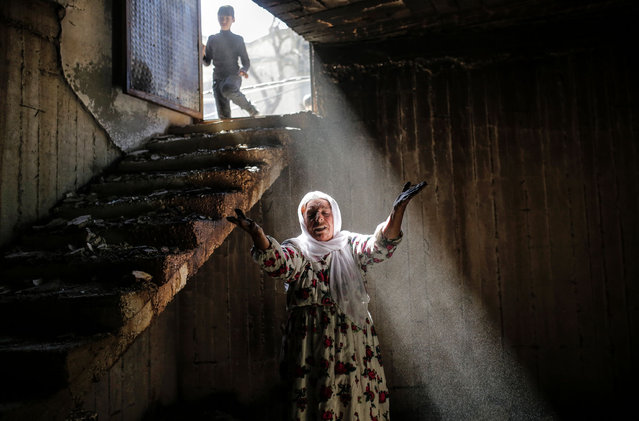
A woman reacts while walking among the ruins of damaged buildings following heavy fighting between government troops and Kurdish fighters, on March 2, 2016 in the southeastern Turkey Kurdish town of Cizre, near the border with Syria and Iraq. Thousands in Turkey's Kurdish-majority town of Cizre started returning to their homes today after authorities partially lifted a curfew in place since December for a controversial military operation to root out separatist rebels. (Photo by Yasin Akgül/AFP Photo)

A woman reacts while walking among the ruins of damaged buildings following heavy fighting between government troops and Kurdish fighters, on March 2, 2016 in the southeastern Turkey Kurdish town of Cizre, near the border with Syria and Iraq. Thousands in Turkey's Kurdish-majority town of Cizre started returning to their homes today after authorities partially lifted a curfew in place since December for a controversial military operation to root out separatist rebels. (Photo by Yasin Akgül/AFP Photo)
Details
03 Mar 2016 11:29:00
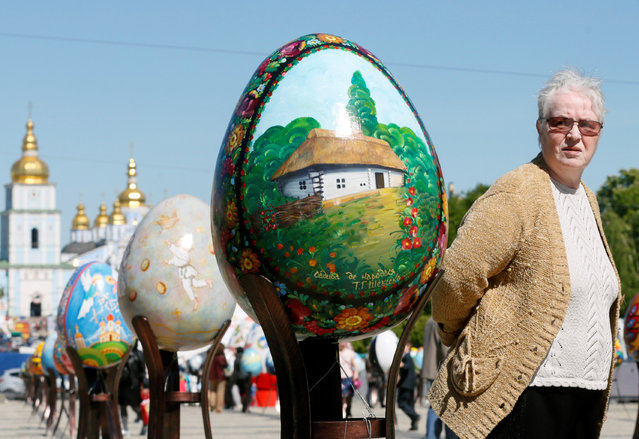
A woman looks at traditional Ukrainian Easter eggs “Pysanka”, installed as part of the upcoming celebrations of Easter, in central Kiev, Ukraine, April 29, 2016. A pysanka is a Ukrainian Easter egg, decorated with traditional Ukrainian folk designs using a wax-resist (batik) method. The word pysanka comes from the verb pysaty, “to write”, as the designs are not painted on, but written with beeswax. Many other eastern European ethnic groups decorate eggs using wax resist for Easter. These include the Belarusians, Bulgarians, Croats, Czechs, Hungarians, Lithuanians, Poles, Romanians, Serbs, Slovaks, Slovenes and Sorbs. (Photo by Valentyn Ogirenko/Reuters)

A woman looks at traditional Ukrainian Easter eggs “Pysanka”, installed as part of the upcoming celebrations of Easter, in central Kiev, Ukraine, April 29, 2016. A pysanka is a Ukrainian Easter egg, decorated with traditional Ukrainian folk designs using a wax-resist (batik) method. The word pysanka comes from the verb pysaty, “to write”, as the designs are not painted on, but written with beeswax. Many other eastern European ethnic groups decorate eggs using wax resist for Easter. These include the Belarusians, Bulgarians, Croats, Czechs, Hungarians, Lithuanians, Poles, Romanians, Serbs, Slovaks, Slovenes and Sorbs. (Photo by Valentyn Ogirenko/Reuters)
Details
30 Apr 2016 09:00:00