Walkers marvel at a fog bow over Curbar Edge, Derbyshire in the last decade of October 2023. The phenomenon is similar to a rainbow, but because the water droplets that cause fog are so small, its colours are very weak. (Photo by Richard Bowring/Animal News Agency)
The Prince Albert Cairn, built in 1862 by Queen Victoria, is surrounded by snow and ice, near Balmoral, Aberdeenshire, Scotland, Friday November 22, 2024. (Photo by Jane Barlow/PA Wire via AP Photo)
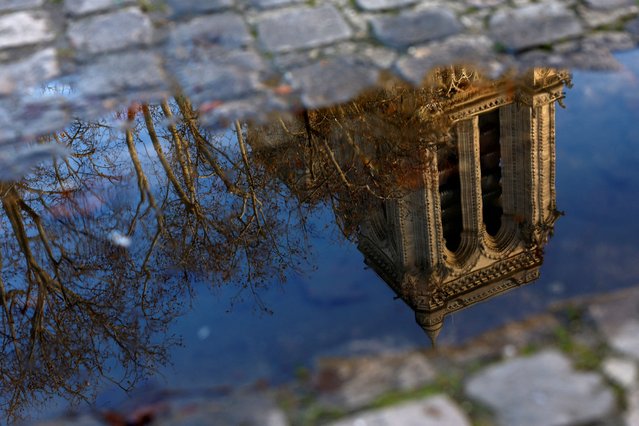
The towers of the Notre-Dame de Paris Cathedral, which was ravaged by a fire in 2019, are reflected in a puddle ahead of the reopening ceremonies, in Paris, France, on December 4, 2024. (Photo by Stephanie Lecocq/Reuters)
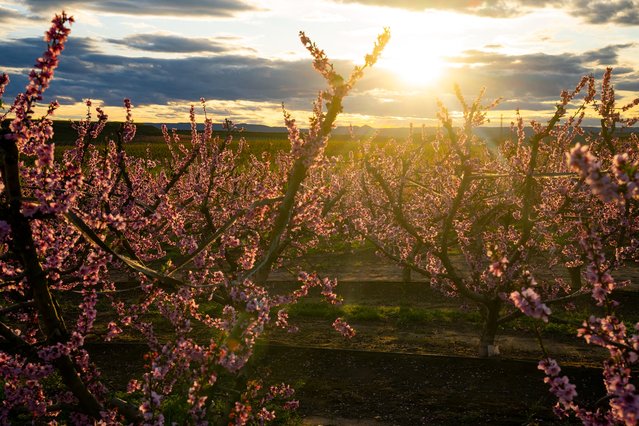
Rows of blossoming peach trees line the fields of Aitona, in the province of Lleida, north eastern Spain, on March 22, 2025. Every year in March the thousands of hectares of blossoming peach trees create a sort of nature tourism with hundreds of people visiting the area to take in the colorful blossoms. (Photo by Josep Lago/AFP Photo)
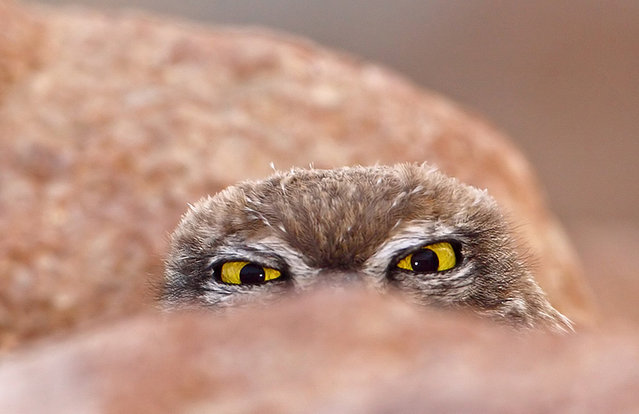
The Little Owl (Athene noctua) is a bird which is resident in much of the temperate and warmer parts of Europe, Asia east to Korea, and north Africa. It is not native to Great Britain, but was first introduced in 1842, by Thomas Powys and is now naturalised there. It was also successfully introduced to the South Island of New Zealand in the early 20th century.
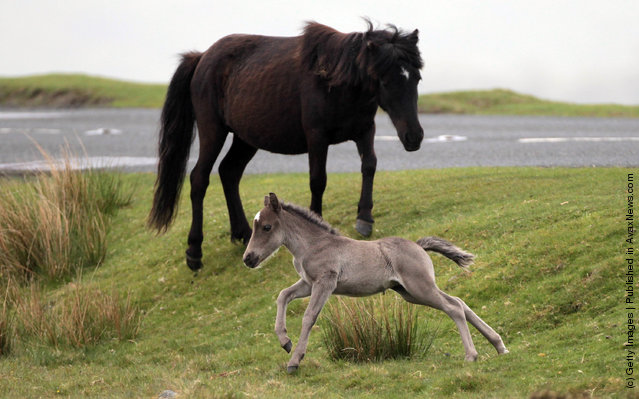
A Dartmoor Hill pony foal runs on the moor on Dartmoor on May 17, 2011 in Princetown England. Although a tourist attraction, especially during the foaling season and often seen as part of the landscape of Dartmoor, many ponies face an uncertain future due to unsustainable breeding and their falling market values. The charity South West Equine Protection estimates that last year 1500 ponies were slaughtered – with many being sold for lion meat to nearby zoos. Along with other equine charities, they are calling for the removal of stallions from the moor to bring numbers down to sustainable levels. (Photo by Matt Cardy/Getty Images)
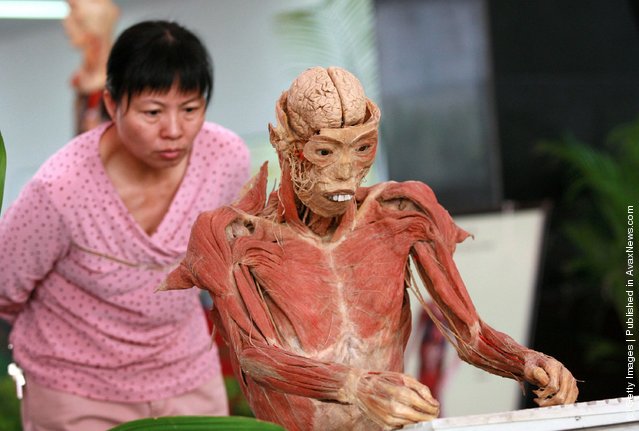
A visitor views a human body specimen during the “Human Body's Wonder Scientific Travelling Exhibition” at the Haikou Gymnasium April 30, 2006 in Haikou of Hainan Province, China. The exhibition displays 13 complete real human body specimens and about 300 pieces of small samples, such as organs, skin, etc with the purpose to promote science and help people know more about their bodies. (Photo by China Photos/Getty Images)