Loading...
Done
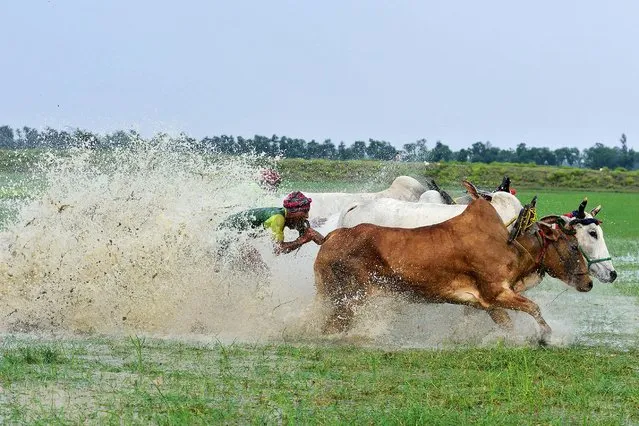
Moichara or Bull race is a rural festival where a pair of bulls race each other during the monsoon season. This race is performed by a farmer in Parganas, India on July 4, 2021. (Photo by Sumit Sanyal/SOPA Images/Rex Features/Shutterstock)

Moichara or Bull race is a rural festival where a pair of bulls race each other during the monsoon season. This race is performed by a farmer in Parganas, India on July 4, 2021. (Photo by Sumit Sanyal/SOPA Images/Rex Features/Shutterstock)
Details
14 Jul 2021 09:47:00
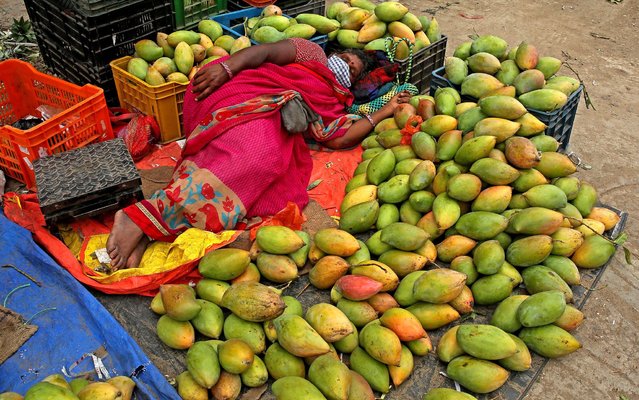
A woman taking a nap on mangoes at city market area after the city eased the lockdown in Bangalore, India 12 July 2021. The Karnataka government eases in covid-19 related lockdown restrictions in the wake of lower coronavirus cases and positivity rate falling below 5% percent. The Karnataka state government administering record 2.5-crore doses till date since the vaccination drive was launched across the state on January 16, Karnataka ranked first in South India in inoculating maximum number of its eligible population, said state Health Minister K. Sudhakar. (Photo by Jagadeesh N.V./EPA/EFE)

A woman taking a nap on mangoes at city market area after the city eased the lockdown in Bangalore, India 12 July 2021. The Karnataka government eases in covid-19 related lockdown restrictions in the wake of lower coronavirus cases and positivity rate falling below 5% percent. The Karnataka state government administering record 2.5-crore doses till date since the vaccination drive was launched across the state on January 16, Karnataka ranked first in South India in inoculating maximum number of its eligible population, said state Health Minister K. Sudhakar. (Photo by Jagadeesh N.V./EPA/EFE)
Details
19 Jul 2021 09:24:00
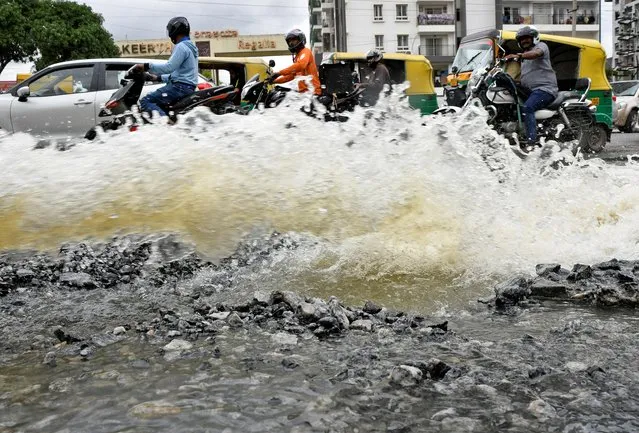
Traffic moves as water is pumped out of an inundated residential area following torrential rains in Bengaluru, India on September 7, 2022. (Photo by Samuel Rajkumar/Reuters)

Traffic moves as water is pumped out of an inundated residential area following torrential rains in Bengaluru, India on September 7, 2022. (Photo by Samuel Rajkumar/Reuters)
Details
14 Sep 2022 05:17:00
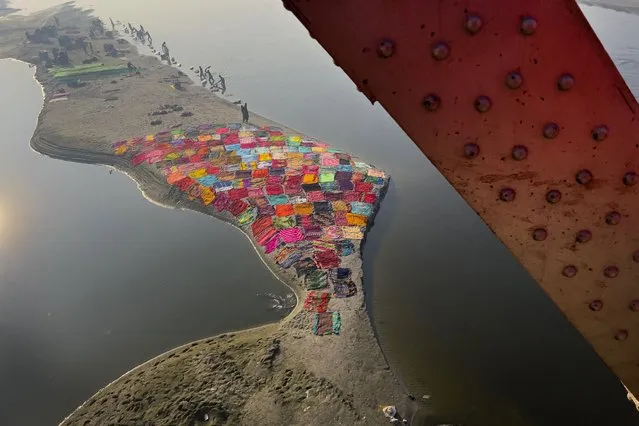
Washermen put their clothes out to dry on the banks of the River Yamuna as seen from a railway bridge near Agra, India, Saturday, December 17, 2022. (Photo by Rajesh Kumar Singh/AP Photo)

Washermen put their clothes out to dry on the banks of the River Yamuna as seen from a railway bridge near Agra, India, Saturday, December 17, 2022. (Photo by Rajesh Kumar Singh/AP Photo)
Details
22 Dec 2022 05:33:00
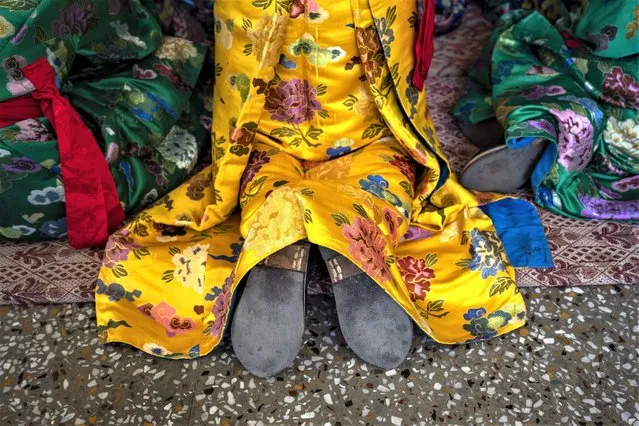
An exile Tibetan artisan waits to perform a traditional dance after an early morning prayer session to usher in the Year of the Water Hare in Dharamshala, India, Tuesday, February 21, 2023. (Photo by Ashwini Bhatia/AP Photo)

An exile Tibetan artisan waits to perform a traditional dance after an early morning prayer session to usher in the Year of the Water Hare in Dharamshala, India, Tuesday, February 21, 2023. (Photo by Ashwini Bhatia/AP Photo)
Details
09 Mar 2023 03:53:00
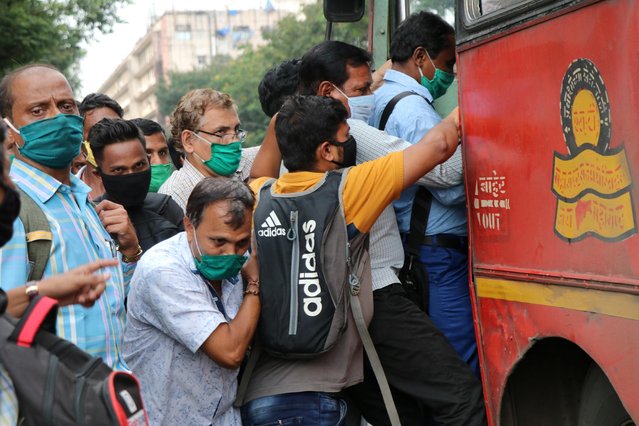
People board a passenger bus during rush hour at a bus terminal, amidst the coronavirus disease (COVID-19) outbreak, in Mumbai, India, September 9, 2020. (Photo by Niharika Kulkarni/Reuters)

People board a passenger bus during rush hour at a bus terminal, amidst the coronavirus disease (COVID-19) outbreak, in Mumbai, India, September 9, 2020. (Photo by Niharika Kulkarni/Reuters)
Details
15 Sep 2020 00:05:00
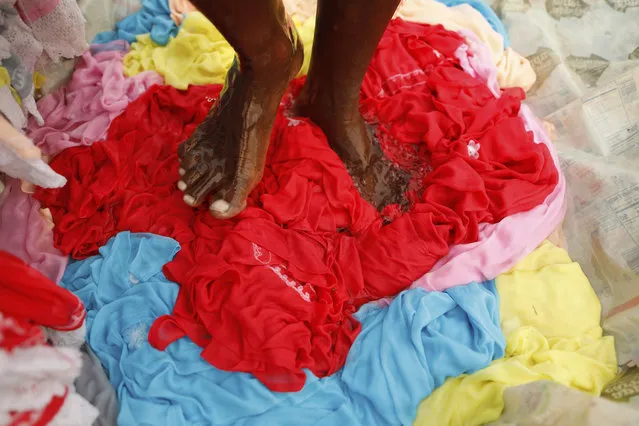
A dhobi, or a washerman washes cloths on the banks of the River Gomti in Lucknow, India, Saturday, September 12, 2020. Dhobis are traditional laundry workers who wash clothes by hand and dry them in the sun, an occupation which has been in existence for generations. Most cities in India have a Dhobi Ghat, or washermen's area, where the city's pile of clothes is laundered. This practice is still popular in India, despite of modern technology. Around 1,000 families work in Lucknow's Dhobi Ghat. However, in light of the novel coronavirus, their wages have decreased drastically. With each family earning around US$100-200 per month. (Photo by Rajesh Kumar Singh/AP Photo)

A dhobi, or a washerman washes cloths on the banks of the River Gomti in Lucknow, India, Saturday, September 12, 2020. Dhobis are traditional laundry workers who wash clothes by hand and dry them in the sun, an occupation which has been in existence for generations. Most cities in India have a Dhobi Ghat, or washermen's area, where the city's pile of clothes is laundered. This practice is still popular in India, despite of modern technology. Around 1,000 families work in Lucknow's Dhobi Ghat. However, in light of the novel coronavirus, their wages have decreased drastically. With each family earning around US$100-200 per month. (Photo by Rajesh Kumar Singh/AP Photo)
Details
25 Sep 2020 00:03:00
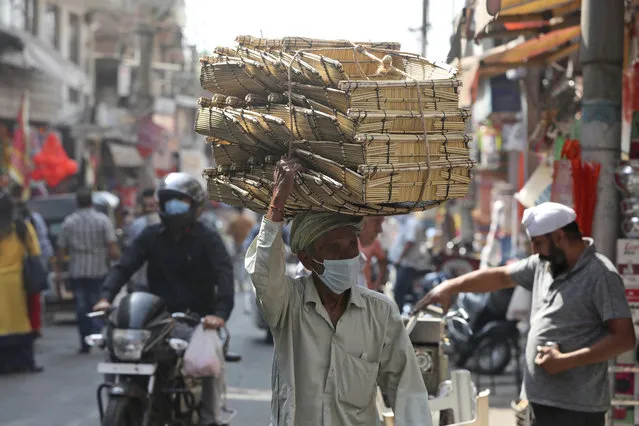
An Indian villager wearing a face mask as a precaution against the coronavirus sells his ware at market in Jammu, India, Friday, October 9, 2020. (Photo by Channi Anand/AP Photo)

An Indian villager wearing a face mask as a precaution against the coronavirus sells his ware at market in Jammu, India, Friday, October 9, 2020. (Photo by Channi Anand/AP Photo)
Details
14 Oct 2020 00:05:00