Mount Sinabung continues to spew thick smoke into the air in Karo, North Sumatra on October 30, 2020. (Photo by Albert Ivan Damanik/Anadolu Agency via Getty Images)
A child poses for a photo inside a life-sized doll box after watching the “Barbie” film at the SM North Edsa in Quezon City on July 19, 2023. (Photo by Jam Sta Rosa/AFP Photo)
Woman enjoying the sun on one of Maui's black sand beaches, Hawaii, United States of America, North America on February 25, 2022. (Photo by Laura Grier/Robert Harding RF via AFP Photo)
Locals harvest their potatoes as Mount Sinabung spews volcanic ash in Karo, North Sumatra province, Indonesia on August 10, 2020. (Photo by Sastrawan Ginting/Antara Foto via Reuters)
A hand-painted sign encouraging citizens to vote, sits with Halloween decorations in the front yard of a home in Chapel Hill, North Carolina, U.S. October 20, 2024. (Photo by Jonathan Drake/Reuters)
Early morning swimmers at Cullercoats Bay on the north east coast of England on Sunday, December 29, 2024. (Photo by Owen Humphreys/PA Images via Getty Images)
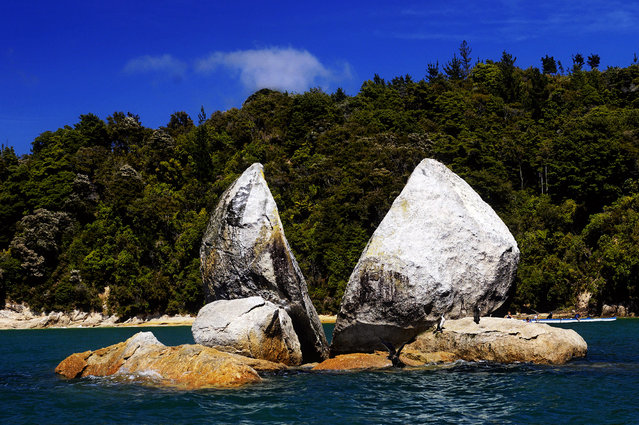
Split Apple Rock is a geological rock formation in The Tasman Bay off the northern coast of the South Island of New Zealand. Made of granite, it is in the shape of an apple which has been cut in half. It is a popular tourist attraction in the waters of the Tasman Sea approximately 50 metres off the coast between Kaiteriteri and Marahau. The rock sits in shallow water at low tide and is accessible by wading. It is also a point of interest for the many tourist boats and pleasure craft which operate along the shores of the Abel Tasman National Park. The cleft to produce two sides of the 'apple' was a natural occurrence. It is unknown when this happened and therefore the cleaving of the rock has attracted mythological explanations.