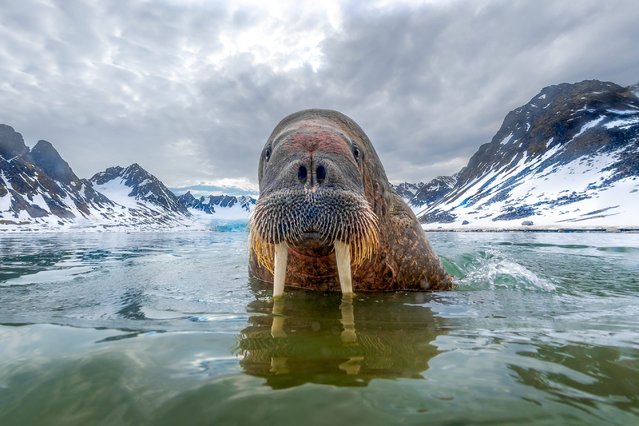
A walrus takes centre stage after barging another out of the way to be in a photograph in Svalbard, between mainland Norway and the North Pole in January 2025. (Photo by Olav Thokle/Syndicated Photos/Solent News)
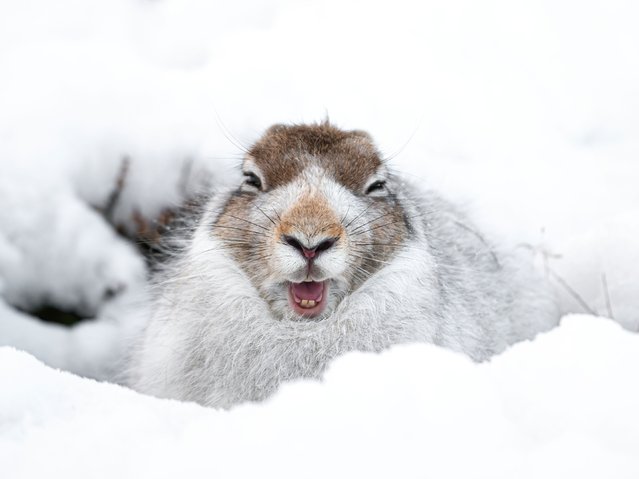
The hare was actually yawning and stretching but, looking back at the photos, it does look like it was laughing — probably at my husband and I as we had been sat there in the freezing conditions for about five hours just waiting for this kind of behaviour in Cairngorms, Scotland in the last decade of February 2025. (Photo by Michelle Coyle/Solent News & Photo Agency)
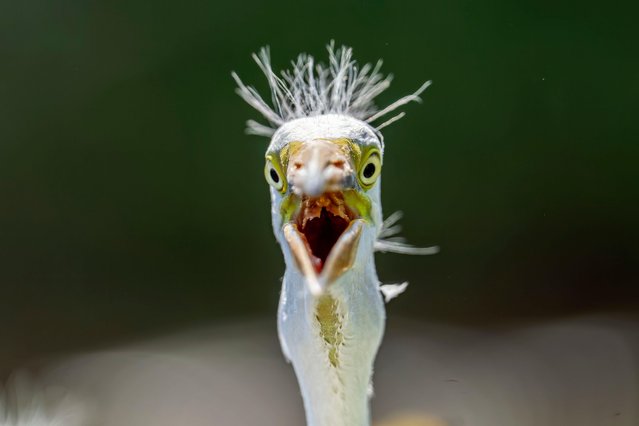
An egret in the second decade of April 2025 cools off in the Florida heat by gular fluttering, rapidly vibrating its throat muscles with an open beak. The mechanism helps to dissipate heat through evaporation. (Photo by Ronen Tivony/ZUMA Press Wire/Alamy Live News)
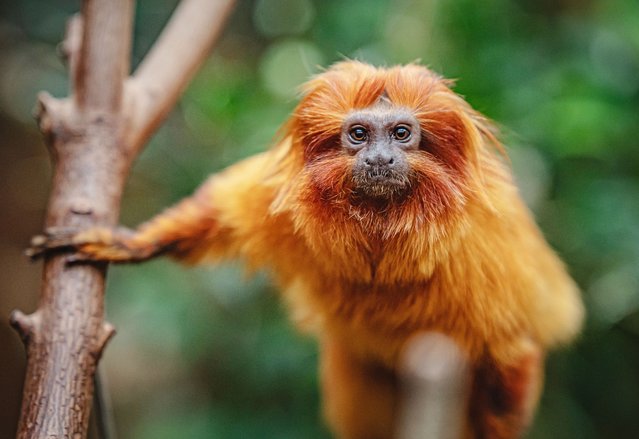
Chester Zoo in the second decade of August 2025 has welcomed a pair of tiny golden lion tamarins, named George, seven, and Leaf, 12. (Phoot by Chester Zoo)
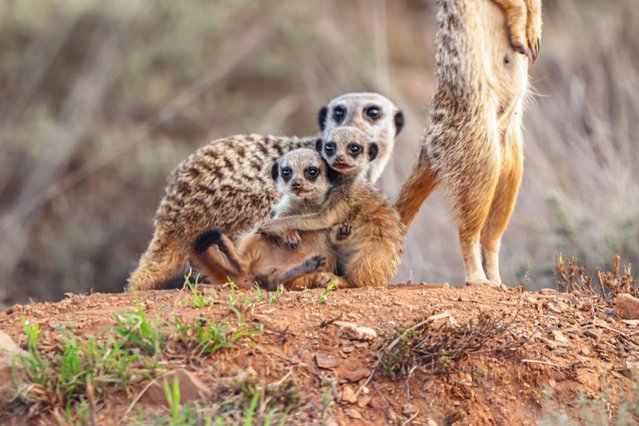
A meerkat stands guard as her pups cuddle at Mountain Zebra National Park, South Africa early November 2025. (Photo by Nadine Leonard/Two Point O Media)
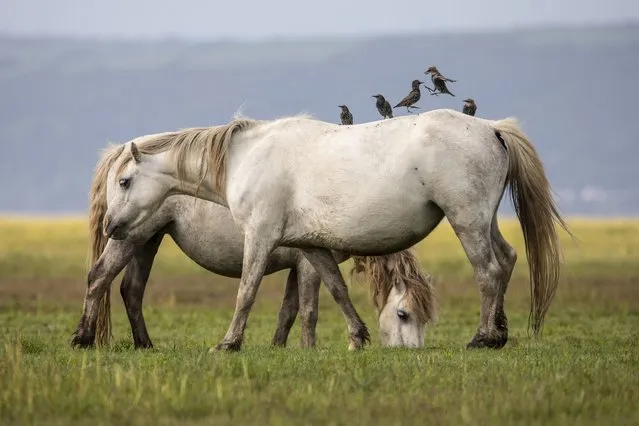
Semi-feral, conservation ponies, graze on the salt marsh's of Gower, Swansea, Wales, United Kingdom on September 7, 2022. (Photo by Joann Randles/Cover Images)
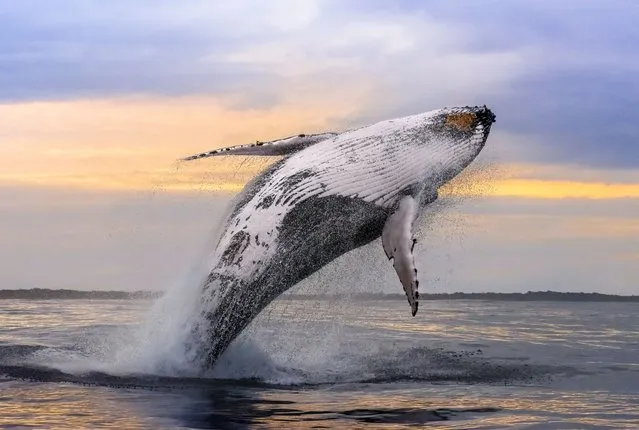
A 40-tonne humpback launching out of the water in an incredible breach in New South Wales, Australia on October 2022 in front of a sunset. The humpback whale can grow up to 56 feet long and typically covers 9,900 miles a year as it travels through the oceans of the world. Humpback whales are a species of Baleen whale, meaning they don't have teeth. Instead, they have baleen which helps them to filter feed. Their main source of food is krill or tiny bait fish. (Photo by Jodie Lowe/Media Drum Images)