Loading...
Done
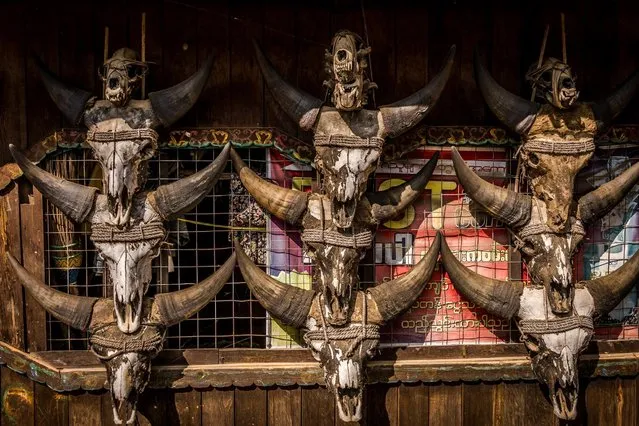
Traditional sculptures by Chin tribe in, Mindat, Myanmar, November 2016. (Photo by Teh Han Lin/Barcroft Images)

Traditional sculptures by Chin tribe in, Mindat, Myanmar, November 2016. In the mountains of Myanmar lives a tribe where the women have taken a unique approach to their beauty regime by decorating their faces with tattoos. The Chin people in the remote mountain town of Mindat, have been marking women in the area with intricate face tattoos for centuries. (Photo by Teh Han Lin/Barcroft Images)
Details
28 Dec 2016 07:01:00
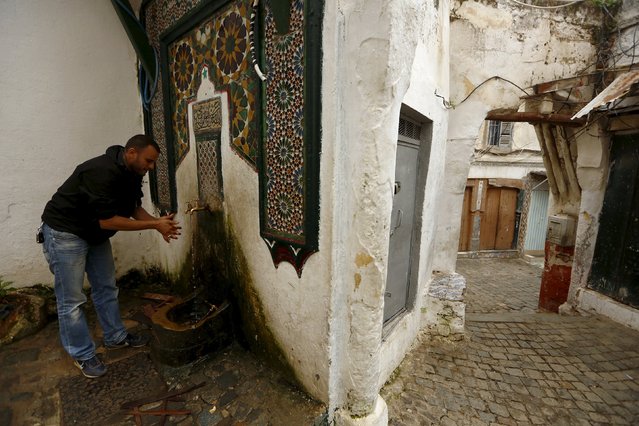
A man performs ablution using water at an old fountain before performing prayers in the old city of Algiers Al Casbah, Algeria December 3, 2015. (Photo by Zohra Bensemra/Reuters)

A man performs ablution using water at an old fountain before performing prayers in the old city of Algiers Al Casbah, Algeria December 3, 2015. The Algiers Casbah is a UNESCO World heritage site that includes the Sidi Ramdane mosque and former fortress, 10 centuries old. Decay from the passing years, as well as earthquake damage in 2003, leads some to consider a move to modern apartments with financial backing from the government. Others refuse to leave a neighbourhood they have called home for decades. (Photo by Zohra Bensemra/Reuters)
Details
22 Jan 2016 11:00:00
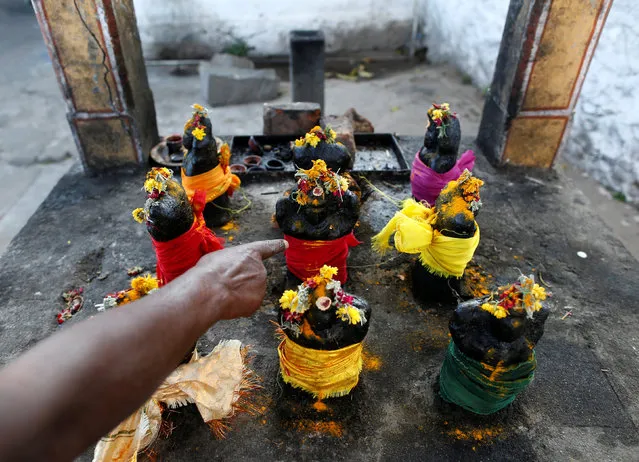
Paramasivan points to the statue of sun god Surya at a temple outside the Kodaikanal Solar Observatory, India, February 5, 2017. (Photo by Danish Siddiqui/Reuters)

Paramasivan points to the statue of sun god Surya at a temple outside the Kodaikanal Solar Observatory, India, February 5, 2017. In the early morning darkness, Devendran P. walks up a hill to a solar observatory in India's southern hill town of Kodaikanal, trudging the same path his father and grandfather walked in a century-old family tradition of studying the sun. (Photo by Danish Siddiqui/Reuters)
Details
24 Feb 2017 00:03:00
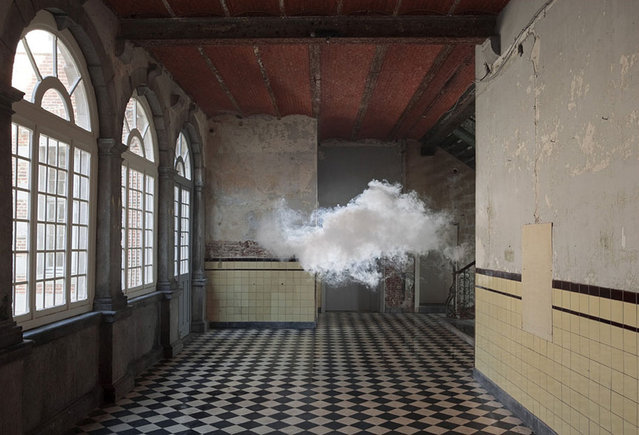
Berndnaut Smilde Creater Clouds

Dutch artist Berndnaut Smilde is interested in the ephemeral -- impermanent states of being which he documents through photographs. For Nimbus II, he used a smoke machine, combined with moisture and dramatic lighting to create a hovering indoor cloud in the empty setting of a sixteenth-century chapel in Hoorn, a small town in Holland. “I imagined walking into a museum hall with just empty walls. The place even looked deserted. On the one hand I wanted to create an ominous situation. You could see the cloud as a sign of misfortune. You could also read it as an element out of the Dutch landscape paintings in a physical form in a classical museum hall.”
Details
25 Dec 2012 12:31:00
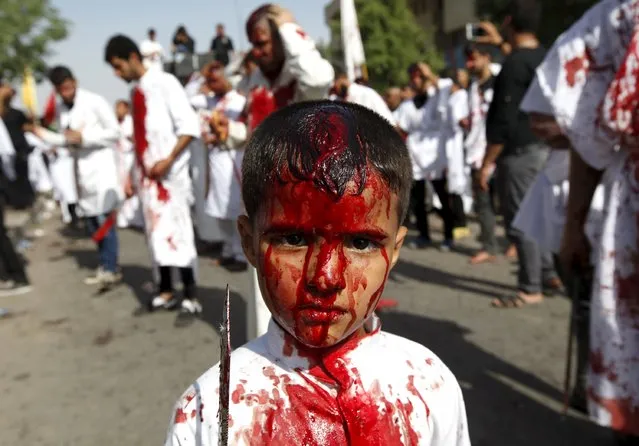
An Iraqi Shi'ite boy poses for a photograph as Iraq Shi'ite Muslims commemorate Ashura in Baghdad, October 24, 2015. (Photo by Ahmed Saad/Reuters)

An Iraqi Shi'ite boy poses for a photograph as Iraq Shi'ite Muslims commemorate Ashura in Baghdad, October 24, 2015. Ashura, which falls on the 10th day of the Islamic month of Muharram, commemorates the death of Imam Hussein, grandson of Prophet Mohammad, who was killed in the seventh century battle of Kerbala. (Photo by Ahmed Saad/Reuters)
Details
27 Oct 2015 08:00:00
A staff member holds “The Henry Graves Supercomplication” handmade watch by Patek Philippe which was completed in 1932 at Sotheby's auction house in London October 21, 2014. (Photo by Suzanne Plunkett/Reuters)

What makes a watch the most valuable in the world? It’s supercomplicated – literally. In 1925 banker Henry Graves Jr. (considered the greatest watch collector of the 20th century) commissioned Patek Philippe to create a unique gold pocket watch. When Graves finally received it – eight years later – it was the most complex timepiece ever created by human hands... (Photo by Suzanne Plunkett/Reuters)
Details
21 Oct 2014 13:23:00
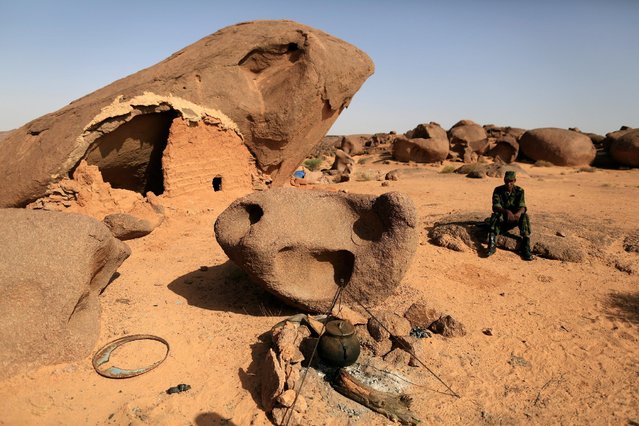
A Polisario fighter sits on a rock at a forward base on the outskirts of Tifariti, Western Sahara, September 9, 2016. At a rocky outpost in Western Sahara, a new generation of soldiers who have never known war are mobilising as tensions resurface in one of Africa's oldest disputes after a quarter century of uneasy peace. Young Sahrawi troops man new desert posts for the Polisario Front, which for more than 40 years has sought independence for the vast desert region - first in a guerrilla war against Morocco and then politically since a ceasefire deal in 1991. Now a standoff with Morocco, which controls the majority of Western Sahara, is renewing pressure for a diplomatic solution to ensure foot soldiers don't return to fighting as the last generation of commanders once did. The standoff since August has brought Moroccan and Polisario forces within 200 metres of each other in a narrow strip of land near the Mauritanian border. Rich in phosphate, Western Sahara has been contested since 1975 when Spanish colonial powers left. Morocco claimed the territory and fought the 16-year war with Polisario. (Photo by Zohra Bensemra/Reuters)

A Polisario fighter sits on a rock at a forward base on the outskirts of Tifariti, Western Sahara, September 9, 2016. At a rocky outpost in Western Sahara, a new generation of soldiers who have never known war are mobilising as tensions resurface in one of Africa's oldest disputes after a quarter century of uneasy peace. (Photo by Zohra Bensemra/Reuters)
Details
04 Nov 2016 12:09:00
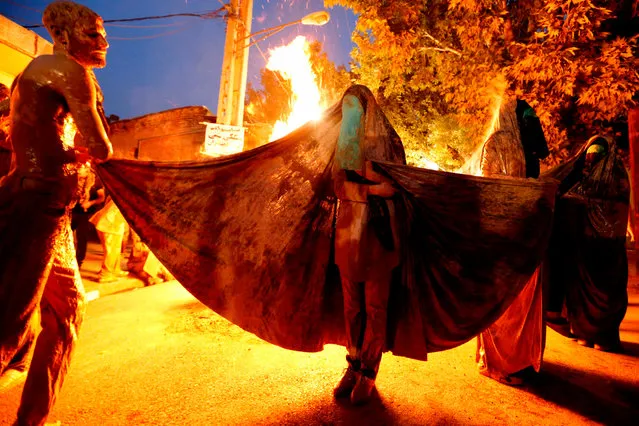
Iranian Shiite Muslim women gather around a bonfire after rubbing mud on their body during the “Kharrah Mali” (Mud Rubbing) ritual to mark the Ashura religious ceremony in the city of Khorramabad, some 470 kms southwest of Tehran, early in the morning on October 1, 2017. “Khrreh Mali” or “Mud Rubbing” is a ritual that is held in the city of Khorramabad every year to commemorate the seventh century slaying of Prophet Mohammed' s grandson Imam Hussein, in which Iranian men roll over in mud and dry themselves by gathering around the bonfires before flagellating themselves. (Photo by Atta Kenare/AFP Photo)

Iranian Shiite Muslim women gather around a bonfire after rubbing mud on their body during the “Kharrah Mali” (Mud Rubbing) ritual to mark the Ashura religious ceremony in the city of Khorramabad, some 470 kms southwest of Tehran, early in the morning on October 1, 2017. “Khrreh Mali” or “Mud Rubbing” is a ritual that is held in the city of Khorramabad every year to commemorate the seventh century slaying of Prophet Mohammed' s grandson Imam Hussein, in which Iranian men roll over in mud and dry themselves by gathering around the bonfires before flagellating themselves. (Photo by Atta Kenare/AFP Photo)
Details
02 Oct 2017 08:38:00