Loading...
Done
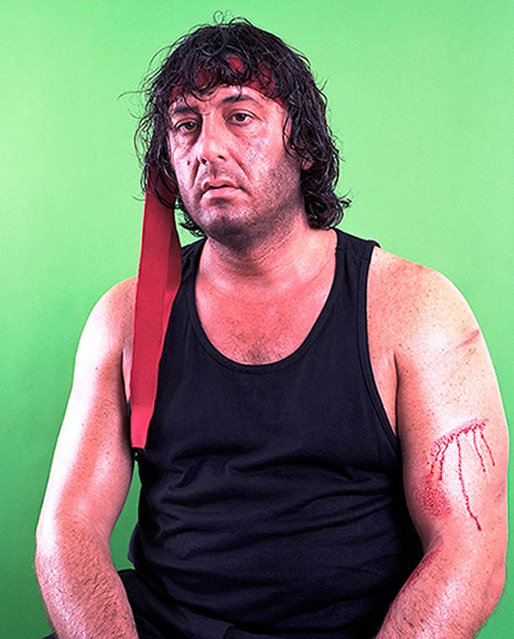
Nicolas Silberfaden: Superheroes

Due to the current economic, social and cultural crisis in The United States of America today, I have decided to do a photographic project consisting of a series of studio portraits of superhero and celebrity impersonators that live and work in the city of Los Angeles. Most of them unemployed Americans, they decided to suit up with their costumes and hit the streets, animate parties and events in efforts to make ends meet. Making them pose in their costumes against a colorful backdrop, I ask them to manifest feelings of genuine sadness – honest emotions that are a consequence of our current times. The result is a somber, striking visual image that contradicts the iconic nature of strength and moral righteousness typical in American superhero and celebrity imagery. Creating the illusion that Superman does exist – that he too was fallible and affected by America’s downturn.

Nicolas Silberfaden
Details
06 Dec 2012 12:13:00


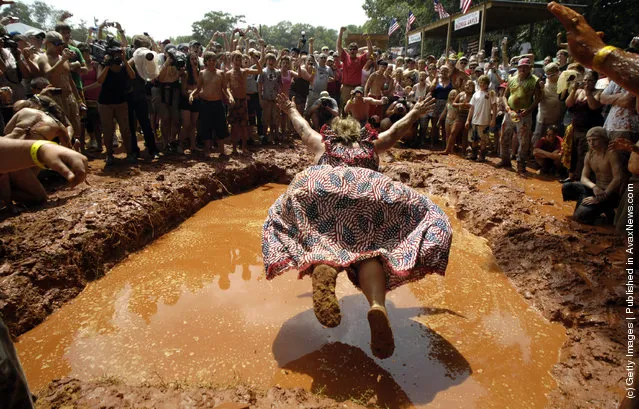
“Redneck is a historically derogatory slang term used in reference to poor white farmers in the Southern United States. It is similar in meaning to cracker (especially regarding Georgia and Alabama), hillbilly (especially regarding Appalachia and the Ozarks), and white trash (but without the last term's suggestions of immorality).

The Redneck Games are held in East Dublin, Georgia annually. The games were started by General Manager for WQZY-FM «Y96»; Mac Davis in response to a comment made by the media; that when the 1996 Olympic Games went to Atlanta, it would be held by a group of rednecks”. – Wikipedia

Photo: Barbara “Redneck Queen” Bailey shows the crowd the proper way to do the Bellyflop during the 13th Annual Summer Redneck Games July 11, 2009 in East Dublin, Georgia. Bailey won the event several year running in the 1990s. (Photo by Stephen Morton/Getty Images)
Details
10 Jul 2011 10:55:00
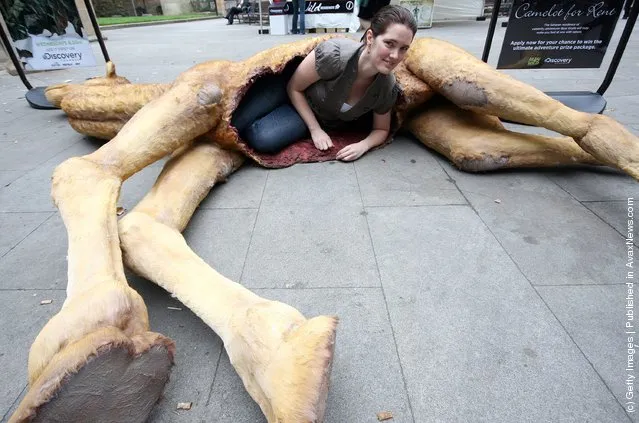
Passer inspects Camelot, a replica camel carcass simulating that used by adventurer Bear Grylls to shelter in the Sahara desert during an episode of the Discovery Channel's Man Vs. Wild

“Bear Grylls, (born Edward Michael Grylls, 7 June 1974) is an English adventurer, writer and television presenter. He is best known for his television series Man vs. Wild, known as Born Survivor in the United Kingdom. He was the youngest Briton to climb Mount Everest, doing so at age 23. In July 2009, Grylls was appointed the youngest ever Chief Scout at the age of 35”. – Wikipedia

Photos: Passer inspects “Camelot”, a replica camel carcass simulating that used by adventurer Bear Grylls to shelter in the Sahara desert during an episode of the Discovery Channel's “Man Vs. Wild”, in Wynyard Park on March 1, 2010 in Sydney, Australia. (Photo by Discovery Channel via Getty Images)
Details
04 Aug 2011 11:24:00
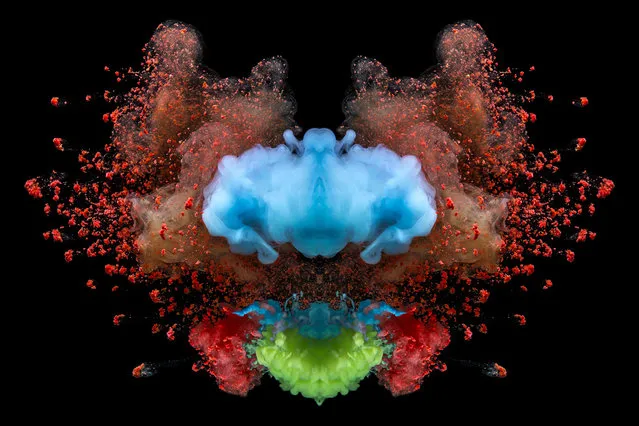
Brian Tomlinsons ink artwork. (Photo by Brian Tomlinsons/Caters News Agency)

These ink-redible, explosive masterpieces are like say-what-you see inkblots tests only in water. The vibrant colors burst from Brian Tomlinsons works, appearing as though they may be coloured ash clouds from an erupting volcano, rather than simply everyday substances. By doing so, Brian challenges viewers to identify what images can be imagined when mixing one fluid with another. In order to shoot the series, entitled Liquid Ink Art, Brain, 40, drops different coloured inks into a fish tank full of water before capturing high-speed shots with a flash. Here: Brian Tomlinsons ink artwork. (Photo by Brian Tomlinsons/Caters News Agency)
Details
15 Jun 2017 08:32:00
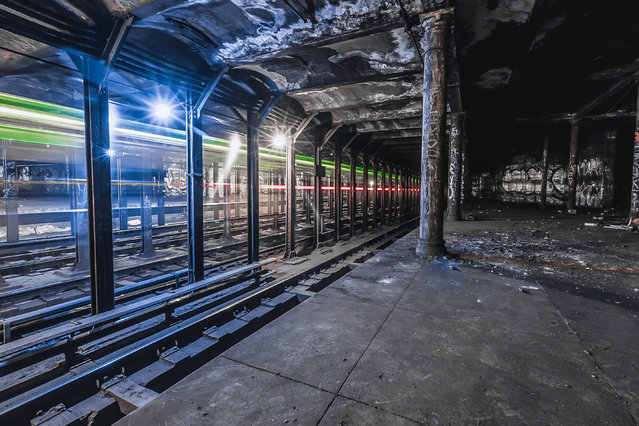
At the dead of night, the photographer – known to his Instagram followers as Dark Cyanide – heads out to look for hidden gems, like abandoned stations, provisions and tunnels. His intriguing images feature vibrant streaks, graffiti, and tight framing – and by adding individuals to some to some of shots, he is also able to depict the incredible scale of some of the tunnels. The photographer, 19, admitted what he and his friends do is highly dangerous, illegal, and he does not recommend others attempt to explore such tunnels. Here: Unnamed subway track in New York City. (Photo by Dark Cyanide/Caters News)

At the dead of night, the photographer – known to his Instagram followers as Dark Cyanide – heads out to look for hidden gems, like abandoned stations, provisions and tunnels. His intriguing images feature vibrant streaks, graffiti, and tight framing – and by adding individuals to some to some of shots, he is also able to depict the incredible scale of some of the tunnels. Here: Unnamed subway track in New York City. (Photo by Dark Cyanide/Caters News)
Details
29 Jan 2016 12:45:00
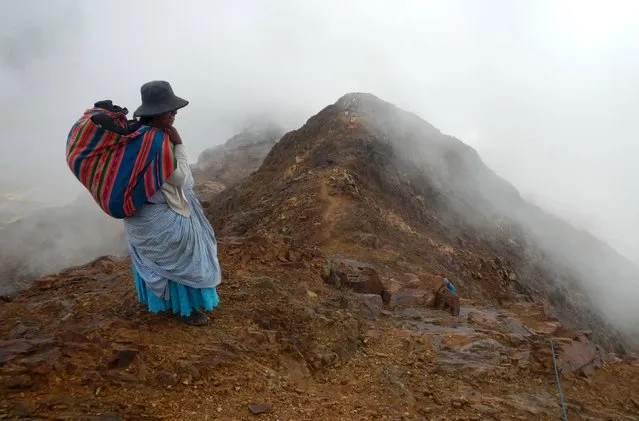
A porter stands at the bottom of the Illimani mountain, on the outskirts of La Paz, Bolivia, April 16, 2016. (Photo by David Mercado/Reuters)

A porter stands at the bottom of the Illimani mountain, on the outskirts of La Paz, Bolivia, April 16, 2016. For years, Lydia Huayllas, 48, has worked as a cook at base camps and mountain-climbing refuges on the steep, glacial slopes of Huayna Potosi, a 19,974-foot (6,088-meter) Andean peak outside of La Paz, Bolivia. But two years ago, she and 10 other Aymara indigenous women, ages 42 to 50, who also worked as porters and cooks for mountaineers, put on crampons – spikes fixed to a boot for climbing – under their wide traditional skirts and started to do their own climbing. (Photo by David Mercado/Reuters)
Details
22 Apr 2016 12:33:00
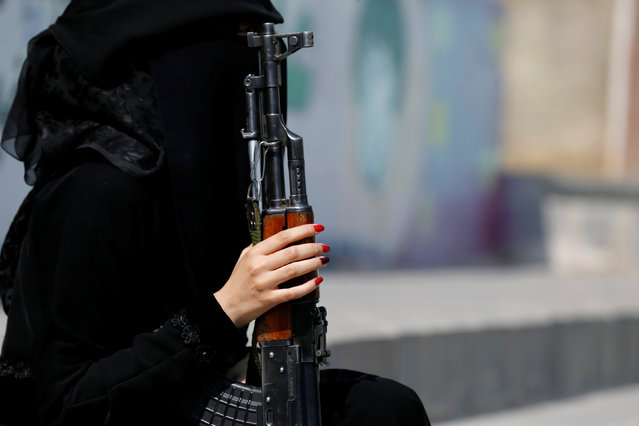
A woman loyal to the Houthi movement holds a rifle as she takes part in a parade to show support to the movement in Sanaa, Yemen September 6, 2016. Dressed in the head to toe garments which obscured their faces, the female fighters brandished machine guns, rocket launchers and grenades. The women also wore hats as they showed support for the Shiite Houthi rebels. The Saudi-led Arab coalition launched a military campaign against the Houthis and their allies in March 2015. It was after the rebels closed in on Gulf-backed President Abedrabbo Mansour Hadi in his southern refuge of Aden, forcing him into exile. The female protesters have pledged to remain supportive and do whatever they can to back the ongoing resistance against the kingdom. Yemen is in the grip of its most severe crisis in years, and is on the brink of civil war. (Photo by Khaled Abdullah/Reuters)

A woman loyal to the Houthi movement holds a rifle as she takes part in a parade to show support to the movement in Sanaa, Yemen September 6, 2016. The Saudi-led Arab coalition launched a military campaign against the Huthis and their allies in March 2015, after the rebels closed in on Gulf-backed President Abedrabbo Mansour Hadi in his southern refuge of Aden, forcing him into exile. (Photo by Khaled Abdullah/Reuters)
Details
07 Sep 2016 10:24:00
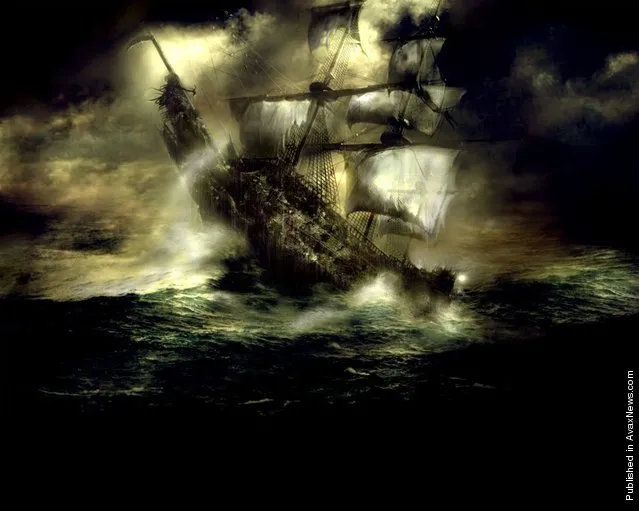
Ocean voyage

Do you think that history is a science? Well, not exactly. First, and foremost, history is the state's “legend of wars”, it’s official regalia. Of course, public historians are not interested in scientific truth – quite the opposite. In this respect, any attempt to present a state’s history as altruistic and benevolent as possible is welcomed and encouraged – as opposed to any revisionism attempts that may be more accurate. In this matter, Chinese have surpassed us all – they revised in highly creative manner (but rather shamelessly) the technology already invented by Europeans, a process that resulted in oldest state on the planet. Here is an interesting paradox: ask any sinologist about the Middle Kingdom during second century B.C., and he will describe it to you in such a vivid manner as if he has been living there all his life – but as soon as you will ask him to describe Chinese history in the 19-20th centuries… let's say, his eagerness will be greatly diminished. However, we will discuss China in a different article, and in the meantime we will try to understand how exactly historic “legend of wars” is formed and functions – based on a specific and well-known example. A great example is Ferdinand Magellan's first voyage around the world.
Details
14 Nov 2011 09:11:00