Loading...
Done
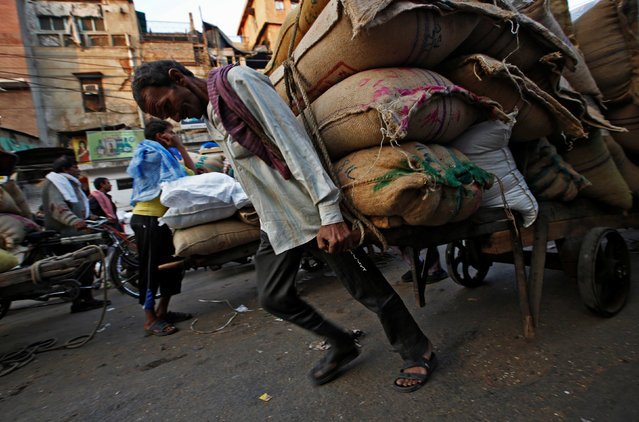
A labourer pulls a cart loaded with sacks of spices at a wholesale spice and chemical market in the old quarters of Delhi, India, December 19, 2016. Picture taken December 19, 2016. (Photo by Adnan Abidi/Reuters)

A labourer pulls a cart loaded with sacks of spices at a wholesale spice and chemical market in the old quarters of Delhi, India, December 19, 2016. Picture taken December 19, 2016. (Photo by Adnan Abidi/Reuters)
Details
29 Dec 2016 07:36:00
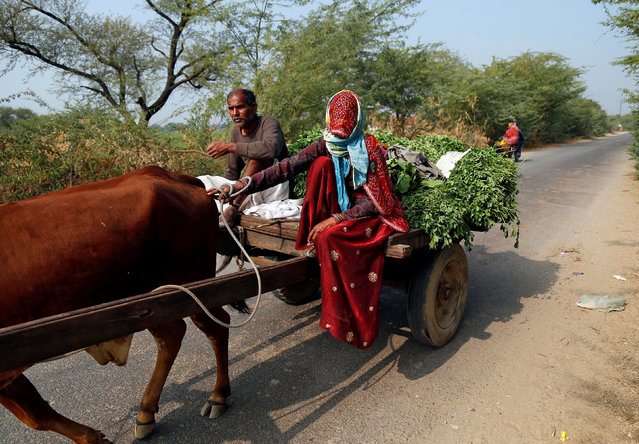
A woman transports fodder for her cattle on a bullock cart on the outskirts of Ajmer, Rajasthan, January 6, 2017. (Photo by Himanshu Sharma/Reuters)

A woman transports fodder for her cattle on a bullock cart on the outskirts of Ajmer, Rajasthan, January 6, 2017. (Photo by Himanshu Sharma/Reuters)
Details
09 Jan 2017 12:58:00
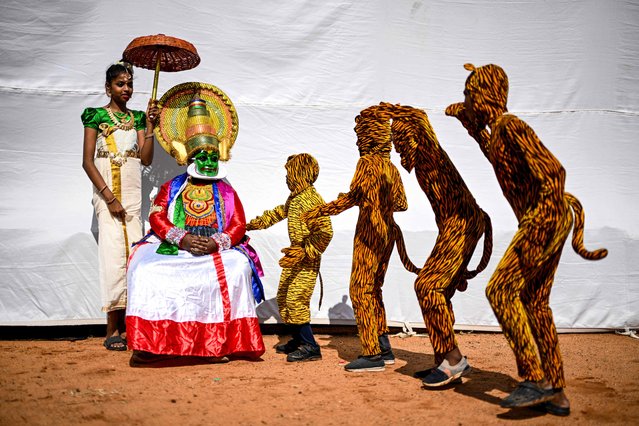
A Kathakali classical dancer (2L) watches artists rehearse the traditional folk dance Pulikkali (Tiger Dance) as they wait backstage before their performance at a cultural festival in Chennai on July 12, 2025. (Photo by R. Satish Babu/AFP Photo)

A Kathakali classical dancer (2L) watches artists rehearse the traditional folk dance Pulikkali (Tiger Dance) as they wait backstage before their performance at a cultural festival in Chennai on July 12, 2025. (Photo by R. Satish Babu/AFP Photo)
Details
07 Aug 2025 03:55:00
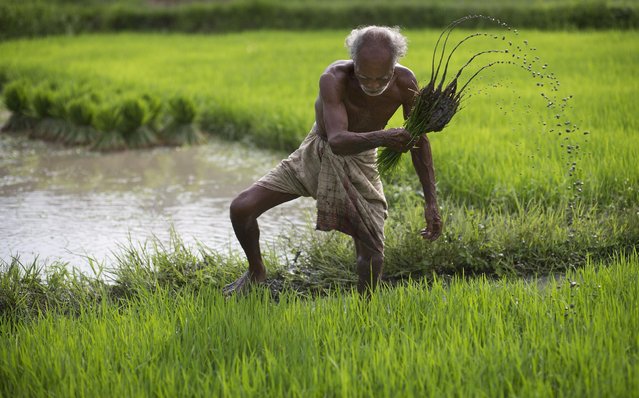
A farmer works in a paddy field at Reba Maheswar village, 56 kilometers (35 miles) east of Gauhati, India, Friday, July 3, 2015. (Photo by Anupam Nath/AP Photo)

A farmer works in a paddy field at Reba Maheswar village, 56 kilometers (35 miles) east of Gauhati, India, Friday, July 3, 2015. Rice is one of the most important food crops of India and about 4,000 different varieties are grown in different parts of the country. (Photo by Anupam Nath/AP Photo)
Details
04 Jul 2015 11:24:00
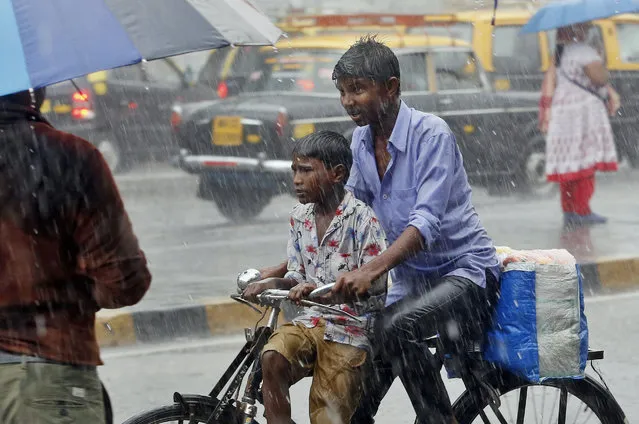
An Indian cyclist pedals with a child during heavy rain in Mumbai, Maharashtra state, India, Friday, July 24, 2015. Several parts of the city witnessed heavy rain Friday. The monsoon rains which usually hit India from June to September are crucial for farmers whose crops feed hundreds of millions of people. (Photo by Rajanish Kakade/AP Photo)

An Indian cyclist pedals with a child during heavy rain in Mumbai, Maharashtra state, India, Friday, July 24, 2015. Several parts of the city witnessed heavy rain Friday. The monsoon rains which usually hit India from June to September are crucial for farmers whose crops feed hundreds of millions of people. (Photo by Rajanish Kakade/AP Photo)
Details
27 Jul 2015 11:00:00
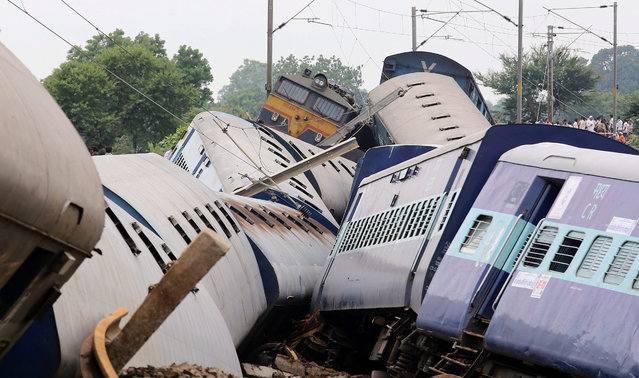
Damaged train coaches at the site of a train accident, 180 kilometers from Bhopal near Harda district of Mahdya Pradesh, India, 05 August 2015. At least 25 people died when two passenger trains derailed in central India after heavy monsoon rains flooded railway tracks, officials said. Ten coaches from the trains toppled while approaching a small bridge just before midnight. (Photo by Sanjeev Gupta/EPA)

Damaged train coaches at the site of a train accident, 180 kilometers from Bhopal near Harda district of Mahdya Pradesh, India, 05 August 2015. At least 25 people died when two passenger trains derailed in central India after heavy monsoon rains flooded railway tracks, officials said. Ten coaches from the trains toppled while approaching a small bridge just before midnight. (Photo by Sanjeev Gupta/EPA)
Details
06 Aug 2015 11:58:00
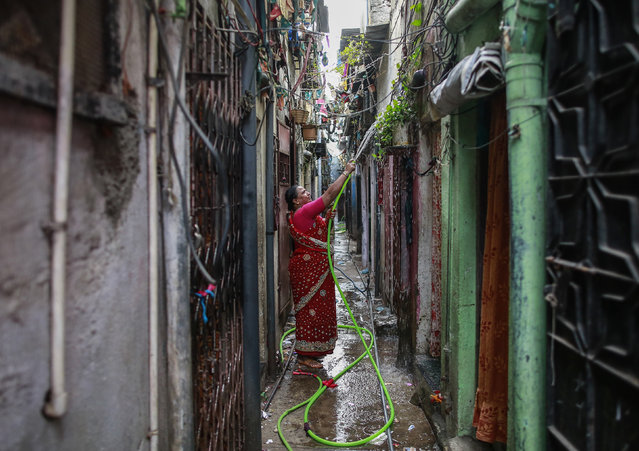
A woman waters the plants outside her house in an alley at a slum in Mumbai October 28, 2014. (Photo by Danish Siddiqui/Reuters)

A woman waters the plants outside her house in an alley at a slum in Mumbai October 28, 2014. (Photo by Danish Siddiqui/Reuters)
Details
29 Oct 2014 11:55:00
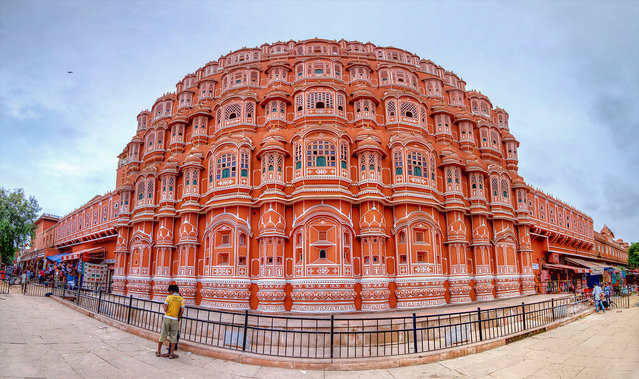
Hawa Mahal India

Hawa Mahal, which translates as the Palace of Winds, was built in 1799 by Maharaja Sawai Pratap Singh. The design of the palace was created by Shreyansh Jain to resemble the crown of Krishna. The design of this unique five-story building is akin to a honeycomb. The main purpose of this building was to allow royal ladies to watch the street below while remaining unseen, since during those times they had a strict code of dressing, which meant covering their faces. The palace was designed to produce the Venturi effect, which created natural air conditioning and kept the interior relatively cool during hot summers.
Details
22 Nov 2014 13:22:00