Loading...
Done
Scanning electron micrograph (SEM) of an Arabidopsis thaliana flower, also commonly known as thale cress. Some of the anthers are open, revealing pollen grains ready for dispersal. Arabidopsis was the first plant to have its entire genome sequenced and is widely used as a model organism in molecular and plant biology. Horizontal width of image is 1200 microns. Magnification 100x. (Photo by Stefan Eberhard/Wellcome Images)

Beautiful, strange and occasionally alarming pictures from the shortlist for this year’s Wellcome image awards – which celebrate the very best in science photography and imaging – from an x-ray of a bat to a micrograph of a kidney stone. The exhibition opens on 12 March at three science centres and the Museum of Science and Industry in Manchester. Photo: Scanning electron micrograph (SEM) of an Arabidopsis thaliana flower, also commonly known as thale cress. Some of the anthers are open, revealing pollen grains ready for dispersal. Arabidopsis was the first plant to have its entire genome sequenced and is widely used as a model organism in molecular and plant biology. Horizontal width of image is 1200 microns. Magnification 100x. (Photo by Stefan Eberhard/Wellcome Images)
Details
11 Mar 2014 05:58:00
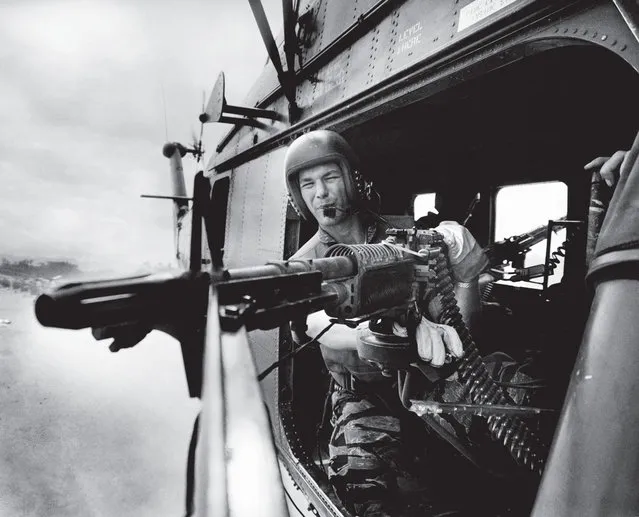
Man your battle stations: The crew chief of helicopter Yankee Papa 13, lance corporal James C. Farley, mans an M-60 machine gun during a mission near Da Nang, Vietnam on March 31, 1965. (Photo by Larry Burrows/Time & Life Pictures)

In the spring of 1965, within weeks of 3,500 American Marines arriving in Vietnam, a 39-year-old Briton named Larry Burrows began work on a feature for LIFE magazine, chronicling the day-to-day experience of U.S. troops on the ground – and in the air – in the midst of the rapidly widening war. The photographs in this gallery focus on a calamitous March 31, 1965, helicopter mission; Burrows’ “report from Da Nang”, featuring his pictures and his personal account of the harrowing operation, was published two weeks later as a now-famous cover story in the April 16, 1965, issue of LIFE.

Photo: Man your battle stations: The crew chief of helicopter Yankee Papa 13, lance corporal James C. Farley, mans an M-60 machine gun during a mission near Da Nang, Vietnam on March 31, 1965. (Photo by Larry Burrows/Time & Life Pictures)
Details
07 Apr 2013 07:08:00
In this Thursday, June 14, 2018, file photo, students wear virtual reality goggles during a science class at Pyongyang Teachers' University, a teacher training college, in Pyongyang, North Korea. (Photo by Dita Alangkara/AP Photo)

In this Thursday, June 14, 2018, file photo, students wear virtual reality goggles during a science class at Pyongyang Teachers' University, a teacher training college, in Pyongyang, North Korea. (Photo by Dita Alangkara/AP Photo)
Details
20 Jun 2018 00:05:00
People attend the 49th annual New York City Gay Pride Parade in New York, New York, USA on 24 June 2018. (Photo by Erik Pendzich/Rex Features/Shutterstock)

People attend the 49th annual New York City Gay Pride Parade in New York, New York, USA on 24 June 2018. (Photo by Erik Pendzich/Rex Features/Shutterstock)
Details
26 Jun 2018 00:01:00
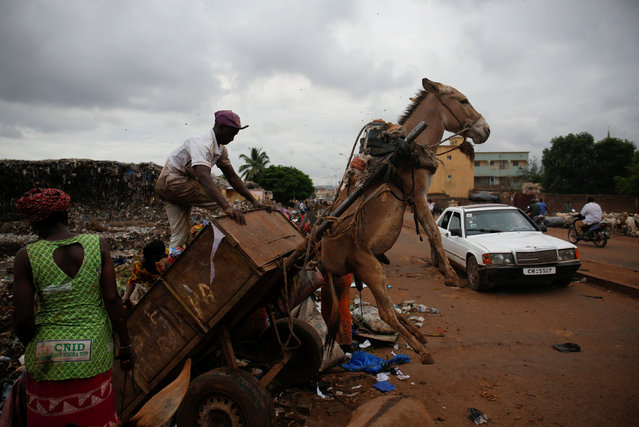
A waste picker unloads garbage at a waste transfer station in Bamako, Mali, August 19, 2018. In the Malian capital of Bamako, donkey carts driven by young men like 19-year-old Arouna Diabate play a vital role battling the fast-growing city's waste problem. Every morning before dawn, Diabate hitches his donkey to a cart and sets off on his rounds, going door-to-door to collect household garbage which he delivers to a local waste transfer station for a monthly salary of around $35. “I won't be picking up trash with a donkey cart for the rest of my life, but for now people appreciate us because we help clean up the homes of Bamako”, Diabate said. (Photo by Luc Gnago/Reuters)

A waste picker unloads garbage at a waste transfer station in Bamako, Mali, August 19, 2018. In the Malian capital of Bamako, donkey carts driven by young men like 19-year-old Arouna Diabate play a vital role battling the fast-growing city's waste problem. Every morning before dawn, Diabate hitches his donkey to a cart and sets off on his rounds, going door-to-door to collect household garbage which he delivers to a local waste transfer station for a monthly salary of around $35. “I won't be picking up trash with a donkey cart for the rest of my life, but for now people appreciate us because we help clean up the homes of Bamako”, Diabate said. (Photo by Luc Gnago/Reuters)
Details
18 Sep 2018 00:01:00
A homeless street child looks in the window of a car in Jammu, India, Friday, January 6, 2017. Some 800 million people in the country live in poverty, many of them migrating to big cities in search of a livelihood and often ending up on the streets. (Photo by Channi Anand/AP Photo)

A homeless street child looks in the window of a car in Jammu, India, Friday, January 6, 2017. Some 800 million people in the country live in poverty, many of them migrating to big cities in search of a livelihood and often ending up on the streets. (Photo by Channi Anand/AP Photo)
Details
02 Feb 2017 04:34:00
A general view of atmosphere at the annual VOLT Festival in Sopron, 208 kms west of Budapest, Hungary on June 26, 2017. (Photo by Mudra László/Rockstar Photographers)

A general view of atmosphere at the annual VOLT Festival in Sopron, 208 kms west of Budapest, Hungary on June 26, 2017. (Photo by Mudra László/Rockstar Photographers)
Details
28 Jun 2017 08:23:00
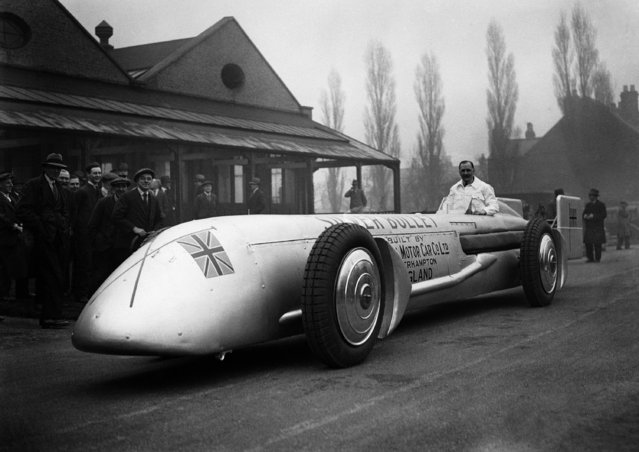
Kaye Don seated in the cockpit of his new racing car the “Silver Bullet” at Wolverhampton, England on February 21, 1930, in which he will attempt to beat world land speed record at Daytona. It has two 12-cylinder V shaped engines and each develops 2,000-h.p. The theoretical speed of the car is 275 m.p.h. but the designer estimated that will be able to reach 250 m.p.h. allowing for wind pressures. (Photo by AP Photo/Staff/Puttnam)

Kaye Don seated in the cockpit of his new racing car the “Silver Bullet” at Wolverhampton, England on February 21, 1930, in which he will attempt to beat world land speed record at Daytona. It has two 12-cylinder V shaped engines and each develops 2,000-h.p. The theoretical speed of the car is 275 m.p.h. but the designer estimated that will be able to reach 250 m.p.h. allowing for wind pressures. (Photo by AP Photo/Staff/Puttnam)
Details
03 Mar 2018 00:03:00