A team of female cadets takes part in a tug-of-war competition at Budyonny Military Academy of the Signal Corps in St Petersburg, Russia on March 7, 2021. (Photo by Peter Kovalev/TASS/Profimedia)
Rays of the misty sunrise swathe Christ Church in the village of Brockham in Surrey, UK on September 29, 2025. Colder temperatures are expected in the early part of the day with mist and fog clearing later in the south. (Photo by Peter Macdiarmid/The Times)
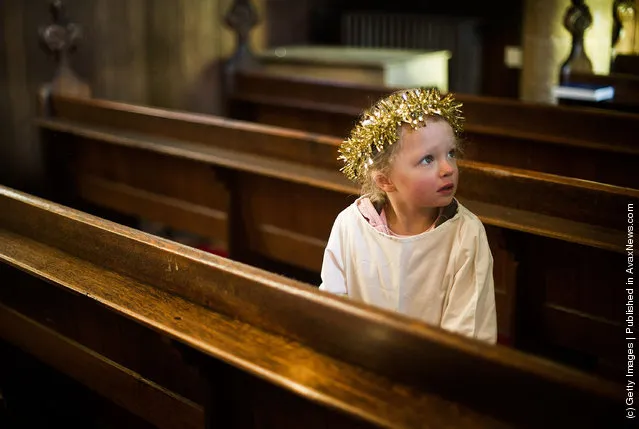
Cathryn Shrimpton, 4, prepares to play the Angle Gabriel during a traditional Christmas Nativity on December 18, 2011, at St Mary's Church, Myton Village, England. In schools and churches around the country children busy preparing and performing in the telling of the traditional nativity story. (Photo by Bethany Clarke/Getty Images)
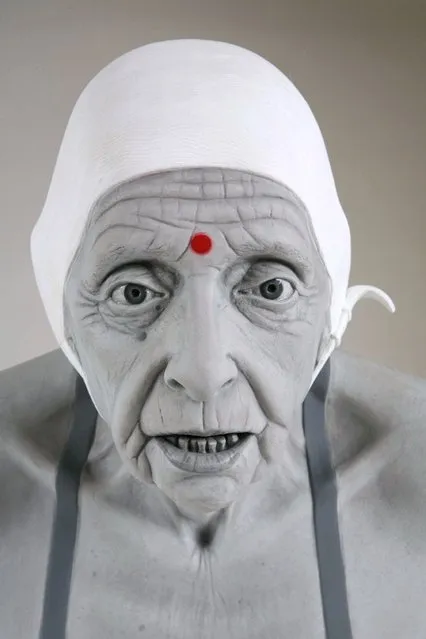
Tip Toland is a sculptor and instructor living in the Seattle, Washington area. Her current focus is figurative ceramic sculpture. Tip is represented by the Nancy Margolis Gallery in New York City.
Photo: “Letter to God”, 2011. Stoneware, paint, chalk pastel, hair. (Photo by Tip Toland/Marie-Andrée Côté)
These amazing photographs of buildings in Hong Kong transform what is actually a concrete jungle into scenes of immense beauty. The optical illusions taken by landscape photographer Peter Stewart, show the city in a totally different, colorful light, despite it being one of the most overcrowded cities in the world. Photo: Colorful block of apartments in Hong Kong at night. (Photo by Peter Stewart/Caters News)
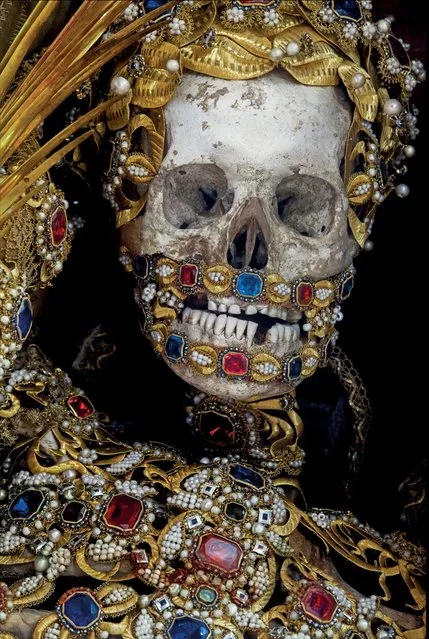
A relic hunter dubbed “Indiana Bones” has lifted the lid on a macabre collection of 400-year-old jewel-encrusted skeletons unearthed in churches across Europe. Art historian Paul Koudounaris has hunted down and photographed dozens of gruesome skeletons in some of the world's most secretive religious establishments. Photo: Albertus in the church of St George in Burgrain, Germany. Incredibly, some of the skeletons, which took up to five years to decorate, were even found hidden away in lock-ups and containers. (Photo by Paul Koudounaris/BNPS)
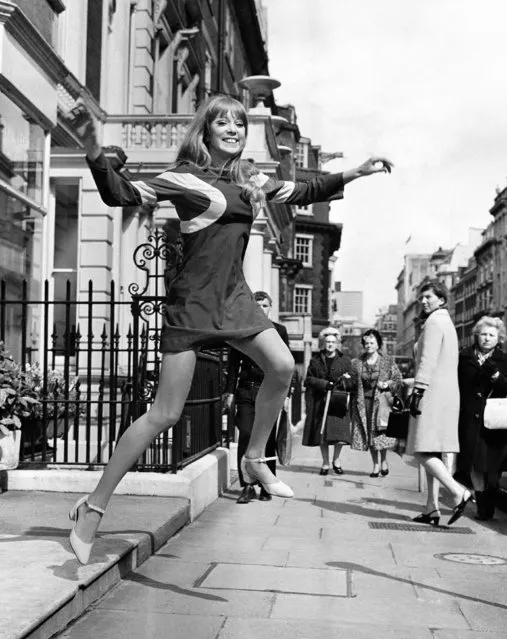
File photo dated 21/04/66 of Pattie Boyd in London's West End wearing a mini skirt, as the British designer Mary Quant, widely credited with popularising the mini skirt has recalled its “feeling of freedom and liberation” 50 years after she took the fashion world by storm. Quant, who named the skirt after her favourite make of car, said she “couldn't have imagined” in 1964 that it would become a staple of women's clothing, but added: “It seemed then to be obvious, and so right”. (Photo by PA Wire)