Loading...
Done
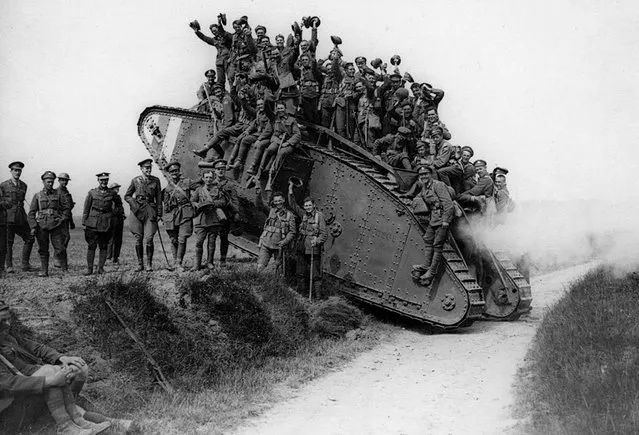
These black-and-white photos are taken from the new book “Armoured Warfare in the First World War 1916 – 1918” by Anthony Tucker-Jones and published by Pen & Sword Military. “Interestingly the British, French and Germans took completely different approaches with varying results”. The British military produced “Little Willie” in Autumn 1915 weighing 18 tonnes, which had a crew of two plus four gunners. “Inspired by a tracked artillery tractor “Little Willie” was referred to as a water tank – hence the name tank – to ensure secrecy”, said Anthony. “This led to the strange looking Mark I with its peculiar rhomboid shape, designed to cross trenches with guns in sponsons on either side. The Germans saw the tank as unchivalrous and were slow to grasp its utility. They favoured the Stormtrooper (specialist soldiers used to infiltrate enemy trenches) and artillery, not the tank”, said Anthony. “However, they didn’t hesitate to make use of captured British tanks. Although the tank helped secure victory and German soldiers dubbed it “Germany’s Downfall” the country was ultimately brought to its knees by the Allies blockade”. Here: British troops hitch a ride on a Mark IV after the massed tank fleet spearheading attack at Cambrai on November 20, 1917. (Photo by Anthony Tucker-Jones/Mediadrumworld.com)

These black-and-white photos are taken from the new book “Armoured Warfare in the First World War 1916 – 1918” by Anthony Tucker-Jones and published by Pen & Sword Military. Here: British troops hitch a ride on a Mark IV after the massed tank fleet spearheading attack at Cambrai on November 20, 1917. (Photo by Anthony Tucker-Jones/Mediadrumworld.com)
Details
23 Feb 2017 00:02:00
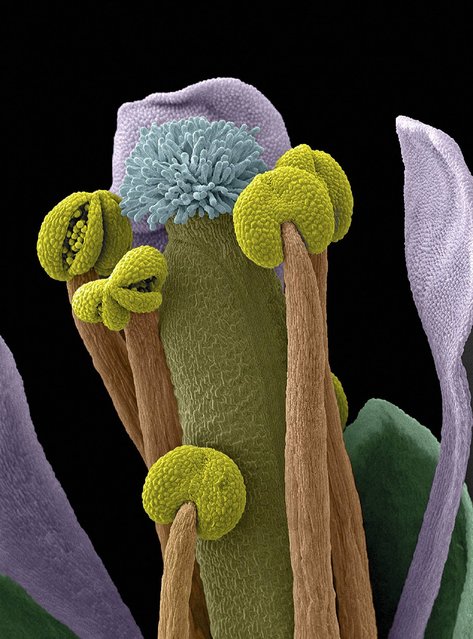
Scanning electron micrograph (SEM) of an Arabidopsis thaliana flower, also commonly known as thale cress. Some of the anthers are open, revealing pollen grains ready for dispersal. Arabidopsis was the first plant to have its entire genome sequenced and is widely used as a model organism in molecular and plant biology. Horizontal width of image is 1200 microns. Magnification 100x. (Photo by Stefan Eberhard/Wellcome Images)

Beautiful, strange and occasionally alarming pictures from the shortlist for this year’s Wellcome image awards – which celebrate the very best in science photography and imaging – from an x-ray of a bat to a micrograph of a kidney stone. The exhibition opens on 12 March at three science centres and the Museum of Science and Industry in Manchester. Photo: Scanning electron micrograph (SEM) of an Arabidopsis thaliana flower, also commonly known as thale cress. Some of the anthers are open, revealing pollen grains ready for dispersal. Arabidopsis was the first plant to have its entire genome sequenced and is widely used as a model organism in molecular and plant biology. Horizontal width of image is 1200 microns. Magnification 100x. (Photo by Stefan Eberhard/Wellcome Images)
Details
11 Mar 2014 05:58:00
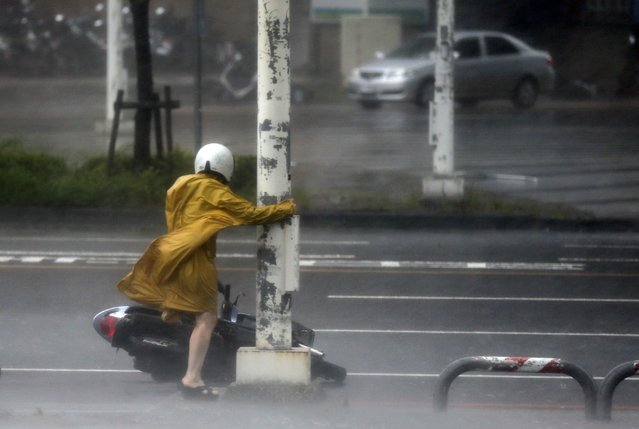
A motorist holds on to a post as she braves high winds and rain of Super Typhoon Meranti in Kaohsiung, southern Taiwan, 14 September 2016. The storm is the strongest recorded since Super Typhoon Haiyan developed in 2013. (Photo by Ritchie B. Tongo/EPA)

A motorist holds on to a post as she braves high winds and rain of Super Typhoon Meranti in Kaohsiung, southern Taiwan, 14 September 2016. The storm is the strongest recorded since Super Typhoon Haiyan developed in 2013. (Photo by Ritchie B. Tongo/EPA)
Details
15 Sep 2016 09:53:00
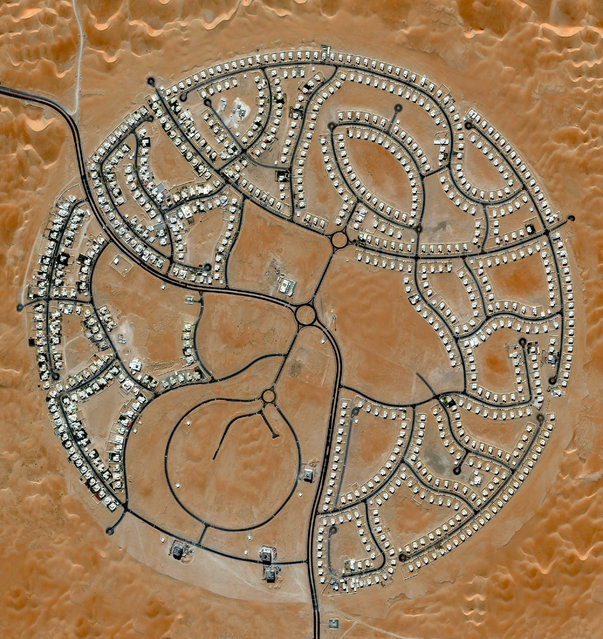
The villas of Marabe Al Dhafra in Abu Dhabi, United Arab Emirates are home to approximately 2,000 people. Located in one of the hottest regions of the world, the record high temperature here is 49.2C° (120.6F°). (Photo by Benjamin Grant/Penguin Random House)

The villas of Marabe Al Dhafra in Abu Dhabi, United Arab Emirates are home to approximately 2,000 people. Located in one of the hottest regions of the world, the record high temperature here is 49.2C° (120.6F°). (Photo by Benjamin Grant/Penguin Random House)
Details
21 Sep 2016 10:04:00
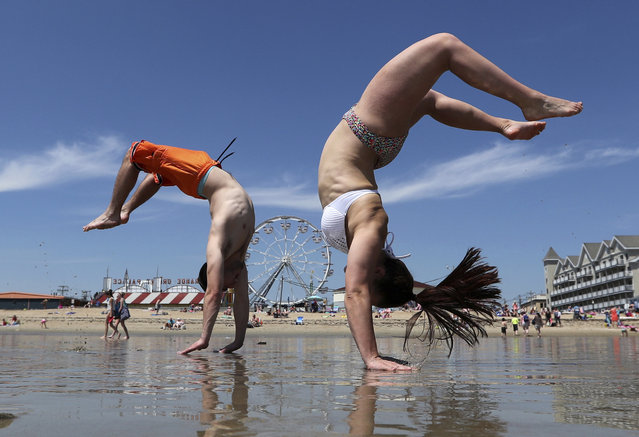
Dan Copeland, left, and Alex Morneau of Biddeford, Maine, former high school cheerleaders, perform back flips while enjoying the record breaking heat, Thursday, May 18, 2017, at Old Orchard Beach, Maine. The temperature climbed well into the 90s in many locations throughout the state. (Photo by Robert F. Bukaty/AP Photo)

Dan Copeland, left, and Alex Morneau of Biddeford, Maine, former high school cheerleaders, perform back flips while enjoying the record breaking heat, Thursday, May 18, 2017, at Old Orchard Beach, Maine. The temperature climbed well into the 90s in many locations throughout the state. (Photo by Robert F. Bukaty/AP Photo)
Details
13 Jul 2017 07:59:00
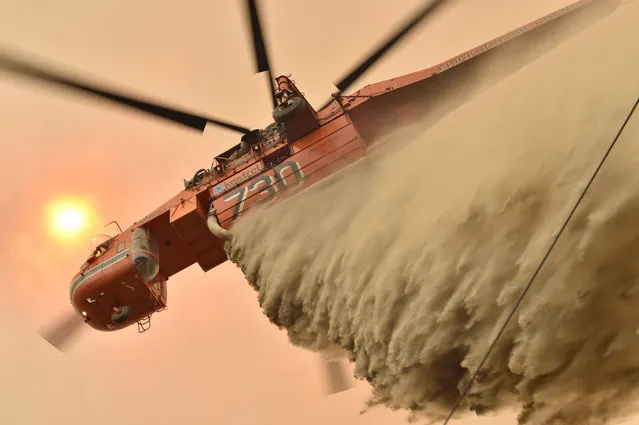
A helicopter drops fire retardent to protect a property in Balmoral, 150 kilometres southwest of Sydney on December 19, 2019. A state of emergency was declared in Australia's most populated region on December 19, as a record heat wave fanned unprecedented bushfires. (Photo by Peter Parks/AFP Photo)

A helicopter drops fire retardent to protect a property in Balmoral, 150 kilometres southwest of Sydney on December 19, 2019. A state of emergency was declared in Australia's most populated region on December 19, as a record heat wave fanned unprecedented bushfires. (Photo by Peter Parks/AFP Photo)
Details
21 Dec 2019 00:07:00
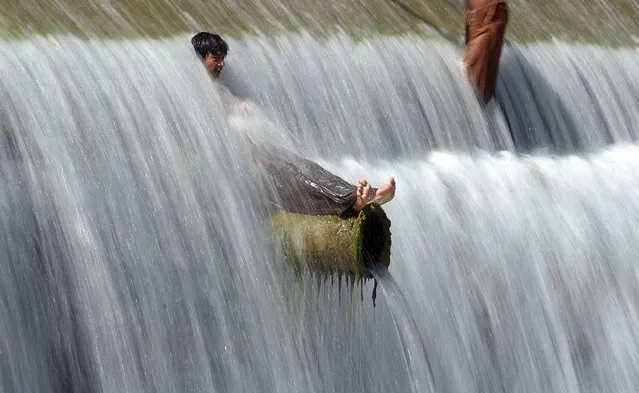
Pakistani youths cool off in a stream during hot weather on the outskirts of Islamabad on April 29, 2016. Pakistan's Meteorological Department has forecast hot and dry weather in most parts of the country with the highest temperatures recorded at 41 celsius in the southern Sindh province. (Photo by Aamir Qureshi/AFP Photo)

Pakistani youths cool off in a stream during hot weather on the outskirts of Islamabad on April 29, 2016. Pakistan's Meteorological Department has forecast hot and dry weather in most parts of the country with the highest temperatures recorded at 41 celsius in the southern Sindh province. (Photo by Aamir Qureshi/AFP Photo)
Details
21 May 2016 11:02:00
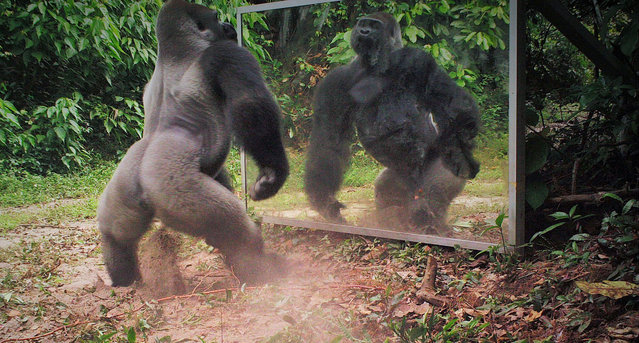
Camera trapper Xavier Hubert-Brierre put this large mirror on the side of a road through the jungle in Gabon and left a camera there to record how the animals would respond to their own reflections. A silverback gorilla thought it was seeing another silverback and responded by trying to scare off the potential challenger… (Photo by Xavier Hubert-Brierre/Johns Hopkins University Press)

Camera trapper Xavier Hubert-Brierre put this large mirror on the side of a road through the jungle in Gabon and left a camera there to record how the animals would respond to their own reflections. A silverback gorilla thought it was seeing another silverback and responded by trying to scare off the potential challenger… (Photo by Xavier Hubert-Brierre/Johns Hopkins University Press)
Details
03 May 2016 13:04:00