Loading...
Done
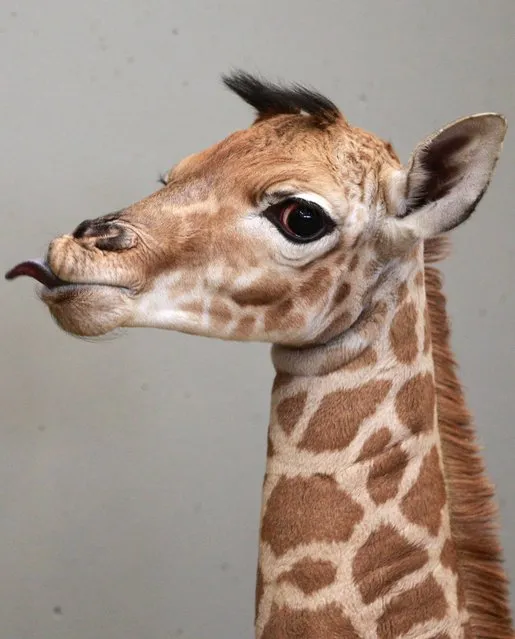
A newborn baby giraffe shows its tongue at the Planckendael zoo in Mechelen, 25 kilometers North of Brussels, Tuesday, February 18, 2014. The calf was born on Valentines day, February 14, and has a heart shaped spot on the hip. (Photo by Yves Logghe/AP Photo)

A newborn baby giraffe shows its tongue at the Planckendael zoo in Mechelen, 25 kilometers North of Brussels, Tuesday, February 18, 2014. The calf was born on Valentines day, February 14, and has a heart shaped spot on the hip. (Photo by Yves Logghe/AP Photo)
Details
22 Feb 2014 13:36:00
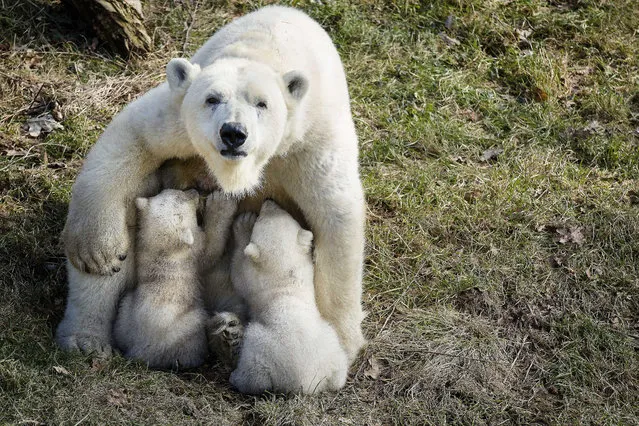
Polar bear twins make their first public appearance with their mother “Freedom” at Ouwehands Zoo Rhenen, in Rhenen, The Netherlands, 19 February 2015. The twins, who were born in November 2014, have not been named because their gender has not yet been determined. (Photo by Bart Maat/EPA)

Polar bear twins make their first public appearance with their mother “Freedom” at Ouwehands Zoo Rhenen, in Rhenen, The Netherlands, 19 February 2015. The twins, who were born in November 2014, have not been named because their gender has not yet been determined. (Photo by Bart Maat/EPA)
Details
21 Feb 2015 11:58:00
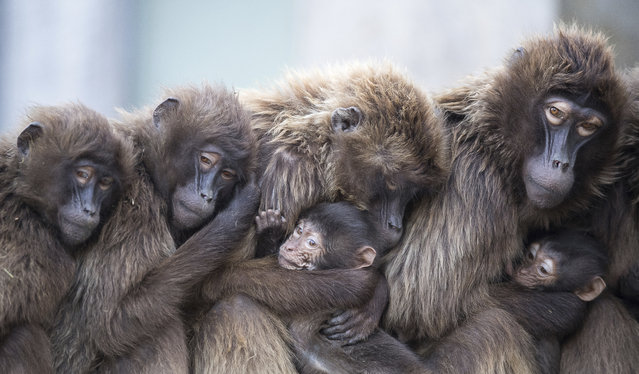
In this January 3, 2018 photo several female Gelada baboons, also known as bleeding-heart baboons, cuddle with their youngs in order to keep warm at the Wilhelma zoo in Stuttgart, Germany. (Photo by Sebastian Gollnow/DPA via AP Photo)

In this January 3, 2018 photo several female Gelada baboons, also known as bleeding-heart baboons, cuddle with their youngs in order to keep warm at the Wilhelma zoo in Stuttgart, Germany. (Photo by Sebastian Gollnow/DPA via AP Photo)
Details
07 Jan 2018 08:08:00
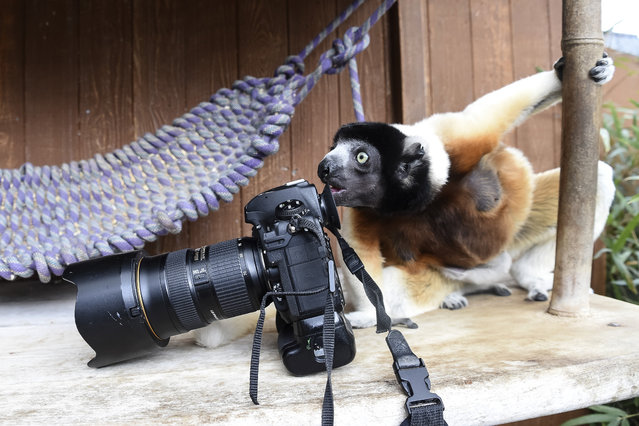
Poppy, a female Crowned sifaka, inspects a photographer's camera in the enclosure at the zoo of Mulhouse, eastern France, on March 5, 2019. The Crowned sifaka is a critically endangered species from Madagascar. (Photo by Sebastien Bozon/AFP Photo)

Poppy, a female Crowned sifaka, inspects a photographer's camera in the enclosure at the zoo of Mulhouse, eastern France, on March 5, 2019. The Crowned sifaka is a critically endangered species from Madagascar. (Photo by Sebastien Bozon/AFP Photo)
Details
10 Mar 2019 00:03:00
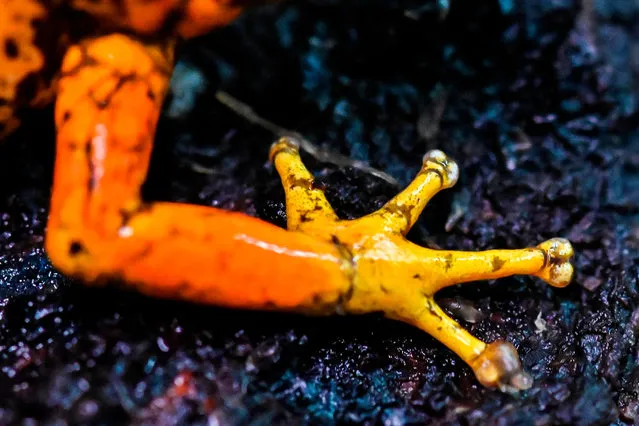
A leg of a “diablito” frog (Oophaga sylvatica) is photographed in a laboratory at a laboratory in the zoo of Cali, Colombia, on July 19, 2019. Colombia is the second country with the largest number of amphibians in the world after Brazil. More than 40% of amphibian species worldwide are in danger of extinction. (Photo by Luis Robayo/AFP Photo)

A leg of a “diablito” frog (Oophaga sylvatica) is photographed in a laboratory at a laboratory in the zoo of Cali, Colombia, on July 19, 2019. Colombia is the second country with the largest number of amphibians in the world after Brazil. More than 40% of amphibian species worldwide are in danger of extinction. (Photo by Luis Robayo/AFP Photo)
Details
28 Nov 2020 00:03:00
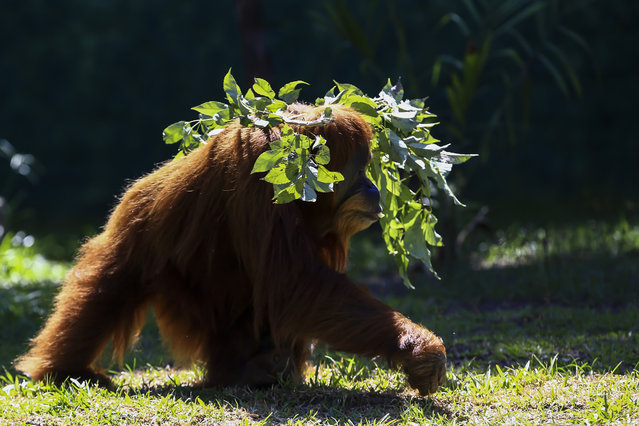
An Orangutan named Elze walks in the Biopark of Rio during a media tour in Rio de Janeiro, Brazil, Thursday, March 18, 2021. The park was closed to the public for renovations to convert the city zoo into a center for biodiversity conservation and will reopen to the general public at the end of March. (Photo by Bruna Prado/AP Photo)

An Orangutan named Elze walks in the Biopark of Rio during a media tour in Rio de Janeiro, Brazil, Thursday, March 18, 2021. The park was closed to the public for renovations to convert the city zoo into a center for biodiversity conservation and will reopen to the general public at the end of March. (Photo by Bruna Prado/AP Photo)
Details
28 Mar 2021 09:55:00


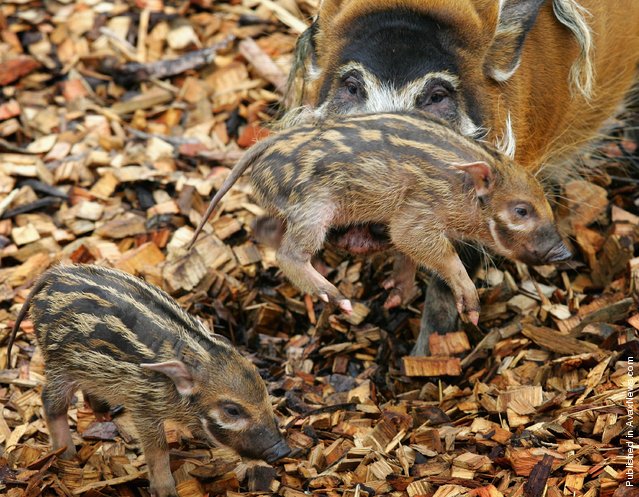
“The Red River Hog (Potamochoerus porcus), also known as the Bush Pig (but not to be confused with P. larvatus, common name “Bushpig”), is a wild member of the pig family living in Africa, with most of its distribution in the Guinean and Congolian forests. It is rarely seen away from rainforests, and generally prefers areas near rivers or swamps.

Red River Hogs eat grass, berries, roots, insects, molluscs, small vertebrates and carrion. They are capable of causing damage to plantations. Red River Hogs typically live in herds of 6-20 members led by a dominant boar. Sows rear 3-6 piglets at a time.”

Photo: Two 17 day old red river hoglet twins forage for food next to their mother Bahiti at London Zoo on August 23, 2007 in London, England. Red River hoglets inhabit the forests and swamps of West and Central Africa. The recent additions to the London Zoo pig pen have been eagerly awaited by zoo keepers. (Photo by Chris Jackson/Getty Images)

Details
18 Mar 2011 15:15:00
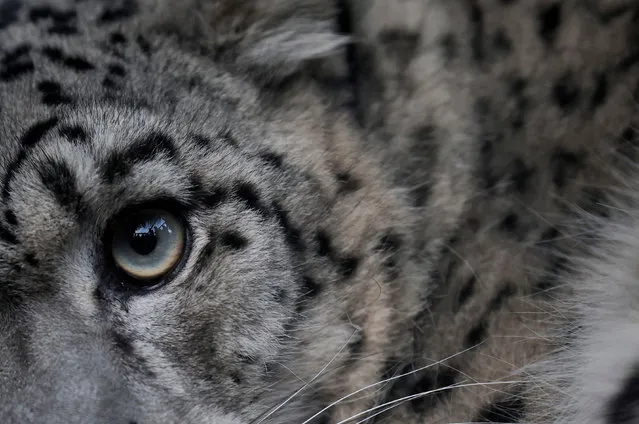
A snow leopard looks on from an inside of a cage, after being captured from the southern plains of Nepal and brought to the central zoo, which wildlife experts say is rare for the animal that is found in the higher altitude, in Kathmandu, Nepal on January 26, 2024. (Photo by Navesh Chitrakar/Reuters)

A snow leopard looks on from an inside of a cage, after being captured from the southern plains of Nepal and brought to the central zoo, which wildlife experts say is rare for the animal that is found in the higher altitude, in Kathmandu, Nepal on January 26, 2024. (Photo by Navesh Chitrakar/Reuters)
Details
03 Feb 2024 08:21:00