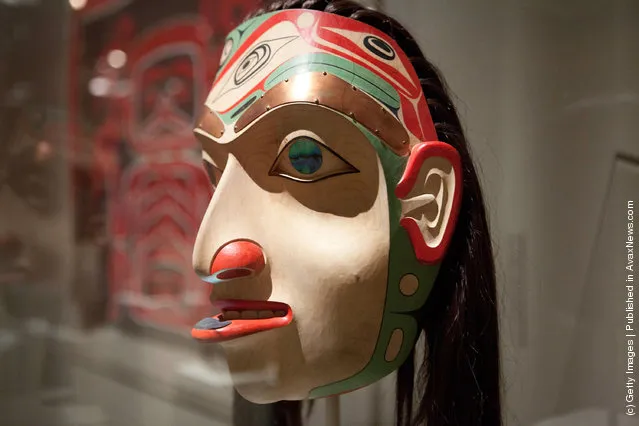
A general view of the Coe Collection of American Indian Art press view at the Metropolitan Museum of Art on December 19, 2011 in New York City. (Photo by Dario Cantatore/Getty Images)
South Koreans wear Santa Claus outfits and hold gifts to promote Christmas at a charity event on December 23, 2011 in Seoul, South Korea. (Photo by Chung Sung-Jun/Getty Images)
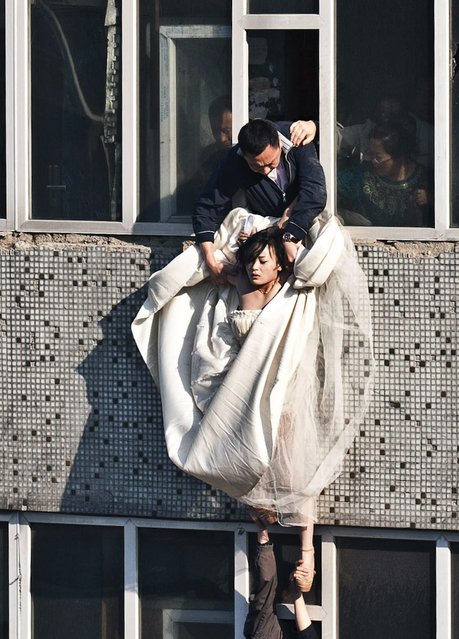
A 22-year-old woman in a wedding gown is grabbed by Guo Zhongfan, a local community officer, as she attempts to kill herself by jumping out of a seven-storey residential building in Changchun, Jilin province. According to local media, the woman tried to commit suicide after her boyfriend of four years broke up with her, just as they were making plans to get married. The woman did not sustain any injuries during the incident. (Photo by China Daily/Reuters)
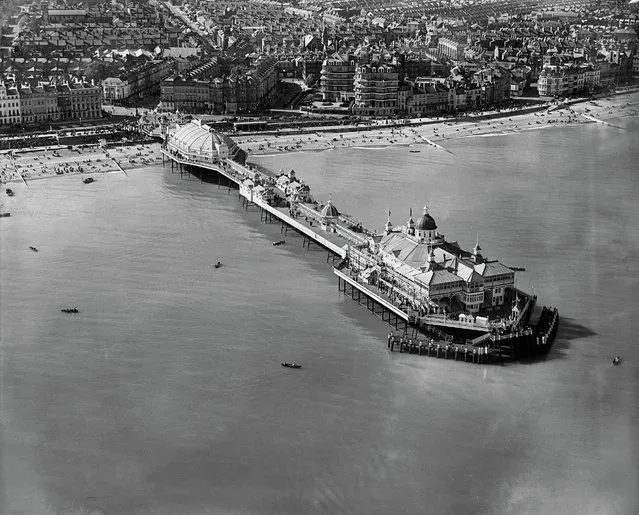
While the lido was described as bringing “modernism to the masses” on the British coast it was just the latest example of a trend that had been developing since Victorian times – transforming seaside towns into resorts for leisure and entertainment. In the latter half of the nineteenth century, the fashion was for local authorities to build great piers stretching from the promenade out into the sea. The Eastbourne Pier, pictured here in May 1931, was erected between 1866 and 1870 to an ingenious design by Eugenius Birch, which saw the structure sitting on special cups allowing the supporting struts to “move” in bad weather. Arranged on the pier's 1,000-foot length were kiosks, a theatre, a ballroom and a camera obscura. 1931. (Photo by Aerofilms Collection via “A History of Britain From Above”)
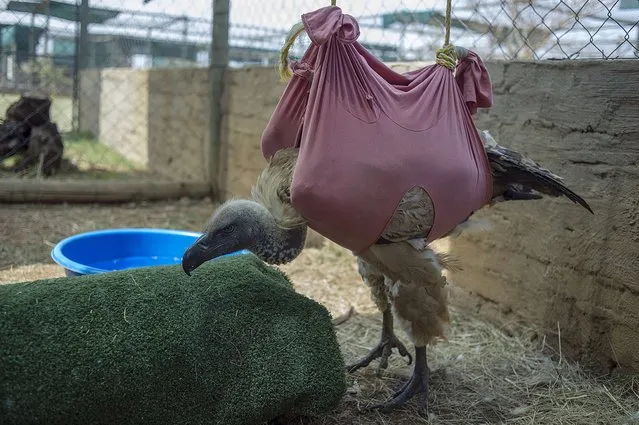
An injured vulture is treated at the VulPro Vulture Rehabilitation Centre in Hartebeepoortdam in the Magalisburg region on September 15, 2015. Confined to southern Africa, just under 4,000 breeding pairs of Cape Vultures remain in the wild, mostly in South Africa, Lesotho and Botswana. Unless conservation efforts are successful, Africa's largest vulture species may be facing eventual extinction. (Photo by Mujahid Safodien/AFP Photo)
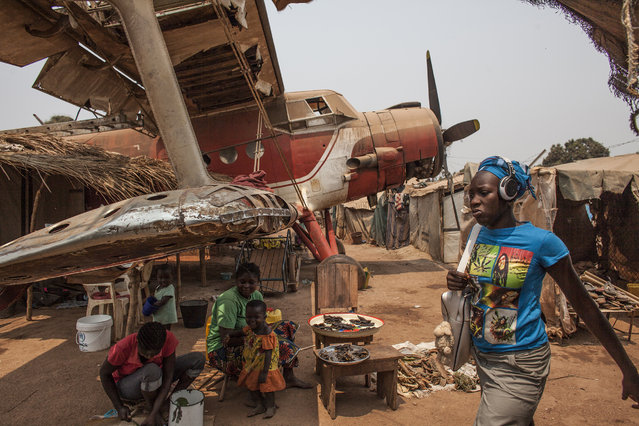
A women sell food under the wing of a plane wreckage being used as housing in M'Poko Internally Displaced Persons camp in Bangui, Central African Republic on Saturday, February 13, 2016. The M'Poko IDP camp, just outside the capitol's airport, currently houses close to 20,000 people displaced due to the ongoing conflict in Central African Republic. (Photo by Jane Hahn/The Washington Post)
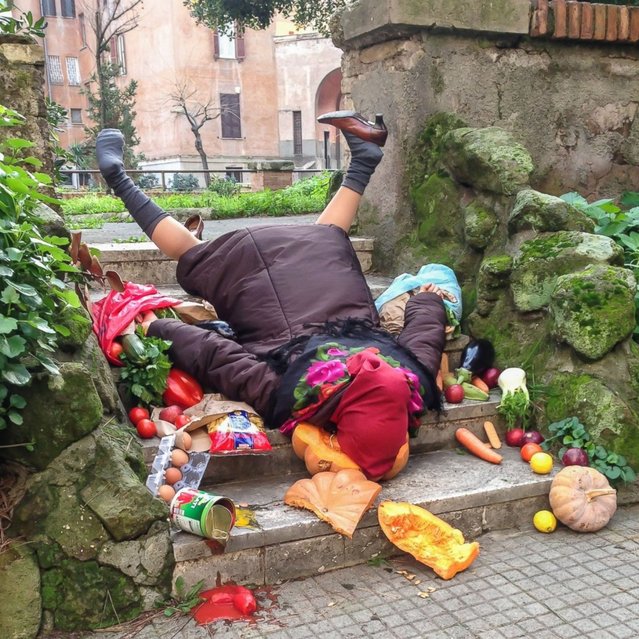
Photographer Sandro Giordoan has created a photo series of people who look like they’ve just taken terrible falls, spilling all their things around them. “Each shot ‘tells’ about worn out characters who, as if a sudden black-out of mind and body took over, let themselves crash with no attempt to save themselves, unable, because of the fatigue of the everyday ‘representation’ of living, oppressed by ‘appearance’ instead of simply ‘existing’,” said Giordano. (Photo by Sandro Giordoan)
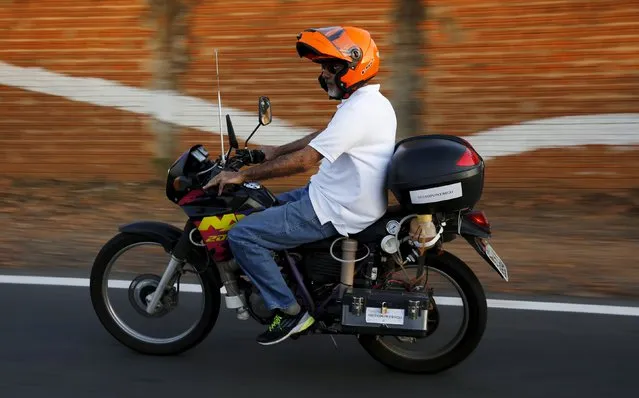
Ricardo Azevedo rides his Honda NX 200 motorbike, which he converted to be powered by water, in Salto, northwest of Sao Paulo, Brazil, August 6, 2015. The Sao Paulo civil servant built the motorbike, which can cover up to 500 kilometres (311 miles) fuelled by just one litre of water. Dubbed “Moto Power H2O” the bike is powered by the process of electrolysis, which breaks the water molecule down into its constituent elements. (Photo by Nacho Doce/Reuters)