Samba dancers arrive to perform ahead of the athletics competitions of the 2016 Summer Olympics at the Olympic stadium in Rio de Janeiro, Brazil, Sunday, August 14, 2016. (Photo by Jae C. Hong/AP Photo)
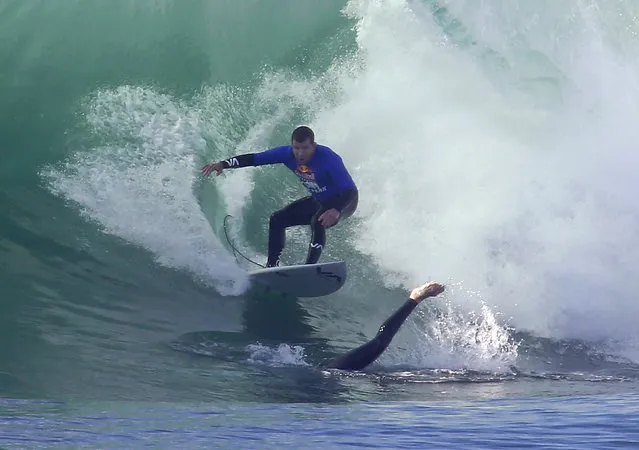
Australia's Richie “Vas” Vaculik maneuvers past another surfer ducking under the wave during the inaugural Red Bull Cape Fear invitational surfing tournament off the shores of southern Sydney, August 31, 2014. (Photo by Jason Reed/Reuters)
The rear of the Chevorlet Chaparral 2X Vision Gran Turismo concept car at its world debut at the Los Angeles Auto Show in California, November 19, 2014. The annual event is open to the public beginning November 21. (Photo by Lucy Nicholson/Reuters)
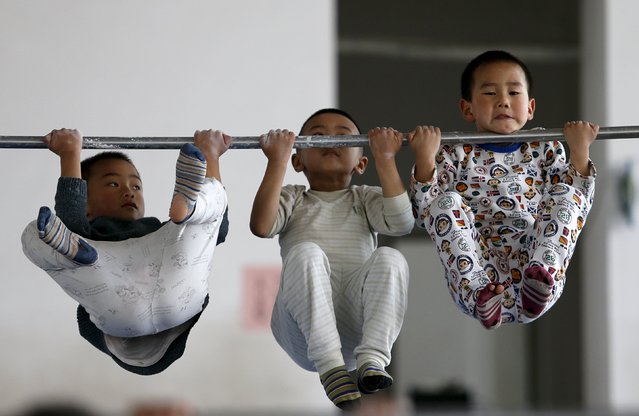
Young gymnasts practice pull-up on a bar at a gymnasium of a sports school in Jiaxing, Zhejiang province April 11, 2015. (Photo by William Hong/Reuters)
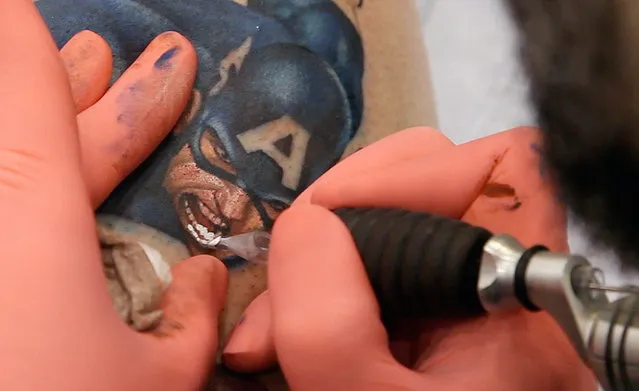
A tattoo of Captain America drawn by artist Sean Karon on the leg of client Ron Raucci at the Hampton Roads Tattoo Festival in Virginia, on March 2, 2012. The tattoo was completed from start to finish in one five-and-a-half hour session and won the prestigious “tattoo of the day” contest. (Photo by Jason Reed/Reuters)
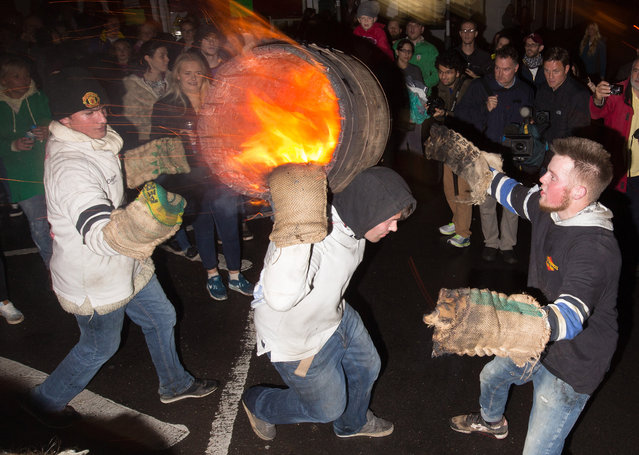
A boy runs with a burning barrel soaked in tar at the annual Ottery St Mary tar barrel festival on November 5, 2015 in Ottery St. Mary, England. The tradition, which is over 400 years old, sees competitors (who must have been born in the town to take part) running with burning barrels on their backs through the village, until the heat becomes too unbearable or the barrel breaks down, starting with junior barrels carried by children and continuing all evening with ever larger and larger barrels. The event, which has been threatened with closure on previous years due to increasing public liability insurance costs, raises thousands of pounds for charity and attracts spectators from around the world. (Photo by Matt Cardy/Getty Images)
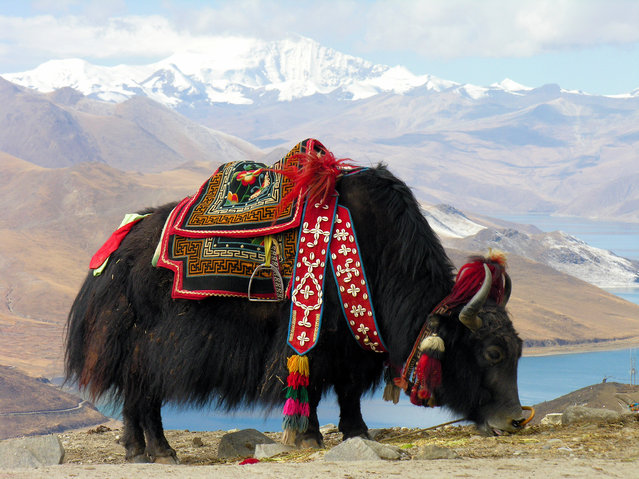
Yak near Yamdrok lake, Tibet. It is a long-haired bovinae found throughout the Himalayan region of south Central Asia, the Tibetan Plateau and as far north as Mongolia and Russia. The Tibetan economy is dominated by subsistence agriculture. Due to limited arable land, the primary occupation of the Tibetan Plateau is raising livestock, such as sheep, cattle, goats, camels, yaks, dzo, and horses. The Tibetan yak is an integral part of Tibetan life. (Photo by Dennis Jarvis)