Loading...
Done
New Year revellers, many in fancy dress, braved freezing conditions in the River Forth in front of the Forth Rail Bridge during the annual Loony Dook Swim

Over 1000 New Year revellers, many in fancy dress, braved freezing conditions in the River Forth in front of the Forth Rail Bridge during the annual Loony Dook Swim on January 1, 2012 in South Queensferry, Scotland. Thousands of people gathered last night to see in the New Year at Hogmanay celebrations in towns and cities across Scotland. (Photo by Jeff J. Mitchell/Getty Images)
Details
02 Jan 2012 12:00:00
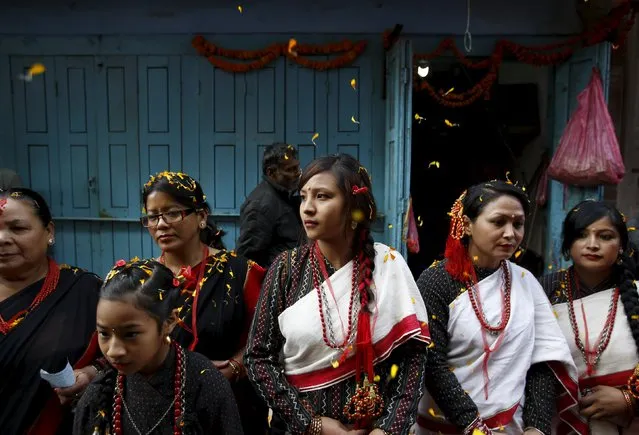
Participants from Newar community in traditional attire, takes part in the parade to celebrate Newari New Year that falls during the Tihar festival, also called Diwali, in Kathmandu, Nepal November 12, 2015. (Photo by Navesh Chitrakar/Reuters)

Participants from Newar community in traditional attire, takes part in the parade to celebrate Newari New Year that falls during the Tihar festival, also called Diwali, in Kathmandu, Nepal November 12, 2015. The Newar community observes the start of their Newari New Year 1136, in accordance with their lunar calendar, by worshipping their spiritual selves in a ritual known as "mahapuja". (Photo by Navesh Chitrakar/Reuters)
Details
16 Nov 2015 08:01:00
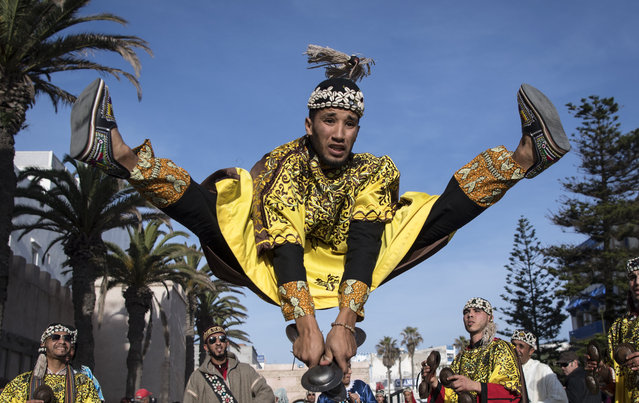
A Gnawa traditional group performs in the city of Essaouira on December 14, 2019, to celebrate the decision of adding the Gnawa culture to UNESCO's list of Intangible Cultural Heritage of Humanity. Gnawa culture, a centuries-old Moroccan practice rooted in music, African rituals and Sufi traditions, was added to UNESCO's list of Intangible Cultural Heritage of Humanity earlier in the week. Gnawa refers to a “set of musical productions, fraternal practices and therapeutic rituals where the secular mixes with the sacred”, according to the nomination submitted by Morocco. Often dressed in colourful outfits, Gnawa musicians play the guenbri, a type of lute with three strings, accompanied by steel castanets called krakebs. (Photo by Fadel Senna/AFP Photo)

A Gnawa traditional group performs in the city of Essaouira on December 14, 2019, to celebrate the decision of adding the Gnawa culture to UNESCO's list of Intangible Cultural Heritage of Humanity. Gnawa culture, a centuries-old Moroccan practice rooted in music, African rituals and Sufi traditions, was added to UNESCO's list of Intangible Cultural Heritage of Humanity earlier in the week. Gnawa refers to a “set of musical productions, fraternal practices and therapeutic rituals where the secular mixes with the sacred”, according to the nomination submitted by Morocco. Often dressed in colourful outfits, Gnawa musicians play the guenbri, a type of lute with three strings, accompanied by steel castanets called krakebs. (Photo by Fadel Senna/AFP Photo)
Details
18 Dec 2019 00:05:00
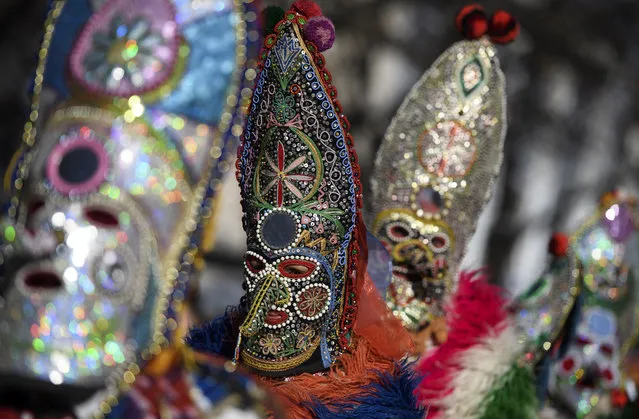
Mask dancers take part in a parade during the the International Festival of Masquerade Games “Surva” in the town of Pernik, some 30 km from Sofia, Bulgaria, 27 January 2019. In ancient times the old Thracians held the Kukeri Ritual Games in honor of god Dionysus – known as a god of wine and ecstasy. Even today these games are also known as the Dionysus' games. Among the Kukeri dancers' are many characters, including Dionysus and his satyrs as well as others from deep history such as the tsar, harachari, plyuvkachi, startzi, and pesyatzi. (Photo by Vassil Donev/EPA/EFE)

Mask dancers take part in a parade during the the International Festival of Masquerade Games “Surva” in the town of Pernik, some 30 km from Sofia, Bulgaria, 27 January 2019. In ancient times the old Thracians held the Kukeri Ritual Games in honor of god Dionysus – known as a god of wine and ecstasy. Even today these games are also known as the Dionysus' games. Among the Kukeri dancers' are many characters, including Dionysus and his satyrs as well as others from deep history such as the tsar, harachari, plyuvkachi, startzi, and pesyatzi. (Photo by Vassil Donev/EPA/EFE)
Details
31 Jan 2019 00:01:00
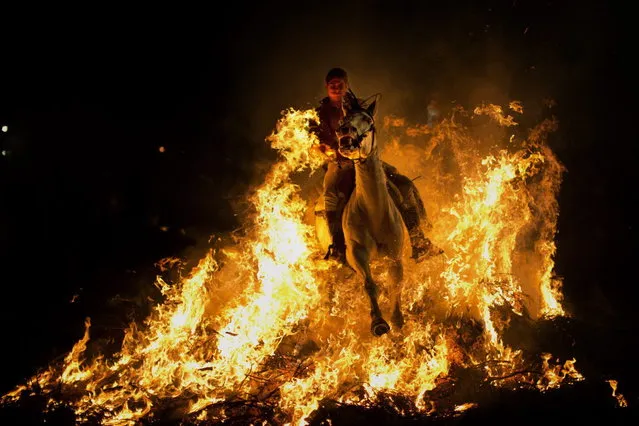
A man rides a horse through a bonfire as part of a ritual in honor of Saint Anthony, the patron saint of animals, in San Bartolome de Pinares, about 100 km west of Madrid, Spain on Thursday, January 16, 2014. On the eve of Saint Anthony's Day, hundreds ride their horses through the narrow cobblestone streets of the small village of San Bartolome during the “Luminarias”, a tradition that dates back 500 years and is meant to purify the animals with the smoke of the bonfires and protect them for the year to come. (Photo by Emilio Morenatti/AP Photo)

A man rides a horse through a bonfire as part of a ritual in honor of Saint Anthony, the patron saint of animals, in San Bartolome de Pinares, about 100 km west of Madrid, Spain on Thursday, January 16, 2014. On the eve of Saint Anthony's Day, hundreds ride their horses through the narrow cobblestone streets of the small village of San Bartolome during the “Luminarias”, a tradition that dates back 500 years and is meant to purify the animals with the smoke of the bonfires and protect them for the year to come. (Photo by Emilio Morenatti/AP Photo)
Details
24 Jan 2014 11:56:00
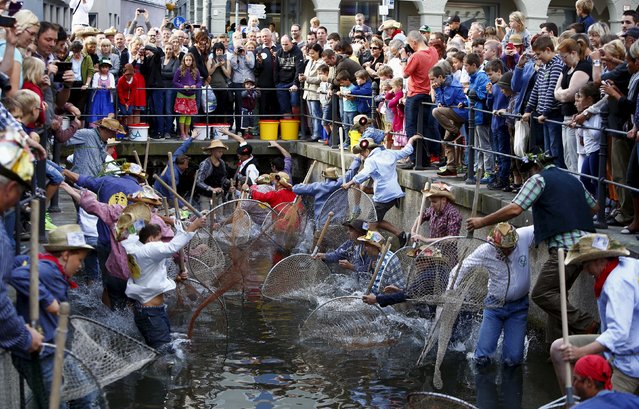
Fishermen jump into a small river to catch trout as they celebrate Fischertag (Fisherman's Day) in downtown Memmingen, southern Germany, July 25, 2015. The annual Fisherman's Day (Fischertag) tradition goes back to the year of 1465 where every fisherman who were born in Memmingen tries to catch trout from the river. The participant who catches the biggest trout will be named the “Fisher King” for one year. (Photo by Michaela Rehle/Reuters)

Fishermen jump into a small river to catch trout as they celebrate Fischertag (Fisherman's Day) in downtown Memmingen, southern Germany, July 25, 2015. The annual Fisherman's Day (Fischertag) tradition goes back to the year of 1465 where every fisherman who were born in Memmingen tries to catch trout from the river. The participant who catches the biggest trout will be named the “Fisher King” for one year. (Photo by Michaela Rehle/Reuters)
Details
26 Jul 2015 10:37:00
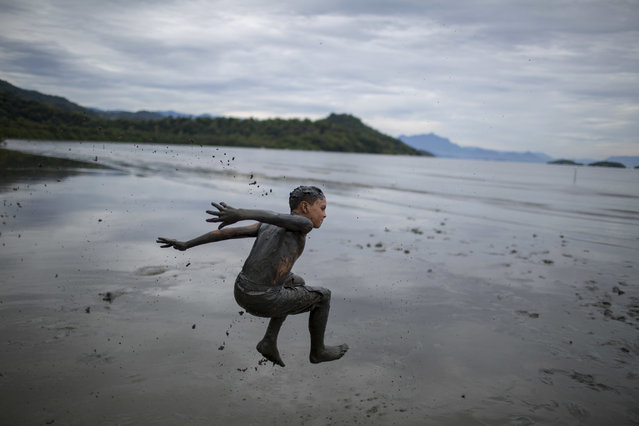
A boy jumps into a pool of mud during the traditional “Bloco da Lama” or “Mud Street” carnival party, in Paraty, Brazil, Saturday, February 25, 2017. Legend has it the “bloco” was born in 1986 after local teens hiking in a nearby mangrove forest smeared themselves with mud to discourage mosquitoes and then wandered through Paraty. The party grew year after year, but revelers eventually were banned from parading in the colonial downtown after shopkeepers complained pristine white walls were stained with the hard-to-remove mud. (Photo by Mauro Pimentel/AP Photo)

A boy jumps into a pool of mud during the traditional “Bloco da Lama” or “Mud Street” carnival party, in Paraty, Brazil, Saturday, February 25, 2017. Legend has it the “bloco” was born in 1986 after local teens hiking in a nearby mangrove forest smeared themselves with mud to discourage mosquitoes and then wandered through Paraty. The party grew year after year, but revelers eventually were banned from parading in the colonial downtown after shopkeepers complained pristine white walls were stained with the hard-to-remove mud. (Photo by Mauro Pimentel/AP Photo)
Details
28 Mar 2017 09:07:00
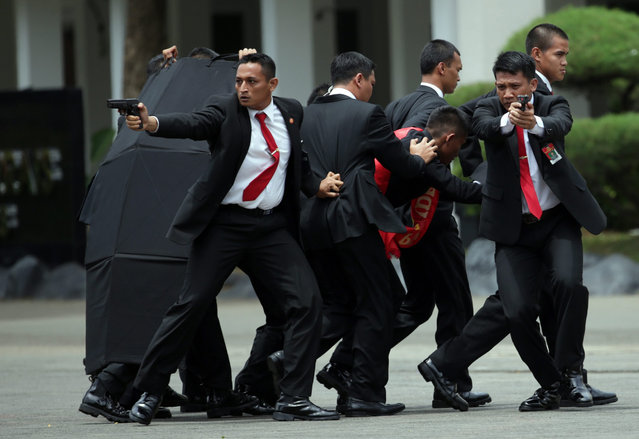
Members of the Indonesian Presidential Security Forces (Paspampres) show their skills during the simulation of a terrorist attack in Jakarta, Indonesia, 29 December 2016. According to reports in local media the Indonesian security forces have already arrested 21 terrorists suspects and fatally shot five of them, who were allegedly planning attacks in the Indonesian capital during the Christmas and New Year's Eve celebrations this year. The presentation was shown on the occasion of a visit by Indonesian President Joko Widodo and a delegation to the Paspampres  headquarters in Jakarta. (Photo by Bagus Indahono/EPA)

Members of the Indonesian Presidential Security Forces (Paspampres) show their skills during the simulation of a terrorist attack in Jakarta, Indonesia, 29 December 2016. According to reports in local media the Indonesian security forces have already arrested 21 terrorists suspects and fatally shot five of them, who were allegedly planning attacks in the Indonesian capital during the Christmas and New Year's Eve celebrations this year. The presentation was shown on the occasion of a visit by Indonesian President Joko Widodo and a delegation to the Paspampres headquarters in Jakarta. (Photo by Bagus Indahono/EPA)
Details
30 Dec 2016 10:57:00