Participants pose as they take part in a bodybuilding and fitness event named “China Fit”, in Beijing, China, June 15, 2016. (Photo by Reuters/Stringer)
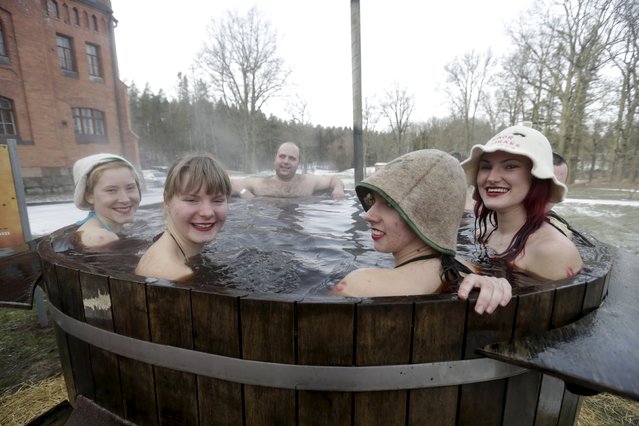
People enjoy a bath in hot kvass, a traditional fermented beverage made from rye bread, during the sauna marathon near Otepaa, Estonia, February 6, 2016. Participants have to track down and visit the given saunas in the Otepaa area as fast as possible. (Photo by Ints Kalnins/Reuters)
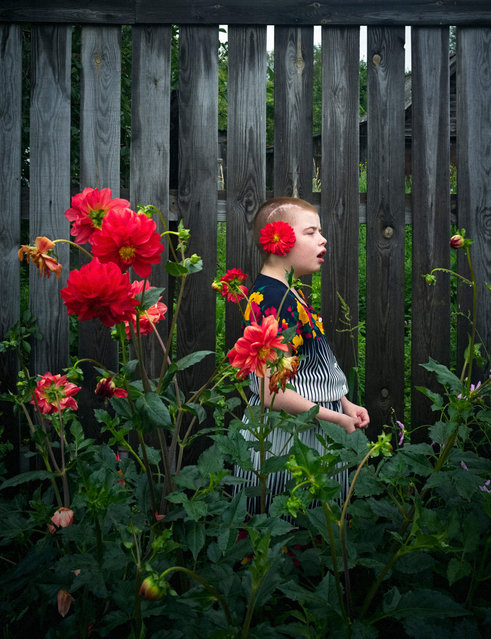
“Elat’ma, the Ryazan Oblast region of Russia. This small town is only 300 kilometers (186 miles) from modern Moscow but remains 60 years in the past, dominated by the spirit of socialism. The air of the communist ‘50s can be seen in the town’s architecture, celebrations and other occurrences. But neither its beauty nor its ties to a socialist past brought photographer Anastasia Rudenko to this village. Elat’ma is unique in that it functions as a town for mentally disabled people”. – Michelle Cohan via CNN. (Photo by Anastasia Rudenko)
“Bombay’s once ubiquitous Premier Padmini taxis were introduced in the 60s and are dwindling at an alarming rate. This follows a decree banning vehicles over 25 years old from the streets to be replaced with “modern alternatives”. In a few years these iconic workhorses will be gone from Bombay’s streets altogether. It is important to capture this before it disappears and I see the road wallah's cabs as the time capsules that allow me to do this”. – Dougie Wallace, Bombay India, March, 2013. (Photo by Dougie Wallace)
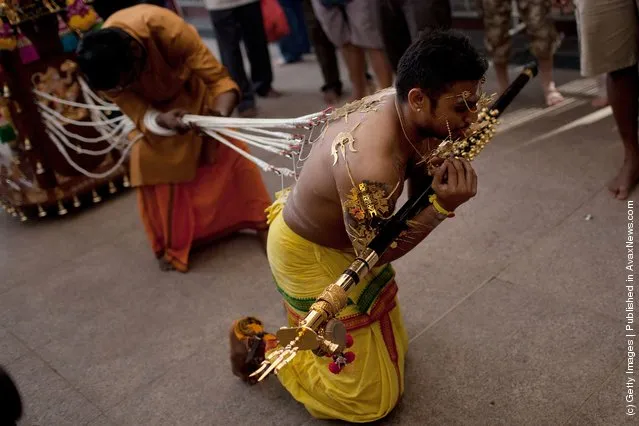
“Kavadi Attam is a dance performed by the devotees during the ceremonial worship of Murugan, the Tamil God of War. It is often performed during the festival of Thaipusam and emphasizes debt bondage. The Kavadi itself is a physical burden through which the devotees implore for help from the God Murugan”. – Wikipedia
Photo: A devotee pulls his procession burden connected by hooks pierced in his back during the Thaipusam procession at Sri Srinivasa Perumal Temple on February 7, 2012 in Singapore. (Photo by Chris McGrath/Getty Images)
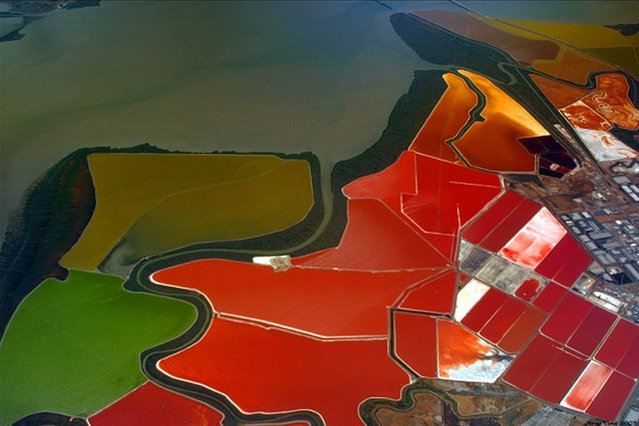
Salt evaporation ponds, also called salterns or salt pans, are shallow artificial ponds designed to produce salts from sea water or other brines. The seawater or brine is fed into large ponds and water is drawn out through natural evaporation which allows the salt to be subsequently harvested. The ponds also provide a productive resting and feeding ground for many species of waterbirds, which may include endangered species. The ponds are commonly separated by levees.
Russian honor guard soldiers warm up prior a rehearsal for the Victory Day military parade in St. Petersburg, Russia, Wednesday, May 3, 2017. The parade will take place at Dvortsovaya (Palace) Square on May 9, to celebrate 72 years after the victory in WWII. (Photo by Dmitri Lovetsky/AP Photo)