Loading...
Done
Elephant

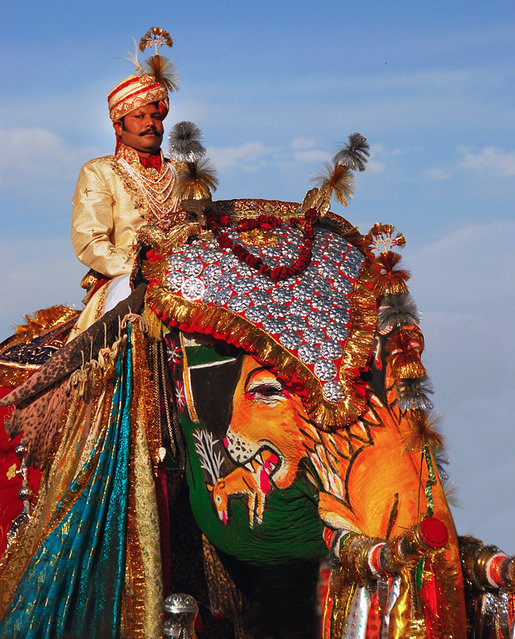
Elephant Festival is a festival celebrated in Jaipur city in Rajasthan state in India. It is held on the day of Holi festival, usually in the month of March.The festival features Elephant polo and Elephant Dance. The Elephant Festival begins with a beautiful procession of bedecked elephants, camels, horses and folk dancers. The owners proudly embellish their elephants with vibrant colors, jhools (saddle cloth) and heavy jewellery. It is quite a treat to see female elephants wearing anklets, which tinkle as they walk. One can see people sprinkling 'gulaal' (colored powder) perched on top of the elephant. The most beautifully decorated elephant is awarded. Elephant polo, Elephant race, the tug-of-war between Elephant and 19 men and women are the featured events of the festival.
Details
30 Apr 2015 16:55:00
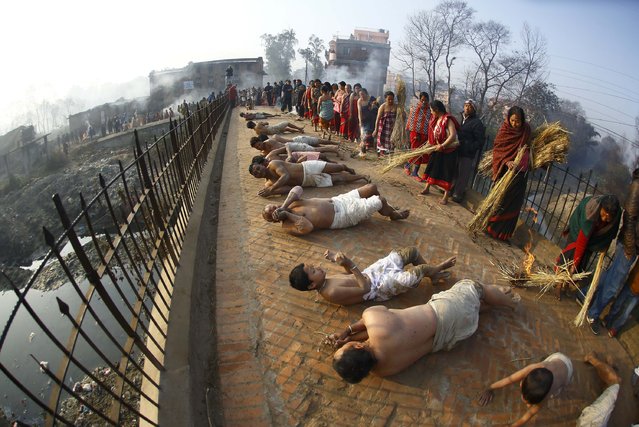
Devotees offer prayer by rolling on the street during the final day of the month-long Swasthani festival of Bhaktapur, near Kathmandu, February 3, 2015. During the festival, devotees recite one chapter of a Hindu tale daily from the 31-chapter sacred Swasthani Brata Katha book, that is dedicated to God Madhavnarayan and Goddess Swasthani, alongside various other gods and goddesses and the miraculous feats performed by them. (Photo by Navesh Chitrakar/Reuters)

Devotees offer prayer by rolling on the street during the final day of the month-long Swasthani festival of Bhaktapur, near Kathmandu, February 3, 2015. During the festival, devotees recite one chapter of a Hindu tale daily from the 31-chapter sacred Swasthani Brata Katha book, that is dedicated to God Madhavnarayan and Goddess Swasthani, alongside various other gods and goddesses and the miraculous feats performed by them. The devotees also go on pilgrimages to various temples, perform religious rituals, take a holy bath in the rivers and fast for a month, especially among women who believe fasting helps in their family's well-being or in getting them a good husband. (Photo by Navesh Chitrakar/Reuters)
Details
04 Feb 2015 12:44:00
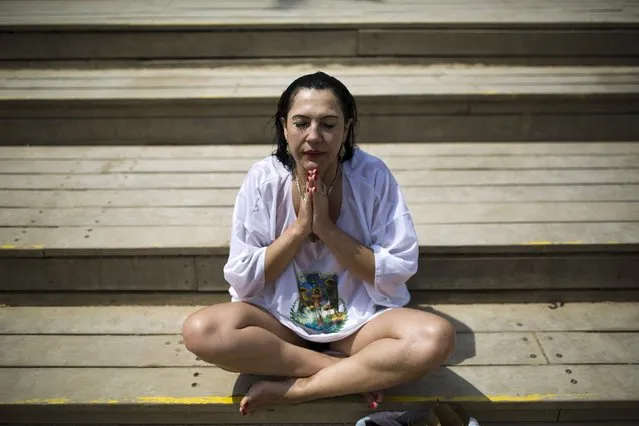
A Christian pilgrim prays during her visit to the baptismal site known as Qasr el-Yahud on the banks of the Jordan River near the West Bank city of Jericho April 9, 2015. (Photo by Amir Cohen/Reuters)

A Christian pilgrim prays during her visit to the baptismal site known as Qasr el-Yahud on the banks of the Jordan River near the West Bank city of Jericho April 9, 2015. A day ahead of Orthodox Good Friday, the Easter period draws many Christian tourists to visit well-known religious sites, including Qasr el-Yahud, where it is believed John the Baptist baptised Jesus. (Photo by Amir Cohen/Reuters)
Details
10 Apr 2015 06:26:00
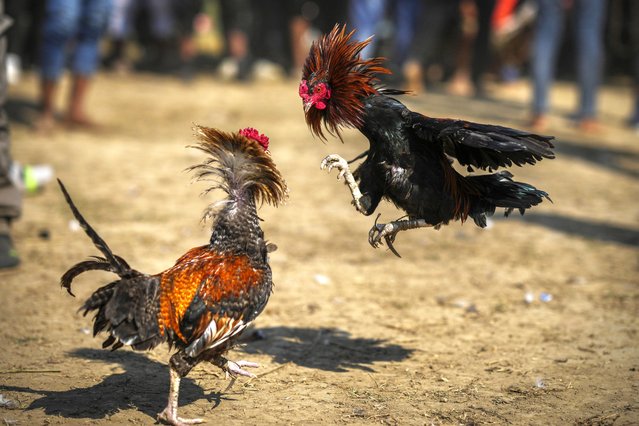
Roosters attack each other during a cockfight as part of Jonbeel festival near Jagiroad, in Morigaon district, India, Friday, January 17, 2025. (Photo by Anupam Nath/AP Photo)

Roosters attack each other during a cockfight as part of Jonbeel festival near Jagiroad, in Morigaon district, India, Friday, January 17, 2025. (Photo by Anupam Nath/AP Photo)
Details
29 Jan 2025 03:26:00
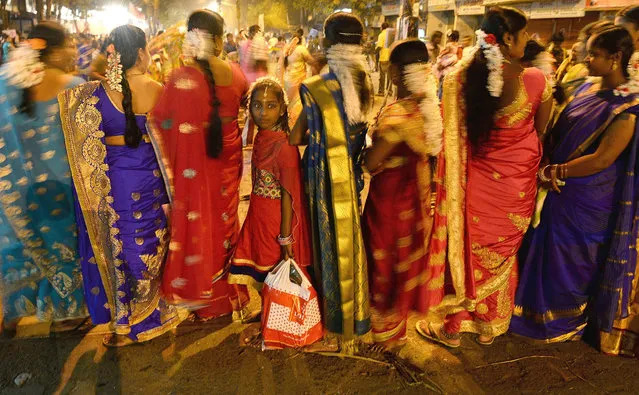
Indian Hindu devotees wait to take part in an event to mark Pongal in Mumbai on January 15, 2016. Pongal, which coincides with the Hindu festival Makara Sankranthi, is a thanksgiving and harvest celebrated throughout India and specifically by those from the Indian state of Tamil Nadu. (Photo by Indranil Mukherjee/AFP Photo)

Indian Hindu devotees wait to take part in an event to mark Pongal in Mumbai on January 15, 2016. Pongal, which coincides with the Hindu festival Makara Sankranthi, is a thanksgiving and harvest celebrated throughout India and specifically by those from the Indian state of Tamil Nadu. (Photo by Indranil Mukherjee/AFP Photo)
Details
19 Jan 2016 08:06:00
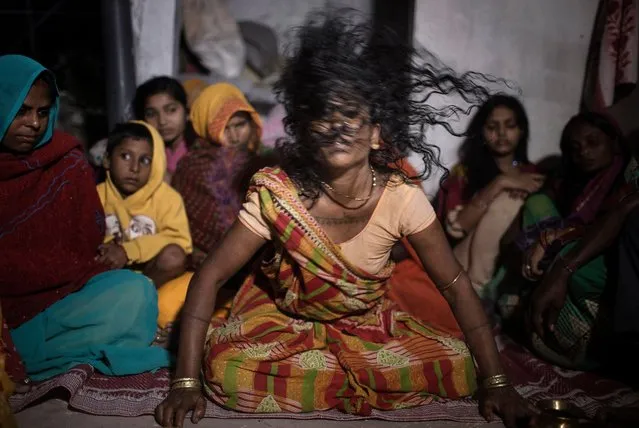
Marani Devi Chaudhary (C), aged 40, performs a ritual in front of shaman Paltan Yadav (unseen) at her home in Rajaur village in Dhanusha district, Nepal, 02 November 2017. The shaman identified Marani Devi to be possessed by their lineage god who was dissatisfied by their worship is thought by the family to have caused them misfortune and is even feared lead to their death. Therefore Marani Devi spent 1,500 USD to perform a healing ritual at the Ghost Festival held at the banks of Kamala River in Dhanusha district two days later. Every family or community has their own sacred god, called 'Kuldevta' in Nepali which means family deity or lineage god. Only family members or people within communities of the same caste can worship to the deity. They have their own rules and regulations of worship which varies from one family and community to another. Being unable to follow the rules and regulations or carry out worship is believed to cause misfortune. (Photo by Narendra Shrestha/EPA/EFE)

Marani Devi Chaudhary (C), aged 40, performs a ritual in front of shaman Paltan Yadav (unseen) at her home in Rajaur village in Dhanusha district, Nepal, 02 November 2017. The shaman identified Marani Devi to be possessed by their lineage god who was dissatisfied by their worship is thought by the family to have caused them misfortune and is even feared lead to their death. (Photo by Narendra Shrestha/EPA/EFE)
Details
17 Nov 2017 06:53:00
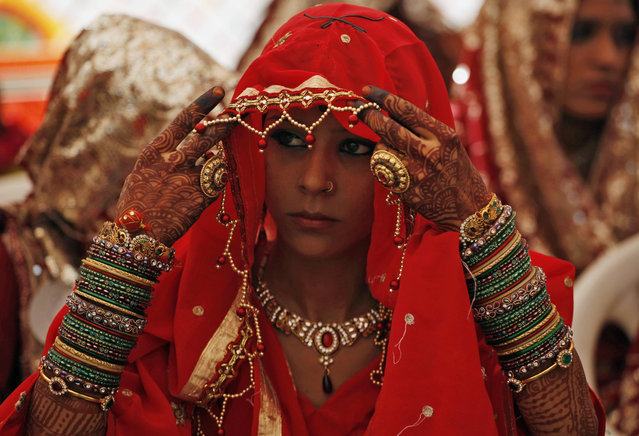
An Indian bride adjusts her veil during a mass marriage ceremony in Ahmadabad, India, Sunday, October 11, 2015. Sixty five Muslim couples tied the knot in a single ceremony organized by a social organization. (Photo by Ajit Solanki/AP Photo)

An Indian bride adjusts her veil during a mass marriage ceremony in Ahmadabad, India, Sunday, October 11, 2015. Sixty five Muslim couples tied the knot in a single ceremony organized by a social organization. (Photo by Ajit Solanki/AP Photo)
Details
15 Oct 2015 08:05:00
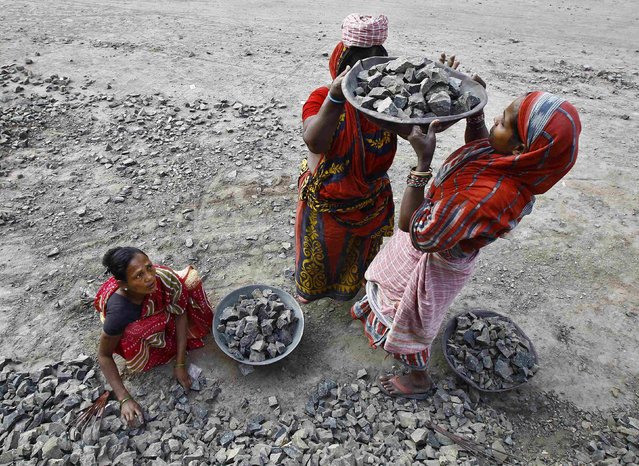
Women labourers work at the construction site of a road in Kolkata January 8, 2015. Across towns and cities in India, it is not uncommon to see women cleaning building sites, carrying bricks and or shoveling gravel - helping construct the infrastructure necessary for the country's economic and social development. (Photo by Rupak De Chowdhuri/Reuters)

Women labourers work at the construction site of a road in Kolkata January 8, 2015. Across towns and cities in India, it is not uncommon to see women cleaning building sites, carrying bricks and or shoveling gravel – helping construct the infrastructure necessary for the country's economic and social development. They help build roads, railway tracks, airports, and offices. They lay pipes for clean water supplies, cables for telecommunications, and dig the drains for sewage systems. But although women make up at least 20 percent of India's 40 million construction workers, they are less recognized than male workers with lower pay and often prone to safety hazards and sexual harassment. They are often unaware of their rights or scared to complain, say activists now trying to campaign for better treatment of women in the construction industry. (Photo by Rupak De Chowdhuri/Reuters)
Details
15 Jan 2015 13:47:00