Loading...
Done
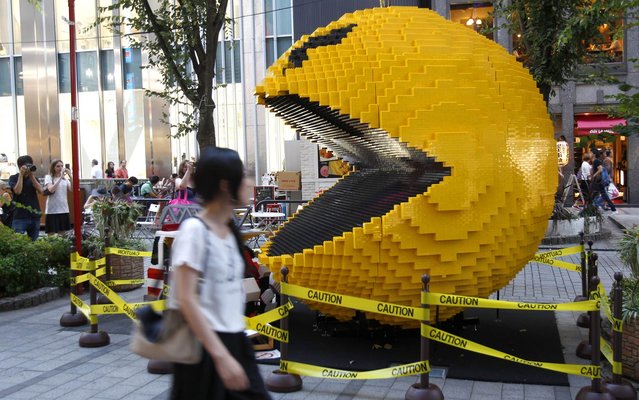
A woman walks past a giant Pac-Man in Tokyo's Shinjuku area, Wednesday, August 12, 2015. The three-meter (about nine feet and 10 inches)-tall Pac-Man and other video game characters, made of Lego bricks, were on display to promote the upcoming movie “Pixels”. (Photo by Ken Aragaki/AP Photo)

A woman walks past a giant Pac-Man in Tokyo's Shinjuku area, Wednesday, August 12, 2015. The three-meter (about nine feet and 10 inches)-tall Pac-Man and other video game characters, made of Lego bricks, were on display to promote the upcoming movie “Pixels”. (Photo by Ken Aragaki/AP Photo)
Details
13 Aug 2015 12:35:00
A reveler dances during the Carmelitas street party in Rio de Janeiro, Brazil, Friday, March 1, 2019. Much of the appeal of Rio street parties is the variety of themes and that people can dress up in costumes or not. (Photo by Leo Correa/AP Photo)

A reveler dances during the Carmelitas street party in Rio de Janeiro, Brazil, Friday, March 1, 2019. Much of the appeal of Rio street parties is the variety of themes and that people can dress up in costumes or not. (Photo by Leo Correa/AP Photo)
Details
03 Mar 2019 00:07:00
Cheng Chen (R), a 27-year-old worker at a state-owned enterprise, poses for a photograph with his nephew who is wearing his home-made Iron Man armour, in Xuzhou, Jiangsu province April 13, 2015. (Photo by Reuters/Stringer)

Cheng Chen (R), a 27-year-old worker at a state-owned enterprise, poses for a photograph with his nephew who is wearing his home-made Iron Man armour, in Xuzhou, Jiangsu province April 13, 2015. It cost Cheng about 500 yuan ($81 USD) to make the armour, which weighs about 4 kilograms, with plastic boards and LED lights, local media reported. (Photo by Reuters/Stringer)
Details
18 Apr 2015 10:12:00
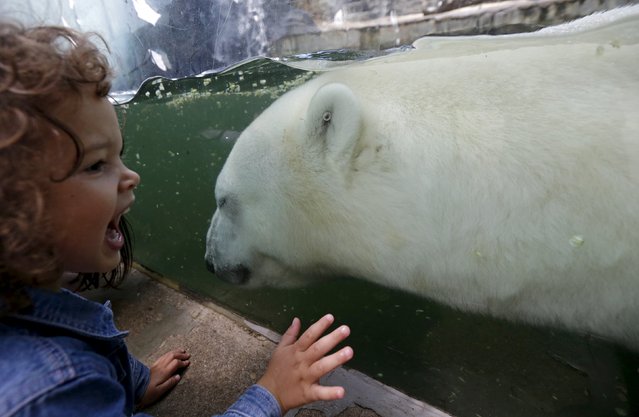
A child looks at a polar bear swimming under a water in its enclosure on a hot summer day at Prague Zoo, Czech Republic, July 30, 2015. (Photo by David W. Cerny/Reuters)

A child looks at a polar bear swimming under a water in its enclosure on a hot summer day at Prague Zoo, Czech Republic, July 30, 2015. (Photo by David W. Cerny/Reuters)
Details
31 Jul 2015 11:45:00
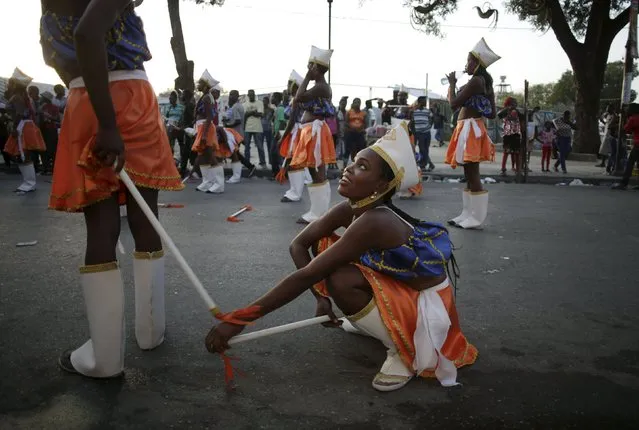
Revellers take a break during the Carnival 2016 parade in Port-au-Prince, Haiti, February 8, 2016. (Photo by Andres Martinez Casares/Reuters)

Revellers take a break during the Carnival 2016 parade in Port-au-Prince, Haiti, February 8, 2016. (Photo by Andres Martinez Casares/Reuters)
Details
10 Feb 2016 11:41:00
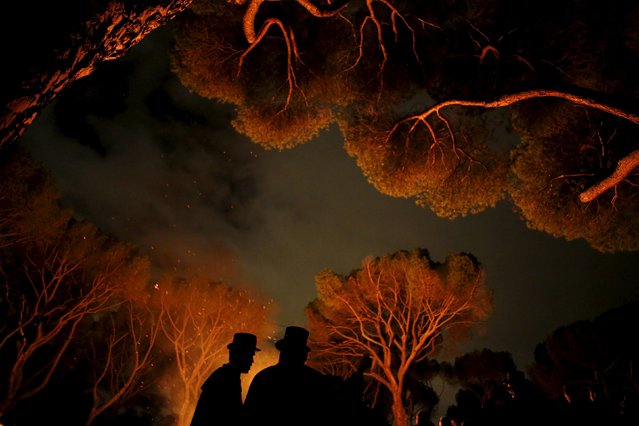
People take part in the “The Burial of the Sardine” funeral procession, which marks the end of carnival festivities, in Madrid, Spain, February 10, 2016. (Photo by Juan Medina/Reuters)

People take part in the “The Burial of the Sardine” funeral procession, which marks the end of carnival festivities, in Madrid, Spain, February 10, 2016. “Mourners” carry a coffin with a mock sardine through the streets to celebrate the countdown to Lent. Spanish painter Francisco de Goya's painting “El entierro de la sardina” (The Burial of the Sardine) was inspired by this tradition, which started in Madrid in the 18th century, around the time of Spanish King Carlos III. (Photo by Juan Medina/Reuters)
Details
11 Feb 2016 12:29:00
A surfer rides a large wave at El Bocal during the Vaca Gigante (Big Cow) giant wave surf competition in Santander, northern Spain December 17, 2016. (Photo by Vincent West/Reuters)

A surfer rides a large wave at El Bocal during the Vaca Gigante (Big Cow) giant wave surf competition in Santander, northern Spain December 17, 2016. (Photo by Vincent West/Reuters)
Details
19 Dec 2016 07:06:00
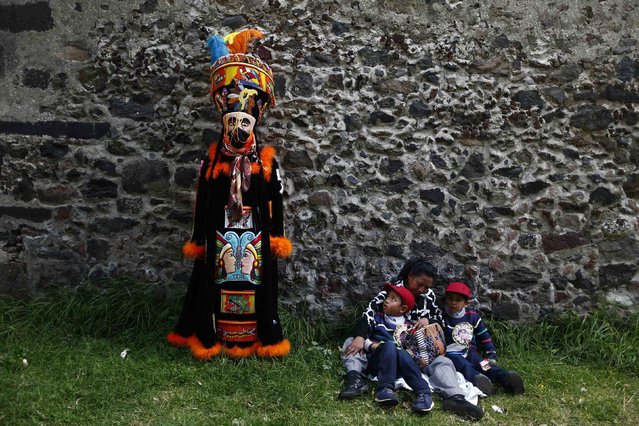
A boy sitting with his family looks up at a traditional Chinelo costumed dancer during a celebration 40 days after the birth of Jesus, in Xochimilco on the outskirts of Mexico City, February 2, 2015. (Photo by Edgard Garrido/Reuters)

A boy sitting with his family looks up at a traditional Chinelo costumed dancer during a celebration 40 days after the birth of Jesus, in Xochimilco on the outskirts of Mexico City, February 2, 2015. The tradition of the Chinelo dates back to colonial times and the outfits and masks, which are supposed to resemble the faces of the Europeans and always sport an uptilted beard, became more elaborate between the 1800s and 1900s to make fun of the upper social classes. (Photo by Edgard Garrido/Reuters)
Details
03 Feb 2015 13:09:00