Loading...
Done
Players battle for the ball during their match at the swamp soccer China tournament in Beijing, June 26, 2014. The 32 teams from across the country participated in the soccer event to celebrate the 2014 World Cup in Brazil. (Photo by Kim Kyung-Hoon/Reuters)

Players battle for the ball during their match at the swamp soccer China tournament in Beijing, June 26, 2014. The 32 teams from across the country participated in the soccer event to celebrate the 2014 World Cup in Brazil. (Photo by Kim Kyung-Hoon/Reuters)
Details
29 Jun 2014 11:58:00
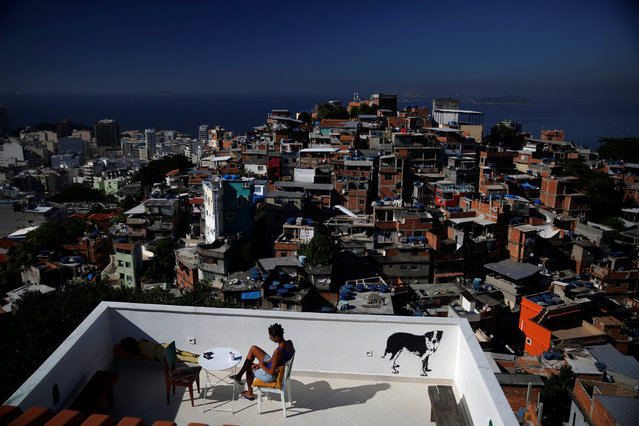
A woman sits on a terrace at Tiki hostel in Cantagalo favela, in Rio de Janeiro, Brazil, April 16, 2016. (Photo by Pilar Olivares/Reuters)

A woman sits on a terrace at Tiki hostel in Cantagalo favela, in Rio de Janeiro, Brazil, April 16, 2016. Hostels in a few of Rio's more than 1,000 slums serve not only as a cheap housing alternative for the more adventurous among the estimated 500,000 foreign tourists expected to arrive for the Olympics in August. The establishments also open up the rich culture of the city's shantytowns for travellers, giving them a glimpse into once “no-go” areas where about one-fifth of Rio's population lives. (Photo by Pilar Olivares/Reuters)
Details
04 May 2016 12:18:00
Group of clowns protested in the old center of Sao Paulo, Brazil on October 24, 2016. (Photo by Cris Faga via ZUMA Wire)

Group of clowns protested in the old center of Sao Paulo, Brazil on October 24, 2016. They are against false clowns scare people. They say they are clowns good and that people who dress to scare clown clowns are false. The wave of evil clowns started in the US and has spread to many countries. (Photo by Cris Faga via ZUMA Wire)
Details
26 Oct 2016 10:49:00
A sеx worker protests at Rua Guaicurus, the main bohemian area of Belo Horizonte, state of Minas Gerais, Brazil on April 5, 2021, asking to be considered a priority group to receive the vaccine agaisnt COVID-19. (Photo by Douglas Magno/AFP Photo)

A sеx worker protests at Rua Guaicurus, the main bohemian area of Belo Horizonte, state of Minas Gerais, Brazil on April 5, 2021, asking to be considered a priority group to receive the vaccine agaisnt COVID-19. (Photo by Douglas Magno/AFP Photo)
Details
04 Feb 2022 07:35:00
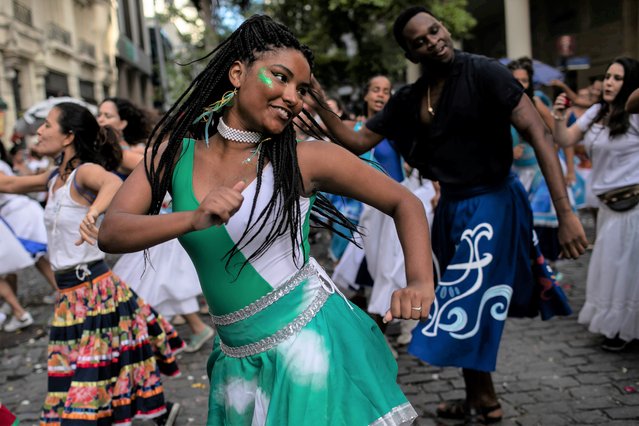
A woman dances during a rehearsal by the group “Tambores de Olokun” in Rio de Janeiro, Brazil, Sunday, April 17, 2022. The Brazilian municipalities of Rio de Janeiro and Sao Paulo postponed the traditional parades of the carnival samba schools to April 22 - 23, as a result of the COVID-19 pandemic. (Photo by Bruna Prado/AP Photo)

A woman dances during a rehearsal by the group “Tambores de Olokun” in Rio de Janeiro, Brazil, Sunday, April 17, 2022. The Brazilian municipalities of Rio de Janeiro and Sao Paulo postponed the traditional parades of the carnival samba schools to April 22 - 23, as a result of the COVID-19 pandemic. (Photo by Bruna Prado/AP Photo)
Details
19 Apr 2022 05:56:00
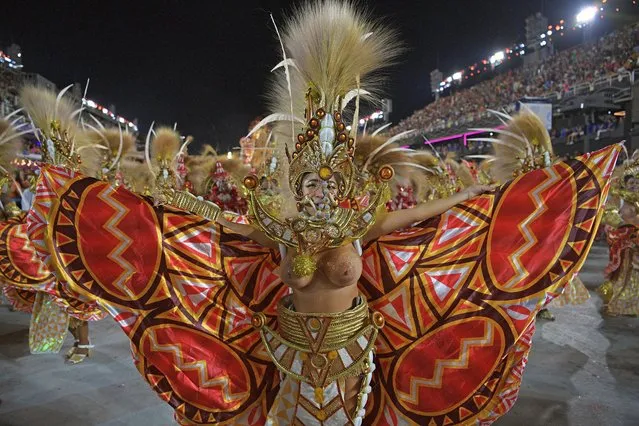
A member of Viradouro samba school performs during the first night of Rio's Carnival parade at the Sambadrome Marques de Sapucai in Rio de Janeiro, Brazil on April 22, 2022. (Photo by Carl de Souza/AFP Photo)

A member of Viradouro samba school performs during the first night of Rio's Carnival parade at the Sambadrome Marques de Sapucai in Rio de Janeiro, Brazil on April 22, 2022. (Photo by Carl de Souza/AFP Photo)
Details
29 May 2022 04:12:00
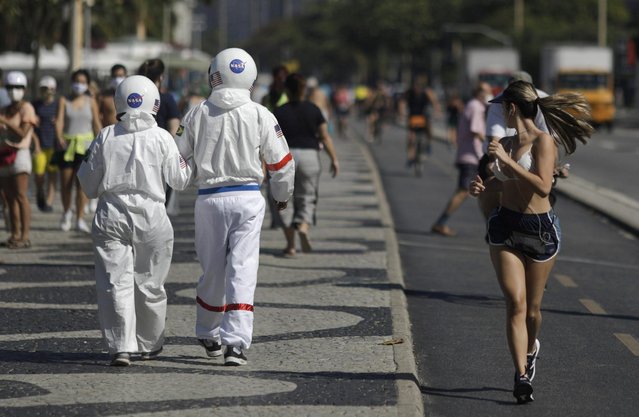
Tercio Galdino, 66, and his wife Aliceia, 65, wear their protective “space suits” as they walk on the sidewalk of Copacabana Beach amid the coronavirus outbreak in Rio de Janeiro, Brazil, July 11, 2020. (Photo by Ricardo Moraes/Reuters)

Tercio Galdino, 66, and his wife Aliceia, 65, wear their protective “space suits” as they walk on the sidewalk of Copacabana Beach amid the coronavirus outbreak in Rio de Janeiro, Brazil, July 11, 2020. (Photo by Ricardo Moraes/Reuters)
Details
25 Nov 2020 00:03:00
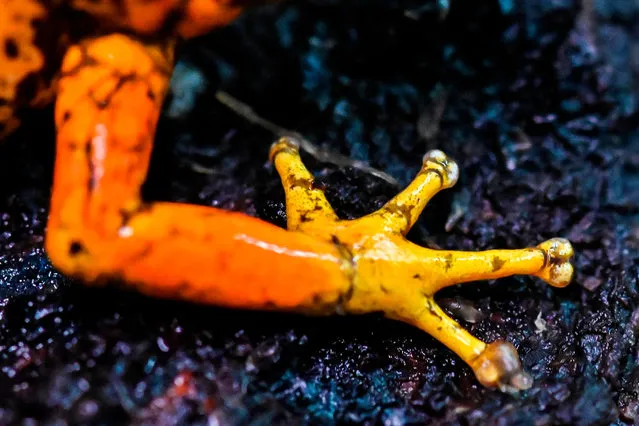
A leg of a “diablito” frog (Oophaga sylvatica) is photographed in a laboratory at a laboratory in the zoo of Cali, Colombia, on July 19, 2019. Colombia is the second country with the largest number of amphibians in the world after Brazil. More than 40% of amphibian species worldwide are in danger of extinction. (Photo by Luis Robayo/AFP Photo)

A leg of a “diablito” frog (Oophaga sylvatica) is photographed in a laboratory at a laboratory in the zoo of Cali, Colombia, on July 19, 2019. Colombia is the second country with the largest number of amphibians in the world after Brazil. More than 40% of amphibian species worldwide are in danger of extinction. (Photo by Luis Robayo/AFP Photo)
Details
28 Nov 2020 00:03:00