Loading...
Done
Mud Makes Man By Alejandro Maestre Gasteazi

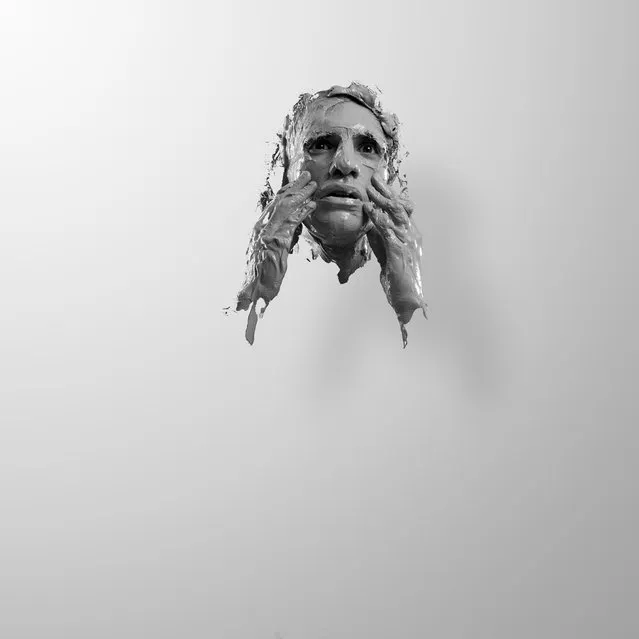
31-year-old Alejandro Maestre Gasteazi has created an incredibly interesting photographic series about the struggle of an artist. First, though, you may be asking yourself these questions: Exactly, what are we looking at? How did the photographer achieve this strange, sculpture-like illusion?

Gasteazi asked his friend Julián to cover himself with a mixture of blue paint and mud. He then photographed Julián at various stages. Later, in Photoshop, Gasteazi cut around his subject's body to make him appear like a floating sculpture.
Details
06 Jun 2015 09:18:00
Snailpimp By Stefan Siverud

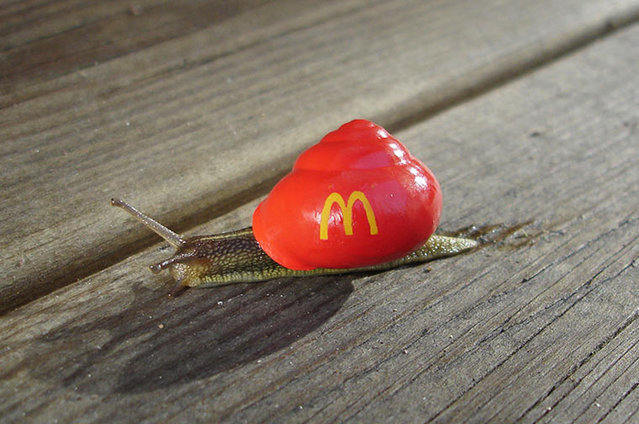
“Snailpimp” is a project by artist Stefan Siverud, who is having fun decorating living snails with the most varied designs, from the McDonald’s logo to the miniature lighthouse through Pac-Man, Ikea and Adidas. A funny and interesting project, achieved with non-toxic paints, which of course raises the question of the impact on these living animals. If some people ironize that these highly visible snails are less likely to be inadvertently stepped on by people, others point out that they are more easily spotted by predators… A project in line with the Inner City Snail artist Slinkachu.
Details
09 Jun 2015 12:18:00
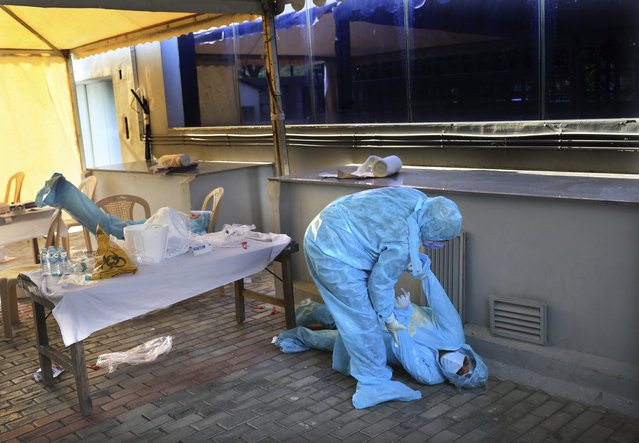
In this April 27, 2020 photo, a health worker helps another as she fainted because of exhaustion and long working hours during a swab test drive for COVID 19, in New Delhi, India. Two and a half months of nationwide lockdown kept numbers of infections relatively low in India. But with restrictions easing in recent weeks, cases have shot up, raising questions about whether authorities have done enough to avert catastrophe. Half of Delhi’s 8,200 hospital beds dedicated to COVID-19 patients are already full and officials are projecting more than half a million cases in the city alone by July 31. (Photo by Manish Swarup/AP Photo)

In this April 27, 2020 photo, a health worker helps another as she fainted because of exhaustion and long working hours during a swab test drive for COVID 19, in New Delhi, India. Two and a half months of nationwide lockdown kept numbers of infections relatively low in India. But with restrictions easing in recent weeks, cases have shot up, raising questions about whether authorities have done enough to avert catastrophe. Half of Delhi’s 8,200 hospital beds dedicated to COVID-19 patients are already full and officials are projecting more than half a million cases in the city alone by July 31. (Photo by Manish Swarup/AP Photo)
Details
08 Jan 2021 00:01:00
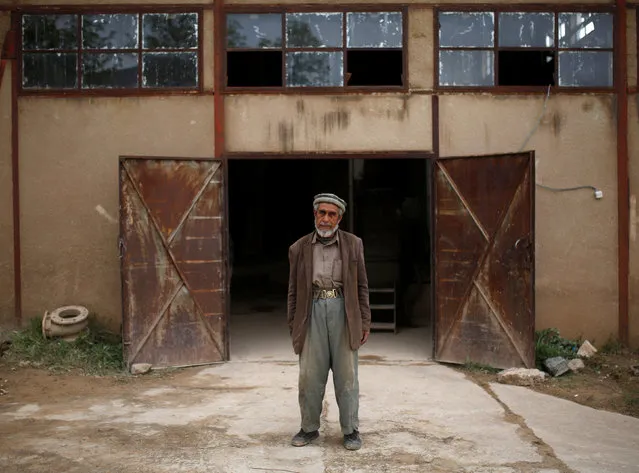
A worker at the Jabal Saraj cement factory poses for a photograph in Jabal Saraj, north of Kabul, Afghanistan April 19, 2016. (Photo by Ahmad Masood/Reuters)

A worker at the Jabal Saraj cement factory poses for a photograph in Jabal Saraj, north of Kabul, Afghanistan April 19, 2016. In an area desperately short of industry and jobs, local workers hope that the relaunch of the plant in Jabal Saraj, built by Czech engineers in 1957 and closed down by the Taliban in 1995, can show that Afghanistan's shattered industry can climb back to its feet after decades of war and destruction. But the outdated state-owned plant some 75 kilometres outside Kabul also shows how far it has to go before that promise can be achieved and there are serious questions over whether it has a viable future unless a new, modern facility is built to replace it. (Photo by Ahmad Masood/Reuters)
Details
31 May 2016 11:29:00
Brtukan. “Being a girl of colour in a society where the majority of the people are white, I have had to get used to all the different ways people approach me. From being asked what kind of rap music you listen to and how you wash your hair, to getting told, “you don’t sound black”, “you’re pretty for a black girl” or “you’re not that black so it’s OK”, as if being black is such a bad thing”. (Photo by Lisa Minogue/The Guardian)

As part of FLAIR Melbourne – a Flinders Lane art festival – Melbourne’s Lisa Minogue presents stylised photographic portraits of Australian women of colour, their faces painted vibrantly to accentuate their individuality and encourage the viewer to study each face more closely. Minogue asked each woman the same question: “What do the words “coloured girl” mean to you?”. (Photo by Lisa Minogue/The Guardian)
Details
17 Aug 2016 11:16:00
We're getting some feedback: “Hi, I have a question. Why is it that 90% of your posts are about women? You don't seem to acknowledge the existence of men unless they were migrants. You're seriously telling me that you can't find a few great accomplishments that MEN are making?? If this is a feminist website I think you should make that public. I've been viewing your posts since 2010 I think, since you first created avaxnews. Now I'm seriously considering blocking you guys”.


And we can reply: We like women more and for that humbly beg for your forgiveness. In general you are right. We promise to rectify the situation somehow.
Details
17 Sep 2018 17:53:00
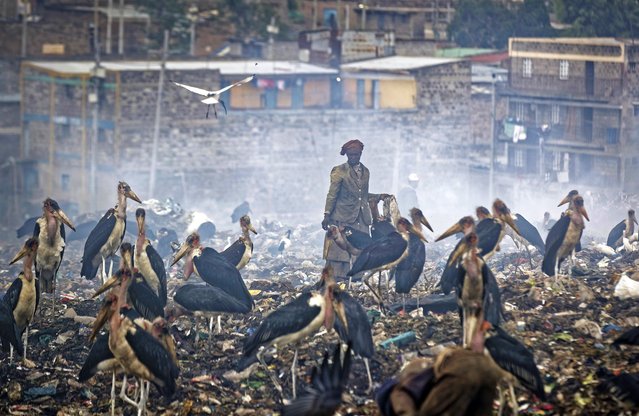
In this photo taken Wednesday, December 5, 2018, a woman who scavenges recyclable materials from garbage for a living is seen through a cloud of smoke from burning trash, surrounded by Marabou storks who feed on the garbage, at the dump in the Dandora slum of Nairobi, Kenya. As the world meets again to tackle the growing threat of climate change, how the continent tackles the growing solid waste produced by its more than 1.2 billion residents, many of them eager consumers in growing economies, is a major question in the fight against climate change. (Photo by Ben Curtis/AP Photo)

In this photo taken Wednesday, December 5, 2018, a woman who scavenges recyclable materials from garbage for a living is seen through a cloud of smoke from burning trash, surrounded by Marabou storks who feed on the garbage, at the dump in the Dandora slum of Nairobi, Kenya. As the world meets again to tackle the growing threat of climate change, how the continent tackles the growing solid waste produced by its more than 1.2 billion residents, many of them eager consumers in growing economies, is a major question in the fight against climate change. (Photo by Ben Curtis/AP Photo)
Details
14 Jan 2019 00:01:00
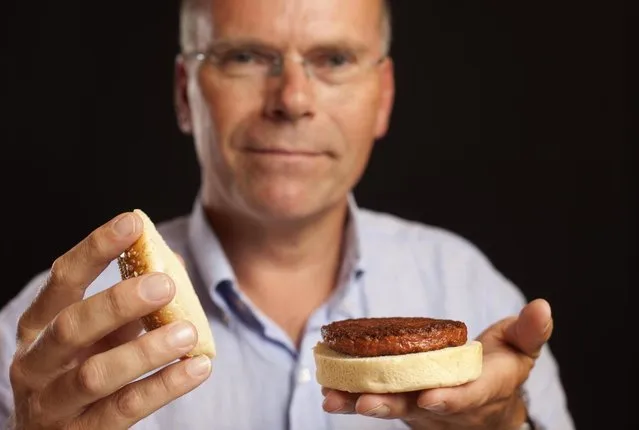
In this handout image provided by Ogilvy, a burger made from cultured beef, which has been developed by Professor Mark Post of Maastricht University in the Netherlands (pictured) is shown to the media during a press conference on August 5, 2013 in London, England. Cultured Beef could help solve the coming food crisis and combat climate change with commercial production of Cultured Beef beginning within ten to twenty years. (Photo by David Parry via Getty Images)

In this handout image provided by Ogilvy, a burger made from cultured beef, which has been developed by Professor Mark Post of Maastricht University in the Netherlands (pictured) is shown to the media during a press conference on August 5, 2013 in London, England. The in-vitro burger, cultured from cattle stem cells, the first example of what its creator says could provide an answer to global food shortages and help combat climate change, was fried in a pan and tasted by two volunteers. The burger is the result of years of research by Dutch scientist Mark Post, a vascular biologist at the University of Maastricht, who is working to show how meat grown in petri dishes might one day be a true alternative to meat from livestock.The meat in the burger has been made by knitting together around 20,000 strands of protein that has been cultured from cattle stem cells in Post's lab. (Photo by David Parry)
Details
06 Aug 2013 08:48:00