Loading...
Done
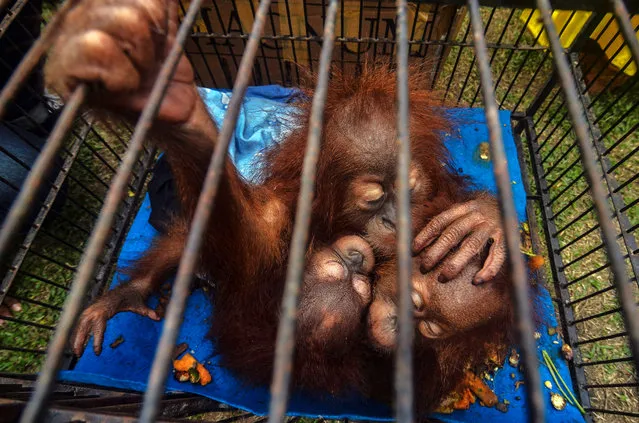
This picture taken on December 15, 2019 shows three young orangutans after they were rescued by police from illegal wildlife traffickers in Pekanbaru in Riau province, Indonesia. (Photo by Wahyudi/Jefta Images/Barcroft Media)

This picture taken on December 15, 2019 shows three young orangutans after they were rescued by police from illegal wildlife traffickers in Pekanbaru in Riau province, Indonesia. (Photo by Wahyudi/Jefta Images/Barcroft Media)
Details
22 Dec 2019 00:03:00
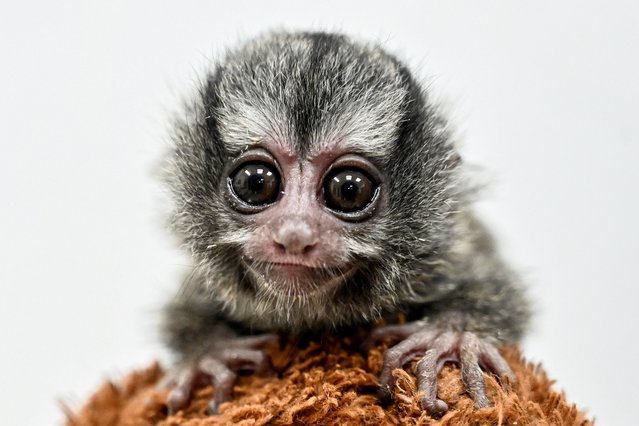
A grey-bellied Night Monkey (Aotus Lemurinus) plays with a teddy bear at the veterinary clinic of the Cali Zoo in Cali, Colombia on January 27, 2020. They monkey is being raised by personnel of the Cali Zoo after a worker found it near the complex. Apparently it fall from a tree with his father who had health problems. (Photo by Luis Robayo/AFP Photo)

A grey-bellied Night Monkey (Aotus Lemurinus) plays with a teddy bear at the veterinary clinic of the Cali Zoo in Cali, Colombia on January 27, 2020. They monkey is being raised by personnel of the Cali Zoo after a worker found it near the complex. Apparently it fall from a tree with his father who had health problems. (Photo by Luis Robayo/AFP Photo)
Details
02 Feb 2020 00:03:00
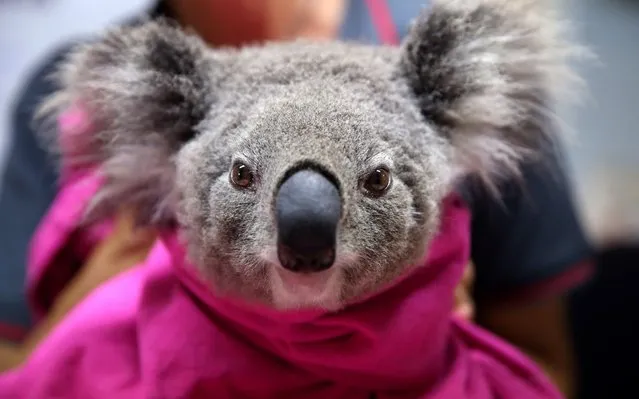
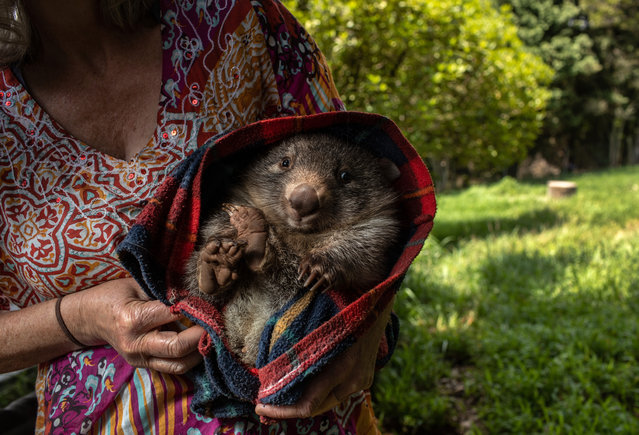
A wildlife caregiver holds an orphaned wombat at the Native Wildlife Rescue center on January 29, 2020 in Robertson, Australia. The center has taken in many burned kangaroos and wallabies injured in recent bushfires. Wombat orphans are often rescued from the pouch of their mothers struck by vehicles. (Photo by John Moore/Getty Images)

A wildlife caregiver holds an orphaned wombat at the Native Wildlife Rescue center on January 29, 2020 in Robertson, Australia. The center has taken in many burned kangaroos and wallabies injured in recent bushfires. Wombat orphans are often rescued from the pouch of their mothers struck by vehicles. (Photo by John Moore/Getty Images)
Details
16 Feb 2020 00:03:00
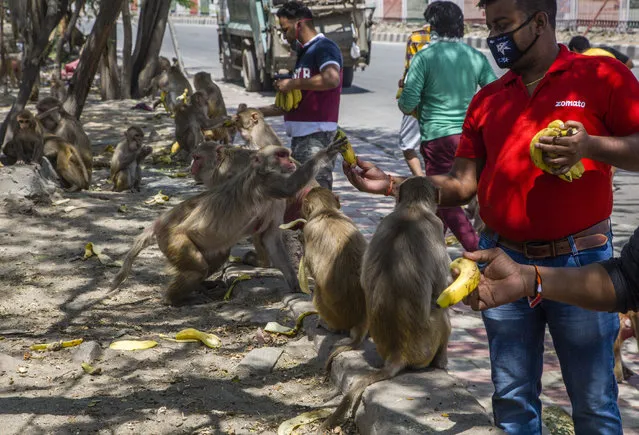
Men give bananas to monkeys gathered on the side of the road as India remains under an unprecedented lockdown over the highly contagious coronavirus (COVID-19) on April 08, 2020 in New Delhi, India. Wild animals, including monkeys, are roaming human settlements in India as people are staying indoors due to the 21-day lockdown. With India's 1.3 billion population and tens of millions of cars off the roads, wildlife is moving towards areas inhabited by humans. Wild animals in many countries have been seen roaming streets. A study says some 60 percent of the new diseases found around the globe every year are zoonotic, meaning they originate in animals and are passed on to humans. COVID-19 is a zoonotic disease that is suspected to have come from the wet markets of Wuhan, China. (Photo by Yawar Nazir/Getty Images)

Men give bananas to monkeys gathered on the side of the road as India remains under an unprecedented lockdown over the highly contagious coronavirus (COVID-19) on April 08, 2020 in New Delhi, India. Wild animals, including monkeys, are roaming human settlements in India as people are staying indoors due to the 21-day lockdown. (Photo by Yawar Nazir/Getty Images)
Details
12 Apr 2020 00:05:00

Some bats in the forested area of Guapiles, Costa Rica, 21 April 2020. (Photo by Jeffrey Arguedas/EPA/EFE)

Some bats in the forested area of Guapiles, Costa Rica, 21 April 2020. (Photo by Jeffrey Arguedas/EPA/EFE)
Details
03 May 2020 00:05:00
A monkey drinks water from a tap on a hot afternoon in Jammu, the winter capital Kashmir, India, 17 May 2016. Temperatures of around 42 degrees Celsius were forecast in the region. According to the news reports the Indian government decided to divert water by its river interlinking plans from rivers like Brahmaputra and the Ganges towards those rivers facing the drought likesituation . Many Indian states have been affected by drought and have been hit hard by water scarcity. (Photo by Jaipal Singh/EPA)

A monkey drinks water from a tap on a hot afternoon in Jammu, the winter capital Kashmir, India, 17 May 2016. Temperatures of around 42 degrees Celsius were forecast in the region. According to the news reports the Indian government decided to divert water by its river interlinking plans from rivers like Brahmaputra and the Ganges towards those rivers facing the drought likesituation . Many Indian states have been affected by drought and have been hit hard by water scarcity. (Photo by Jaipal Singh/EPA)
Details
22 May 2016 07:00:00
A picture made available on 07 March 2016 shows visitors petting and holding a Fennec fox, native to the Sahara, in the petting room at the Little Zoo Cafe, a business built to capitalize on Thais' love for exotic animals, and food, on the outskirts of Bangkok, Thailand, 05 March 2016. (Photo by Barbara Walton/EPA)

A picture made available on 07 March 2016 shows visitors petting and holding a Fennec fox, native to the Sahara, in the petting room at the Little Zoo Cafe, a business built to capitalize on Thais' love for exotic animals, and food, on the outskirts of Bangkok, Thailand, 05 March 2016. The cafe boasts Fennec foxes, Meerkat, native to parts of Africa, Silver Fox, Raccoon and Chinchillas, along with a menu of Thai food and Cheesecake, among other sweet deserts. Nature is a faraway fantasy in the bustling exhaust-filled cement city of Bangkok, fuelling a demand to own and be close to exotic pets. The trend to be near to a species that was once wild, in a city environment, far from the natural setting, has drawn criticism but continues to grow. (Photo by Barbara Walton/EPA)
Details
13 Mar 2016 09:38:00
A monkey jumps from a branch at Yangon Zoological Gardens in Yangon, Myanmar, 06 April 2016. Yangon Zoological Gardens (Yangon Zoo) is the oldest and second largest zoo in Myanmar. (Photo by Lynn Bo Bo/EPA)

A monkey jumps from a branch at Yangon Zoological Gardens in Yangon, Myanmar, 06 April 2016. Yangon Zoological Gardens (Yangon Zoo) is the oldest and second largest zoo in Myanmar. (Photo by Lynn Bo Bo/EPA)
Details
10 Apr 2016 10:41:00