Loading...
Done
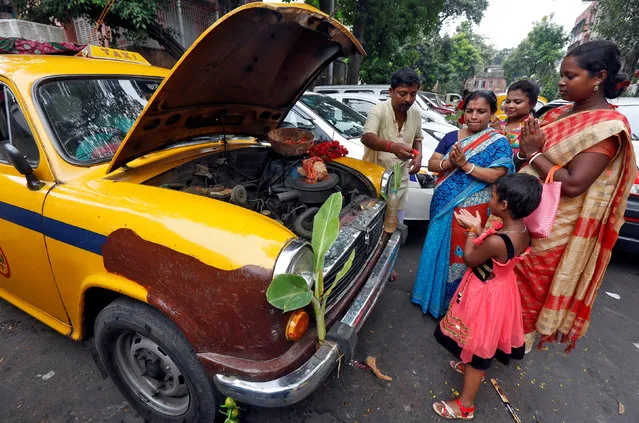
Family members of a taxi driver offer prayer in front of their taxi during the Vishwakarma Puja or the festival of the Hindu deity of architecture and machinery in Kolkata, India, September 17, 2017. (Photo by Rupak De Chowdhuri/Reuters)

Family members of a taxi driver offer prayer in front of their taxi during the Vishwakarma Puja or the festival of the Hindu deity of architecture and machinery in Kolkata, India, September 17, 2017. (Photo by Rupak De Chowdhuri/Reuters)
Details
22 Sep 2017 07:09:00
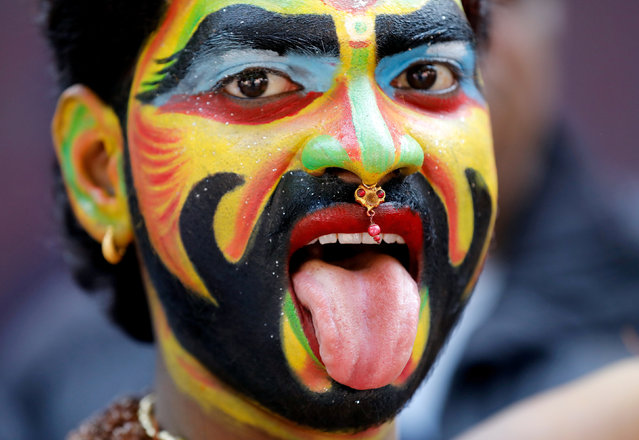
A performer poses during celebrations after Rahul Gandhi, newly elected president of India's main opposition Congress party, took charge as the president during a ceremony outside the party's headquarters in New Delhi, India, December 16, 2017. (Photo by Altaf Hussain/Reuters)

A performer poses during celebrations after Rahul Gandhi, newly elected president of India's main opposition Congress party, took charge as the president during a ceremony outside the party's headquarters in New Delhi, India, December 16, 2017. (Photo by Altaf Hussain/Reuters)
Details
19 Dec 2017 07:58:00
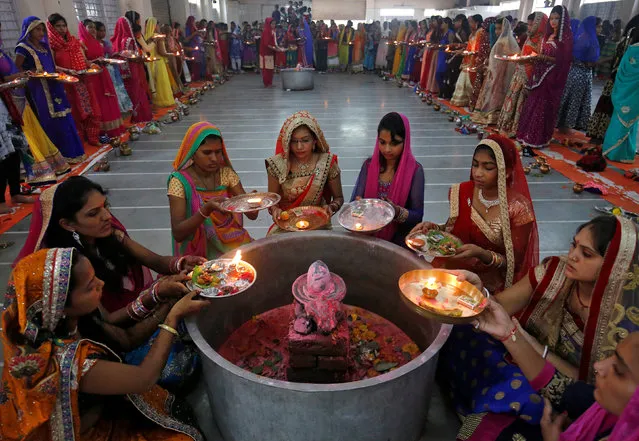
Hindu women perform a ritual known as Aarti around a Shivling (a symbol of Lord Shiva) on the last day of Jaya Parvati Vrat festival in Ahmedabad, India, July 10, 2017. (Photo by Amit Dave/Reuters)

Hindu women perform a ritual known as Aarti around a Shivling (a symbol of Lord Shiva) on the last day of Jaya Parvati Vrat festival in Ahmedabad, India, July 10, 2017. (Photo by Amit Dave/Reuters)
Details
11 Jul 2017 06:09:00
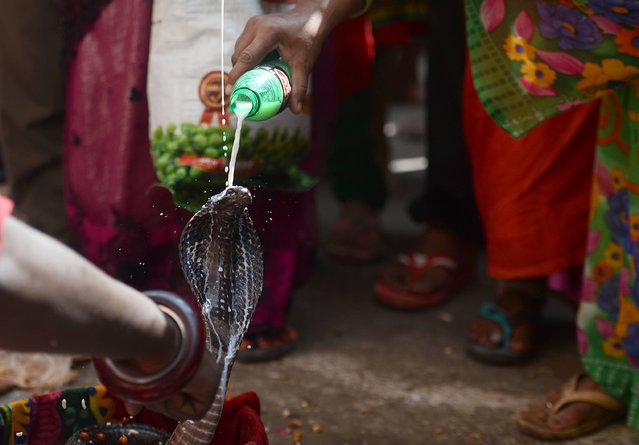
An Indian Hindu devotee pours milk on a snake as an offering during the annual Nag Panchami festival, dedicated to the worship of snakes outside the Nagvasuki temple, in Allahabad, on July 28, 2017. (Photo by Sanjay Kanojia/AFP Photo)

An Indian Hindu devotee pours milk on a snake as an offering during the annual Nag Panchami festival, dedicated to the worship of snakes outside the Nagvasuki temple, in Allahabad, on July 28, 2017. Officially the snake charmers' profession is banned in India, but many in the country offered prayers and milk blessings to cobras and other deadly serpents on July 28 in an annual tribute. The 800,000 charmers and their young apprentices come to the fore for the Nag Panchami festival which dates back several centuries. (Photo by Sanjay Kanojia/AFP Photo)
Details
31 Jul 2017 09:17:00
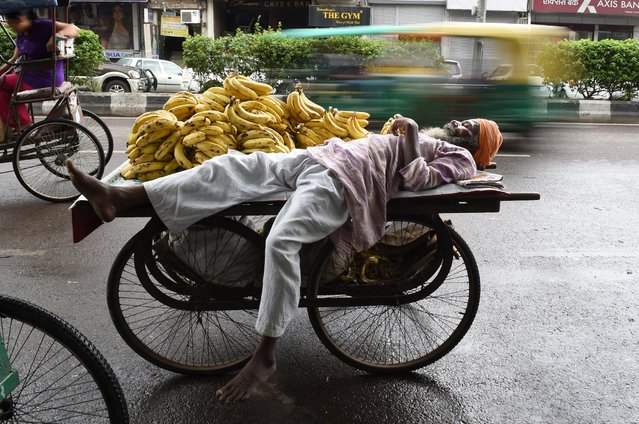
An Indian street vendor selling bananas naps on his fruit cart at the roadside in New Delhi on June 3, 2015. (Photo by Money Sharma/AFP Photo)

An Indian street vendor selling bananas naps on his fruit cart at the roadside in New Delhi on June 3, 2015. (Photo by Money Sharma/AFP Photo)
Details
02 Mar 2016 13:33:00
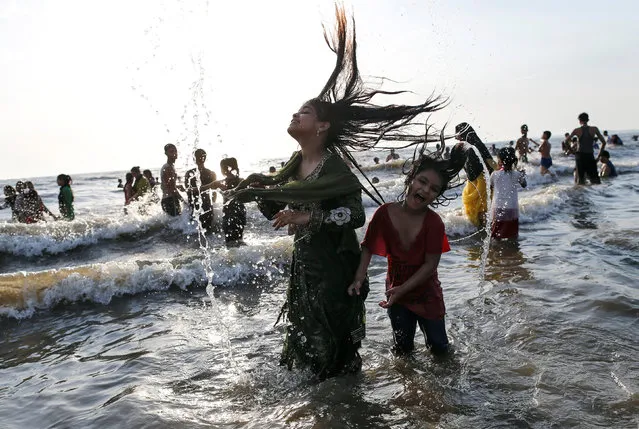
People play on a beach along the Arabian Sea on a hot summer day in Mumbai, India, April 29, 2016. (Photo by Danish Siddiqui/Reuters)

People play on a beach along the Arabian Sea on a hot summer day in Mumbai, India, April 29, 2016. (Photo by Danish Siddiqui/Reuters)
Details
02 May 2016 10:27:00
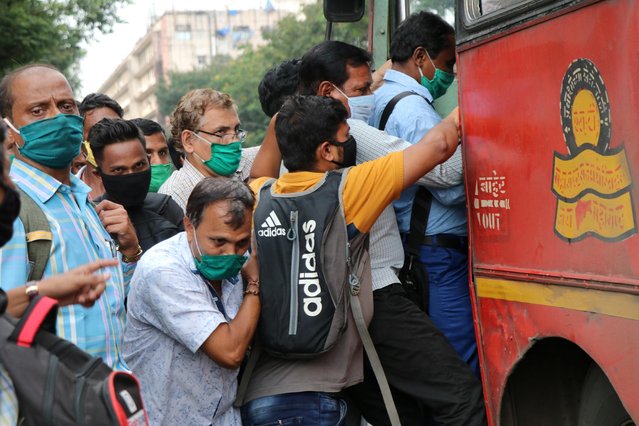
People board a passenger bus during rush hour at a bus terminal, amidst the coronavirus disease (COVID-19) outbreak, in Mumbai, India, September 9, 2020. (Photo by Niharika Kulkarni/Reuters)

People board a passenger bus during rush hour at a bus terminal, amidst the coronavirus disease (COVID-19) outbreak, in Mumbai, India, September 9, 2020. (Photo by Niharika Kulkarni/Reuters)
Details
15 Sep 2020 00:05:00
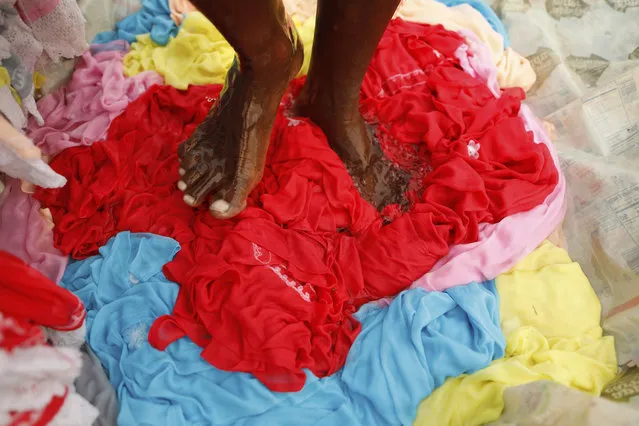
A dhobi, or a washerman washes cloths on the banks of the River Gomti in Lucknow, India, Saturday, September 12, 2020. Dhobis are traditional laundry workers who wash clothes by hand and dry them in the sun, an occupation which has been in existence for generations. Most cities in India have a Dhobi Ghat, or washermen's area, where the city's pile of clothes is laundered. This practice is still popular in India, despite of modern technology. Around 1,000 families work in Lucknow's Dhobi Ghat. However, in light of the novel coronavirus, their wages have decreased drastically. With each family earning around US$100-200 per month. (Photo by Rajesh Kumar Singh/AP Photo)

A dhobi, or a washerman washes cloths on the banks of the River Gomti in Lucknow, India, Saturday, September 12, 2020. Dhobis are traditional laundry workers who wash clothes by hand and dry them in the sun, an occupation which has been in existence for generations. Most cities in India have a Dhobi Ghat, or washermen's area, where the city's pile of clothes is laundered. This practice is still popular in India, despite of modern technology. Around 1,000 families work in Lucknow's Dhobi Ghat. However, in light of the novel coronavirus, their wages have decreased drastically. With each family earning around US$100-200 per month. (Photo by Rajesh Kumar Singh/AP Photo)
Details
25 Sep 2020 00:03:00