Loading...
Done
Heesco, Windsor. Born and raised in Mongolia and now living and working in Melbourne, Heesco is well known for his skill in rendering photo-realistic portraits. They speak to the viewer in a way that the subtext is enjoyable to decipher. Just what is the Blue Lady’s message? The sunglasses might mask the confronting gaze but her body language fills in the gaps. Heesco’s characters often wear traditional jewellery and clothing that remind us of his Mongolian cultural heritage. (Photo by Lou Chamberlin/The Guardian)

Heesco, Windsor. Born and raised in Mongolia and now living and working in Melbourne, Heesco is well known for his skill in rendering photo-realistic portraits. They speak to the viewer in a way that the subtext is enjoyable to decipher. Just what is the Blue Lady’s message? The sunglasses might mask the confronting gaze but her body language fills in the gaps. Heesco’s characters often wear traditional jewellery and clothing that remind us of his Mongolian cultural heritage. (Photo by Lou Chamberlin/The Guardian)
Details
26 Dec 2017 08:28:00


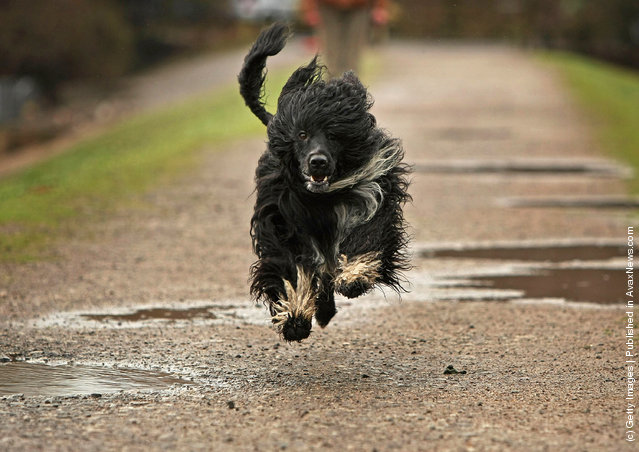
“The Portuguese Water Dog is a breed of working dog as classified by the American Kennel Club. Portuguese Water Dogs are originally from the Portuguese region of the Algarve, from where the breed expanded to all around Portugal's coast, where they were taught to herd fish into fishermen's nets, to retrieve lost tackle or broken nets, and to act as couriers from ship to ship, or ship to shore. Portuguese Water Dogs rode in bobbing fishing trawlers as they worked their way from the warm Atlantic waters of Portugal to the frigid fishing waters off the coast of Iceland where the fleets caught cod to bring home. Portuguese Water Dogs were often taken with sailors during the Portuguese discoveries”. – Wikipedia

Photo: Kix, a Portuguese Water Dog , enjoys a walk around the muddy fields near his home before the grooming and preparation starts for this years Crufts on March 3, 2009 in Telford, England. (Photo by Christopher Furlong/Getty Images)
Details
26 Jul 2011 11:27:00
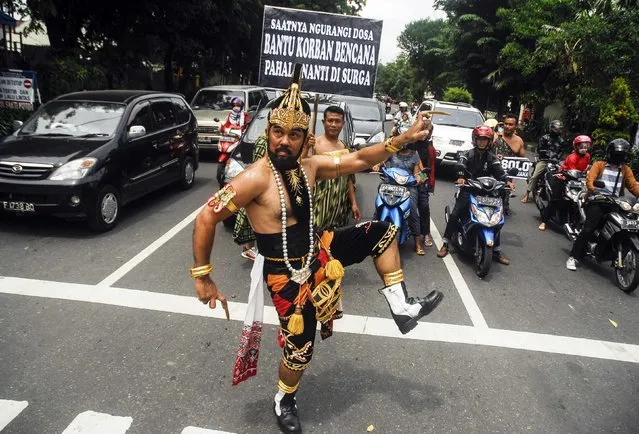
Indonesian army soldier Partika Subagyo, wearing a costume of the puppet character Bima, dances to raise money for landslide victims, in Solo, December 17, 2014, in this photo taken by Antara Foto. The landslide in Banjarnegara destroyed a village and killed at least 32 people, according to officials. (Photo by Andika Betha/Reuters/Antara Foto)

Indonesian army soldier Partika Subagyo, wearing a costume of the puppet character Bima, dances to raise money for landslide victims, in Solo, December 17, 2014, in this photo taken by Antara Foto. The landslide in Banjarnegara destroyed a village and killed at least 32 people, according to officials. (Photo by Andika Betha/Reuters/Antara Foto)
Details
20 Dec 2014 11:41:00
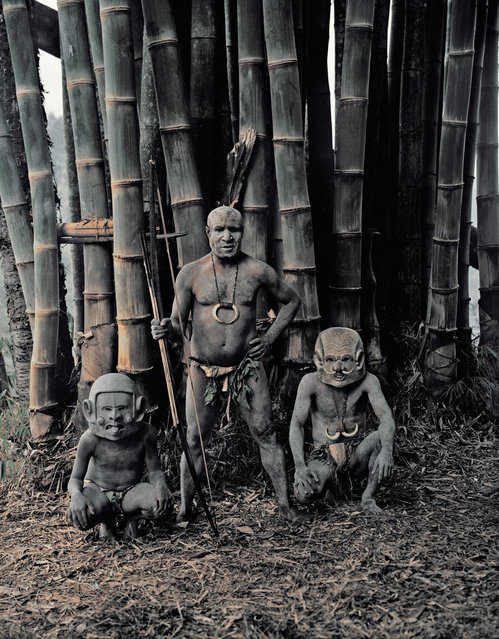
“Asaro from the Eastern Highlands”. The mudmen could not cover their faces with mud because the people of Papua New Guinea thought that the mud from the Asaro river was poisonous. So instead of covering their faces with this alleged poison, they made masks from pebbles that they heated and water from the waterfall, with unusual designs such as long or very short ears either going down to the chin or sticking up at the top, long joined eyebrows attached to the top of the ears, horns and sideways mouths. (Jimmy Nelson)

“Asaro from the Eastern Highlands”. The mudmen could not cover their faces with mud because the people of Papua New Guinea thought that the mud from the Asaro river was poisonous. So instead of covering their faces with this alleged poison, they made masks from pebbles that they heated and water from the waterfall, with unusual designs such as long or very short ears either going down to the chin or sticking up at the top, long joined eyebrows attached to the top of the ears, horns and sideways mouths. (Photo and caption by Jimmy Nelson)
Details
20 Oct 2013 08:54:00
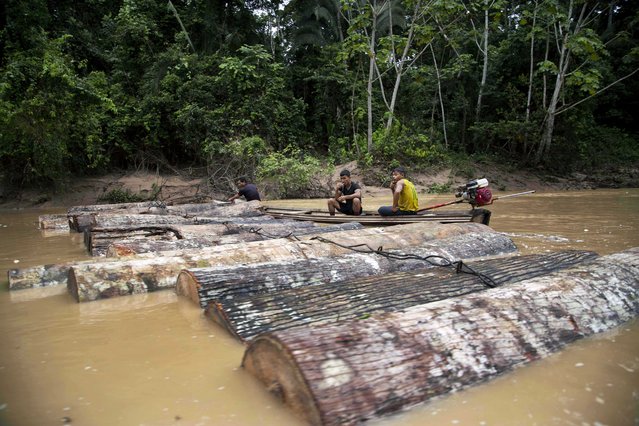
In this March 17, 2015 photo, Ashaninka Indian men, identified by locals as illegal loggers, tie tree trunks together to move them along the Putaya River near the hamlet of Saweto, Peru. Illegal logging persists unabated in this remote Amazon community where four indigenous leaders who resisted it were slain in September. The Putaya River is the waterway that transports felled trees, cut both legally and illegally, to the city of Pucallpa. (Photo by Martin Mejia/AP Photo)

In this March 17, 2015 photo, Ashaninka Indian men, identified by locals as illegal loggers, tie tree trunks together to move them along the Putaya River near the hamlet of Saweto, Peru. Illegal logging persists unabated in this remote Amazon community where four indigenous leaders who resisted it were slain in September. The Putaya River is the waterway that transports felled trees, cut both legally and illegally, to the city of Pucallpa. (Photo by Martin Mejia/AP Photo)
Details
27 Mar 2015 12:40:00
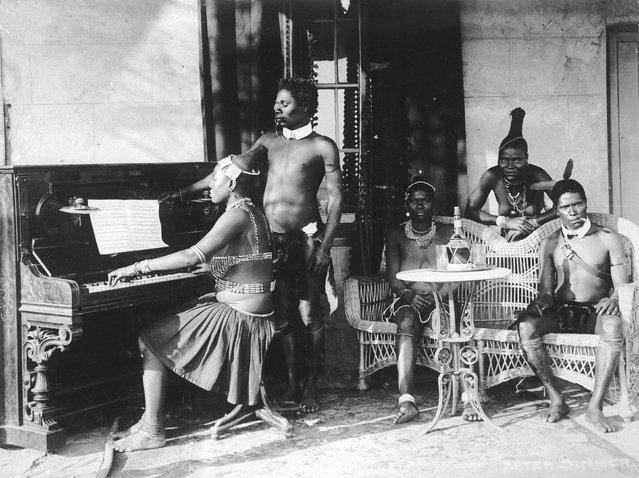
circa 1925:  A Zulu woman playing the piano while a group of others sit and listen.  (Photo by General Photographic Agency/Getty Images)

“The Zulu are the largest South African ethnic group, with an estimated 10–11 million people living mainly in the province of KwaZulu-Natal. Small numbers also live in Zimbabwe, Zambia, and Mozambique. Their language, Zulu, is a Bantu language; more specifically, part of the Nguni subgroup. The Zulu Kingdom played a major role in South African history during the 19th and 20th centuries. Under apartheid, Zulu people were classed as third-class citizens and suffered from state-sanctioned discrimination. They remain today the most numerous ethnic group in South Africa, and now have equal rights along with all other citizens”. – Wikipedia.

Photo: A Zulu woman playing the piano while a group of others sit and listen (to put it briefly, Englishmen scoff over Zulu). South Africa, circa 1925. (Photo by General Photographic Agency)

Details
03 Feb 2014 09:40:00
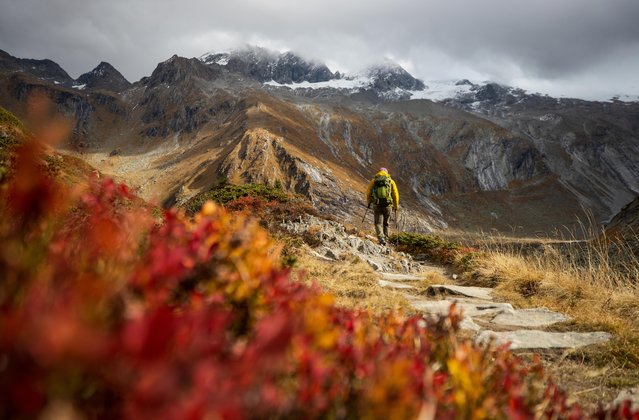
A hiker walks in the Zillertal Alps during an autumn day near the village of Ginzling, Austria, October 15, 2019. (Photo by Lisi Niesner/Reuters)

A hiker walks in the Zillertal Alps during an autumn day near the village of Ginzling, Austria, October 15, 2019. (Photo by Lisi Niesner/Reuters)
Details
11 Dec 2019 00:01:00
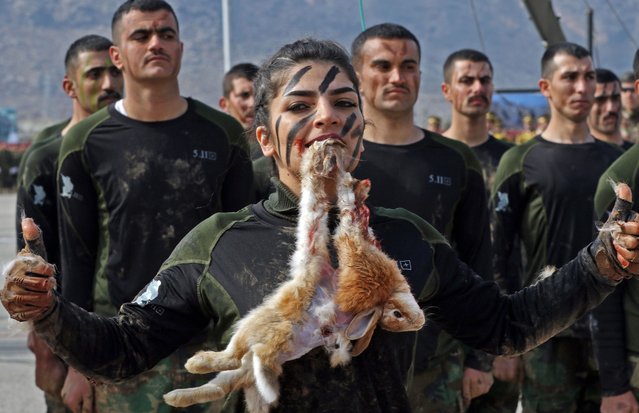
An Iraqi Kurdish Peshmerga female officer bites a Rabbit while demonstrating skills during a graduation ceremony in the Kurdish town of Soran, about 100 kilometres northeast of the capital of Iraq's autonomous Kurdish region Arbil, on February 12, 2020. (Photo by Safin Hamed/AFP Photo)

An Iraqi Kurdish Peshmerga female officer bites a Rabbit while demonstrating skills during a graduation ceremony in the Kurdish town of Soran, about 100 kilometres northeast of the capital of Iraq's autonomous Kurdish region Arbil, on February 12, 2020. (Photo by Safin Hamed/AFP Photo)
Details
09 Mar 2020 00:01:00