Loading...
Done


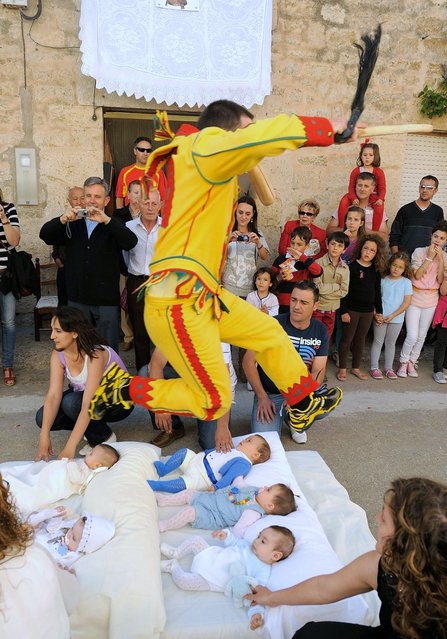
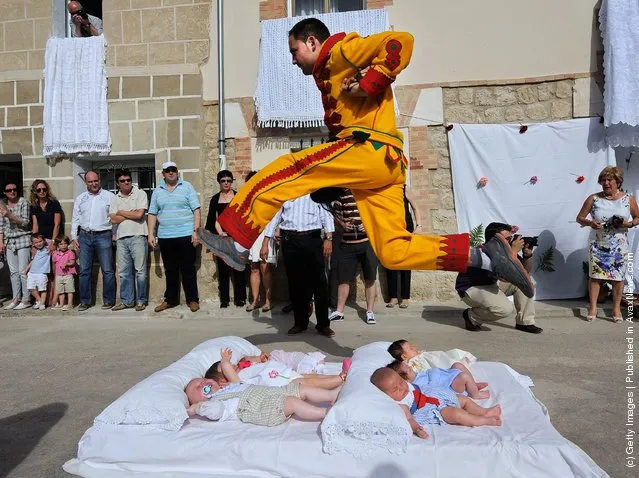
“Baby jumping (El Colacho) is a traditional Spanish practice dating back to 1620 that takes place annually to celebrate the Catholic feast of Corpus Christi in the village of Castrillo de Murcia near Burgos. During the act – known as El Salto del Colacho (the devil's jump) or simply El Colacho – men dressed as the Devil (known as the Colacho) jump over babies born during the previous twelve months of the year who lie on mattresses in the street. ... The festival has been rated as one of the most dangerous in the world”. – Wikipedia

Photo: A man representing the devil leaps over babies during the festival of El Colacho on June 26, 2011 in Castrillo de Murcia near Burgos, Spain. The festival, held on the first Sunday after Corpus Cristi, represents the devil taking away original sin from the newly born babies by leaping over them. (Photo by Denis Doyle/Getty Images)
Details
27 Jun 2011 09:20:00


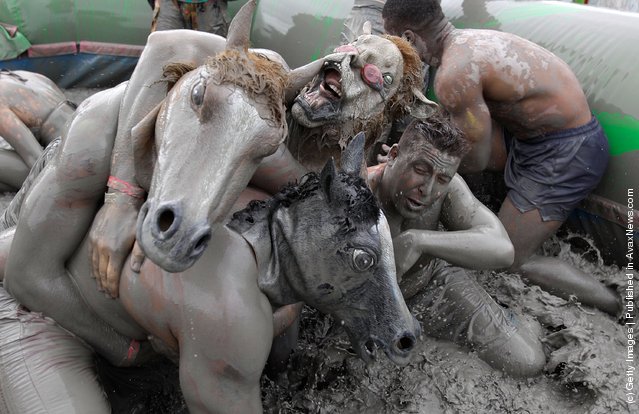
Participants enjoy mud during the 14th Annual Boryeong Mud Festival at Daecheon Beach on July 16, 2011 in Boryeong, South Korea. The mud, which is believed to have beneficial effects on the skin due to its mineral content, is sourced from mud flats near Boryeong and transported to the beach by truck. (Photo by Chung Sung-Jun/Getty Images)
Details
17 Jul 2011 11:20:00
China Celebrates The Lantern Festival

Young dancers perform at a preview show for the Chinese Lantern Festival which falls on February 6 and traditionally marks the end of the Lunar New Year celebrations on February 3, 2012 in Beijing, China.The Lantern Festival also known as the Yuanxiao Festival or Shangyuan Festival in China.(Photo by Lintao Zhang/Getty Images)
Details
04 Feb 2012 13:02:00


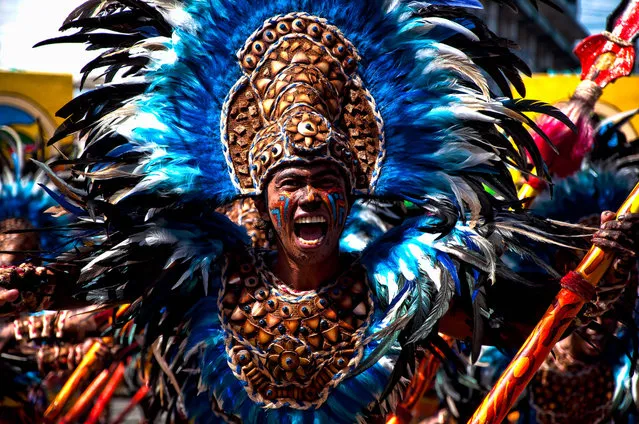
The Dinagyang is a religious and cultural festival in Iloilo City, Philippines held on the fourth Sunday of January, or right after the Sinulog In Cebu and the Ati-Atihan in Aklan. It is held both to honor the Santo Niño and to celebrate the arrival on Panay of Malay settlers and the subsequent selling of the island to them by the Atis. wiki
Details
07 May 2012 04:18:00
A man representing the devil leaps over babies during the festival of El Colacho in Castrillo de Murcia near Burgos, Spain

A man representing the devil leaps over babies during the festival of El Colacho on June 10, 2012 in Castrillo de Murcia near Burgos, Spain. The festival, held on the first Sunday after Corpus Cristi, represents the devil taking away original sin from the newly born babies by leaping over them. (Photo by Denis Doyle)
Details
11 Jun 2012 10:45:00
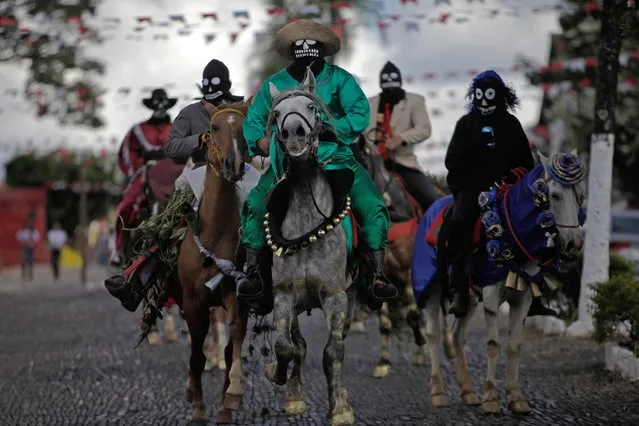
Masked men ride in a morning procession as part of the “Cavalhadas” festival in Pirenopolis, Brazil, Sunday, May 19, 2013. The popular festival is a tradition that was introduced in the 1800's by a Portuguese priest to mark the the ascension of Christ. The 3-day festival reenacts the Christian knights' medieval defeat of the Moors. (Photo by Eraldo Peres/AP Photo)

Masked men ride in a morning procession as part of the “Cavalhadas” festival in Pirenopolis, Brazil, Sunday, May 19, 2013. The popular festival is a tradition that was introduced in the 1800's by a Portuguese priest to mark the the ascension of Christ. The 3-day festival reenacts the Christian knights' medieval defeat of the Moors. (Photo by Eraldo Peres/AP Photo)
Details
22 May 2013 08:49:00
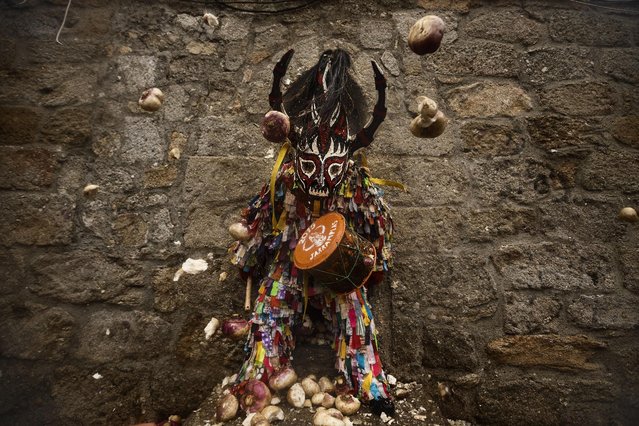
People throw turnips at the Jarramplas as he makes his way through the streets beating his drum during the Jarramplas Festival in Piornal, Spain, Tuesday, January 20, 2015. Jarramplas is a character that wears a costume made from colorful strips of fabric, and a devil-like mask and beats a drum through the streets of Piornal while residents throw turnips as a punishment for stealing cattle. (Photo by Daniel Ochoa de Olza/AP Photo)

People throw turnips at the Jarramplas as he makes his way through the streets beating his drum during the Jarramplas Festival in Piornal, Spain, Tuesday, January 20, 2015. Jarramplas is a character that wears a costume made from colorful strips of fabric, and a devil-like mask and beats a drum through the streets of Piornal while residents throw turnips as a punishment for stealing cattle. The exact origin of the festival are not known, various theories exist from the mythological punishment of Caco by Hercules, to a cattle thief ridiculed and expelled by his neighbors. The Jarramplas Festival takes place every year from the 19th till the 20th of January on Saint Sebastian Day. (Photo by Daniel Ochoa de Olza/AP Photo)
Details
21 Jan 2015 13:42:00
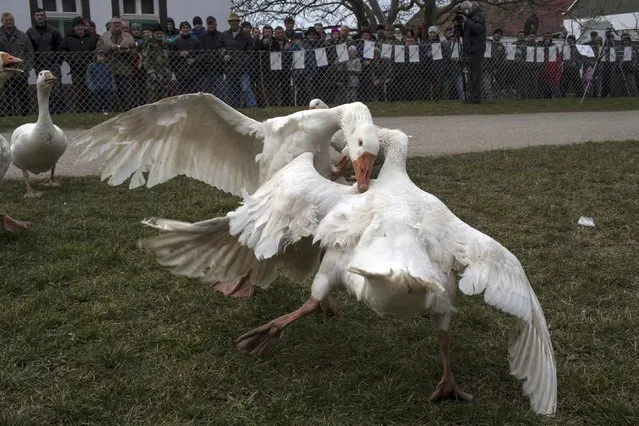
Geese fight during the annual Geese Fight Day in the northern Serbian village of Mokrin, some 160km (100 miles) from Belgrade February 22, 2015. (Photo by Marko Djurica/Reuters)

Geese fight during the annual Geese Fight Day in the northern Serbian village of Mokrin, some 160km (100 miles) from Belgrade February 22, 2015. Every year in the last week of February, goose fights are held in the northern Serbian village of Mokrin. Left alone, male geese, or ganders, are unlikely to fight each other, hence why females are brought along for whose affections the ganders then fight until one or the other gives up. (Photo by Marko Djurica/Reuters)
Details
23 Feb 2015 13:01:00