Loading...
Done
Spectacular images offering insight into the lives of the Huaorani people in the Ecuadorian Amazon have been revealed showing how they use traditional methods to hunt monkeys for food. The stunning pictures were taken by conservation photographer Pete Oxford from Torquay, Devon in the Ecuadorian Amazon. “The Huaorani Indians are a forest people highly in tune with their environment. Many are now totally acculturated since the 1950s by missionaries”, said Pete. “Today they face radical change to their culture to the proximity of oil exploration within their territory and the Yasuni National Park and Biosphere Reserve, they are vastly changed. Some still live very traditionally and for this shoot, through my Huaorani friend, a direct relative of those photographed he wanted to depict them as close to their original culture as possible. They still largely hunt with blow pipes and spears eating a lot of monkeys and peccaries”. The Huaorani are also known as the Waorani, Waodani or the Waos and are native Amerindians. Their lands are located between the Curaray and Napo rivers and speak the Huaorani language. Pete says that during his visit he was welcomed into the group and hopes that ancient cultures can be saved. Here: The tribe were seen celebrating after a hunter returned to camp with a wild pig. (Photo by Pete Oxford/Mediadrumworld.com)

Spectacular images offering insight into the lives of the Huaorani people in the Ecuadorian Amazon have been revealed showing how they use traditional methods to hunt monkeys for food. The stunning pictures were taken by conservation photographer Pete Oxford from Torquay, Devon in the Ecuadorian Amazon. Here: The tribe were seen celebrating after a hunter returned to camp with a wild pig. (Photo by Pete Oxford/Mediadrumworld.com)
Details
20 Jan 2017 07:58:00
An image of a Fennec fox painted on a tree hole by Wang Yue is seen in Shijiazhuang, on March 13, 2013. Wang Yue, a senior at Dalian Industry University, uses her paintbrush to turn ugly tree holes into lovely views in Shijiazhuang, capital city of Hebei Province, China. Wang and her companions call the tree-hole paintings “meitu”, which means “beautiful journey”. The paintings on the trees have brightened the city during the dull, grey winter. (Photo by Pillar Lee/Reuters)

An image of a Fennec fox painted on a tree hole by Wang Yue is seen in Shijiazhuang, on March 13, 2013. Wang Yue, a senior at Dalian Industry University, uses her paintbrush to turn ugly tree holes into lovely views in Shijiazhuang, capital city of Hebei Province, China. Wang and her companions call the tree-hole paintings “meitu”, which means “beautiful journey”. The paintings on the trees have brightened the city during the dull, grey winter. (Photo by Pillar Lee/Reuters)

P.S. All pictures are presented in high resolution. To see Hi-Res images – just TWICE click on any picture. In other words, click small picture – opens the BIG picture. Click BIG picture – opens VERY BIG picture (if available; this principle works anywhere on the site AvaxNews).
Details
16 Mar 2013 11:27:00
“A snapshot from mountaineer's life”. Have you ever wondered how does a mountaineer's day start? (Photo and caption by Kamil Tamiola/National Geographic Traveler Photo Contest)

“A snapshot from mountaineer's life”. Have you ever wondered how does a mountaineer's day start? I will give you a hint: you wake up at 3 am, set the stove, wake up your partner, pretend it is warm, quickly consume a high-calorie breakfast, watch your friends slowly ascending the icy slopes of your dream summit with their tiny head torches glimmering against perfectly blue ice, and hope for the good weather. One would ask: why all this trouble? The answer is easy: for the love of the adventure and the unknown. Location: Chamonix, Haute Savoye, France. (Photo and caption by Kamil Tamiola/National Geographic Traveler Photo Contest)

ATTENTION! All pictures are presented in high resolution. To see Hi-Res images – just TWICE click on any picture. In other words, click small picture – opens the BIG picture. Click BIG picture – opens VERY BIG picture.
Details
27 Jun 2013 12:47:00
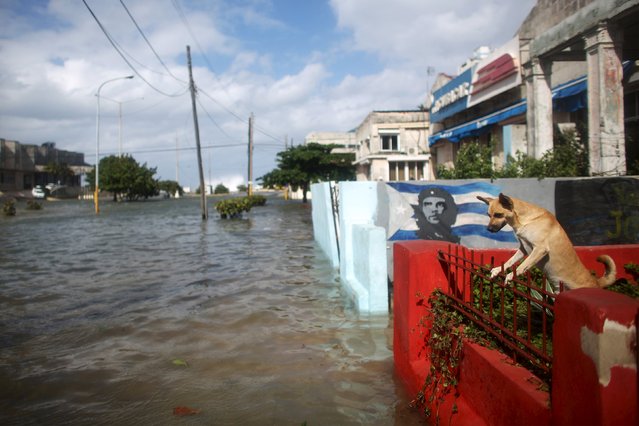
A four-year-old dog Nika stands next to an image of Cuba's revolutionary hero Ernesto “Che” Guevara in front of a flooded street in Havana, January 23, 2016. Havana's seafront Malecon continued to be slammed by massive waves that flooded parts of the seaside city on Saturday. As a result, Havana was confronting flooding as a cold front passes through the Caribbean island.  (Photo by Alexandre Meneghini/Reuters)

A four-year-old dog Nika stands next to an image of Cuba's revolutionary hero Ernesto “Che” Guevara in front of a flooded street in Havana, January 23, 2016. Havana's seafront Malecon continued to be slammed by massive waves that flooded parts of the seaside city on Saturday. As a result, Havana was confronting flooding as a cold front passes through the Caribbean island. The giant waves began washing up onto shore during sunrise. The waves have been accompanied by winds passing through at a speed between 35 and 50 km (21 to 31 miles) per hour. (Photo by Alexandre Meneghini/Reuters)
Details
24 Jan 2016 15:03:00
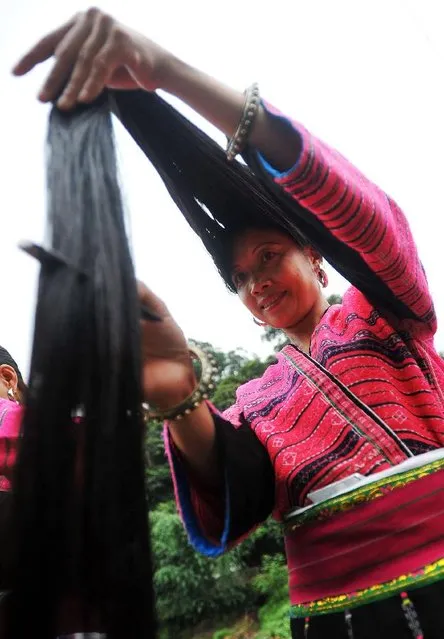
A woman combs her hair at the Huangluo Village of the Yao ethnic group in Guilin, south China's Guangxi Zhuang Autonomous Region, July 15, 2012. (Photo by Lu Boan/Xinhua)

“The Yao nationality is a government classification for various minorities in China. They form one of the 55 ethnic minority groups officially recognized by the People's Republic of China, where they reside in the mountainous terrain of the southwest and south”. – Wikipedia

Photo: A woman combs her hair at the Huangluo Village of the Yao ethnic group in Guilin, south China's Guangxi Zhuang Autonomous Region, July 15, 2012. The Huangluo Village of the Yao ethnic group locates at the Longji Terraces in Heping Town of Longsheng County in Guilin. Women here have the tradition of keeping long hair. They believe that long hair brings good luck and fortune. The average length of hair of 180 women in the village is 1.7 meters. (Photo by Lu Boan/Xinhua)
Details
07 Mar 2015 08:33:00


“An Oscar nominated documentary maker and war photographer who learnt his trade at Cardiff University has been killed while covering the conflict in Lybia. Tim Hetherington is understood to have died in a rocket-propelled grenade attack in the Libyan city of Misrata. Earlier this year the 40-year-old was nominated in the Best Documentary Feature category at the Academy Awards for the war documentary Restrepo which he co-directed”. – WalesOnline

Photo: Tim Hetherington arrives at the 83rd Annual Academy Awards – Nominated Docs! Reception on February 23, 2011 in Beverly Hills, California. (Photo by Valerie Macon/Getty Images)
Details
21 Apr 2011 09:23:00


ATTENTION PLEASE! This publication is NOT about cute animals! This is a compilation of photographs of DIFFERENT content! Some photos may SHOCK YOU.

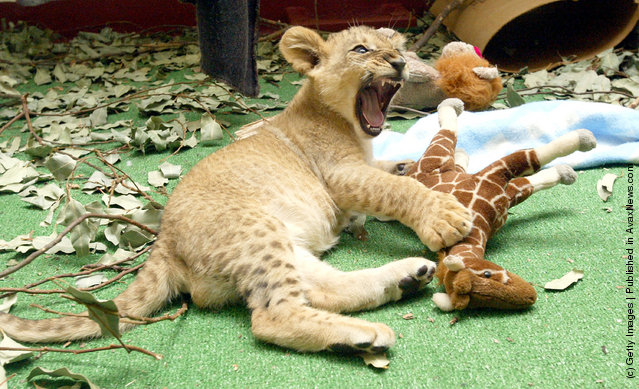
Photo: An eleven-week-old lion cub growls as she plays with a stuffed toy at the San Francisco Zoo April 25, 2003 in San Francisco, California. The cub's mother, Kita, died two days after giving birth to her and her brother. Zookeepers have hand fed and cared for the two surviving cubs around the clock since their mother died. (Photo by Justin Sullivan/Getty Images)
Details
15 May 2011 10:37:00
Baby Flamingoes

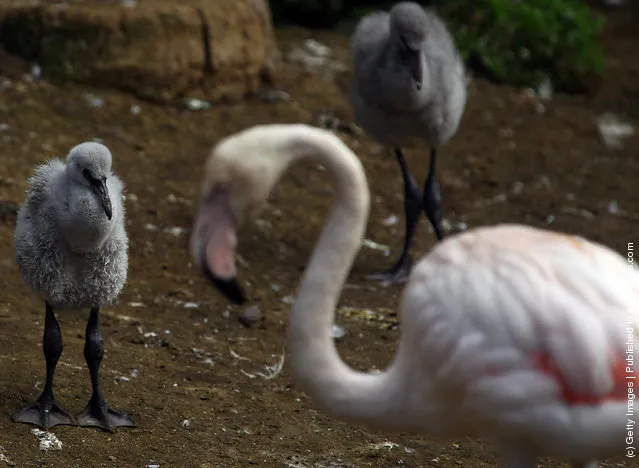
One of the nine baby flamingos born at Bristol Zoo stands with the adults as they feed together on August 19, 2011 in Bristol, England. Nine flamingo chicks have hatched at Bristol Zoo Gardens in the last three months – the biggest number the Zoo has ever had. The chicks, which are Greater Flamingoes from Africa and southern Europe and range in age from four weeks to three months old, take the Zoo's total flock to 38 birds. (Photo by Matt Cardy/Getty Images)
Details
21 Aug 2011 11:09:00