Paint-splattered revellers take a break at the Notting Hill carnival in West London in the last decade of August 2022. (Photo by Andy Hall/The Observer)
A one-and-a-half-month-old orphaned two-toed sloth clings a sloth plush toy at the Panamerican Conservation Association (APPC) during a conservation activity for International Sloth Day, in Panama City, Panama, on October 19, 2025. (Photo by Enea Lebrun/Reuters)
A member of the pro-government “red shirt” movement attacks a Buddhist monk outside the National Anti-Corruption Commission office in Nonthaburi province, on the outskirts of Bangkok March 24, 2014. Members of the movement attacked the monk after he shouted complaints to the group blocking a road near the National Anti-Corruption Commission. (Photo by Chaiwat Subprasom/Reuters)
Animal rights activists covered with fake blood sit on the floor during a protest against the use of animals in research to mark World Day for Animals in Laboratories in central Madrid April 24, 2014. The sign reads, “How many rabbits do your shampoo kill?”. (Photo by Andrea Comas/Reuters)
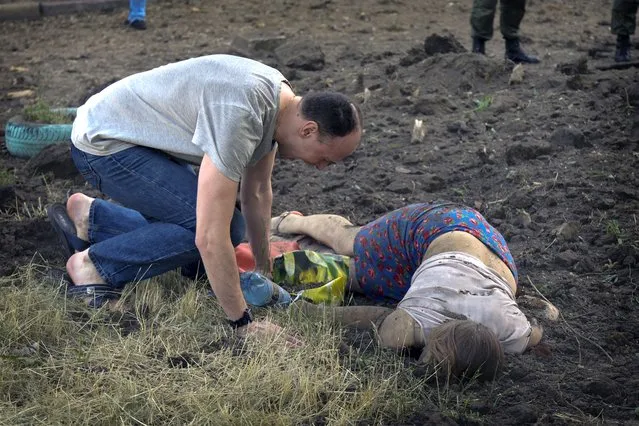
A man cries over the body of his girlfriend, who was killed by shelling in the Kalininsky district of Donetsk, territory under control of the pro-Russian Government of the Donetsk People's Republic in eastern Ukraine, Thursday, June 9, 2022, during the Russian invasion. (Photo by Alexei Alexandrov/AP Photo)
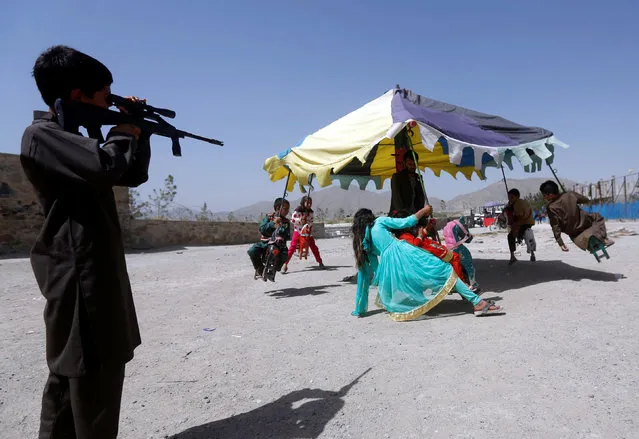
An Afghan boy looks through the scope of a toy gun, as other children ride on swings during the first day of the Muslim holiday of Eid al-Fitr, which marks the end of the holy month of Ramadan, in Kabul, Afghanistan June 25, 2017. (Photo by Omar Sobhani/Reuters)
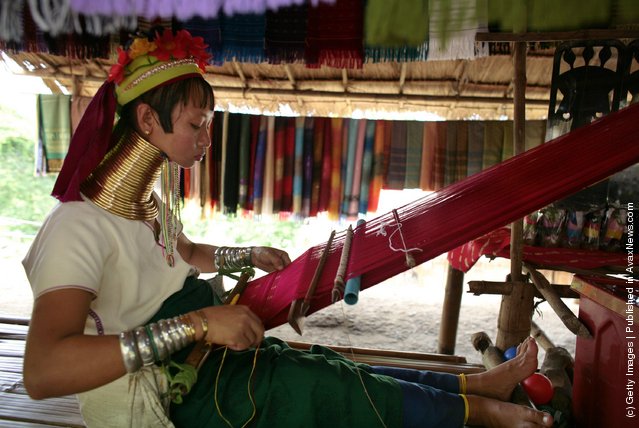
Mah Chan, a Long Neck Padaung hill tribe woman weaves a scraf for sale to tourists in a small village where 30 familes live July 13, 2006 in Chiang Dao, Thailand. All the Long Neck villages are set up for tourists and just over a year ago the hill tribe members were hand picked to move closer to Chiang Mai from more remote communities so that they could be more accessible. The Padaung women famously wear brass rings around their necks, beginning at five-years-old, to distort the growth of their collarbones and making them look like they have long necks. They are originally from eastern Burma near the Thailand border. (Photo by Paula Bronstein/Getty Images)