Loading...
Done


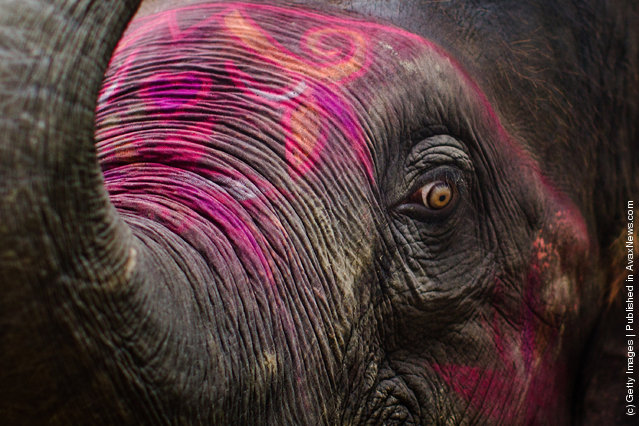
SONEPUR, INDIA - NOVEMBER 15: An elephant is painted in decorative colours during the Sonepur Mela on November 15, 2011 in Sonepur near Patna, India. The cattle fair, held in the Indian state of Bihar, has its origins during ancient times, when people traded elephants and horses across the auspicious river Ganges. The mela used to attract traders from places as distant as Central Asia. It is one of Asia's largest cattle fairs and lasts for a fortnight. (Photo by Daniel Berehulak/Getty Images)
Details
16 Nov 2011 02:42:00
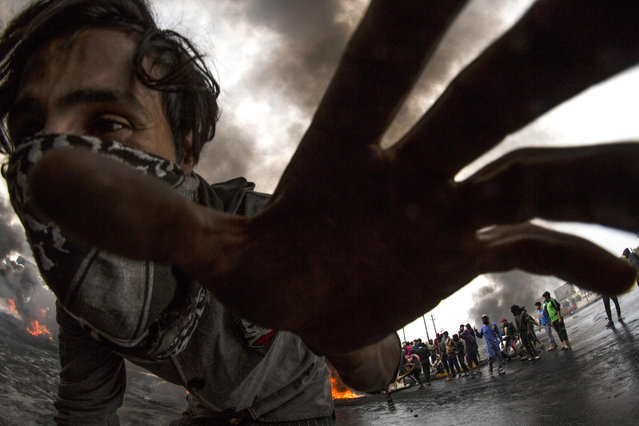
An Iraqi demonstrator runs as others burn tyres to cut-off roads in the southern city of Basra on November 25, 2019. (Photo by Hussein Faleh/AFP Photo)

An Iraqi demonstrator runs as others burn tyres to cut-off roads in the southern city of Basra on November 25, 2019. (Photo by Hussein Faleh/AFP Photo)
Details
27 Nov 2019 00:07:00
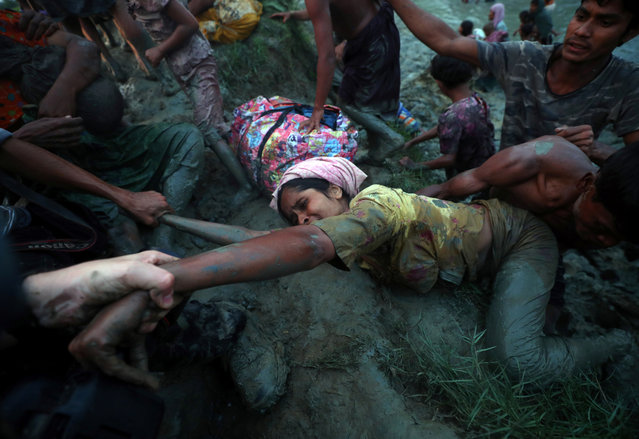
Photographers help a Rohingya refugee to climb out of Naf River as they cross the Myanmar-Bangladesh border in Palong Khali, near Cox's Bazar, Bangladesh on November 1, 2017. (Photo by Hannah McKay/Reuters)

Photographers help a Rohingya refugee to climb out of Naf River as they cross the Myanmar-Bangladesh border in Palong Khali, near Cox's Bazar, Bangladesh on November 1, 2017. (Photo by Hannah McKay/Reuters)
Details
02 Nov 2017 08:24:00
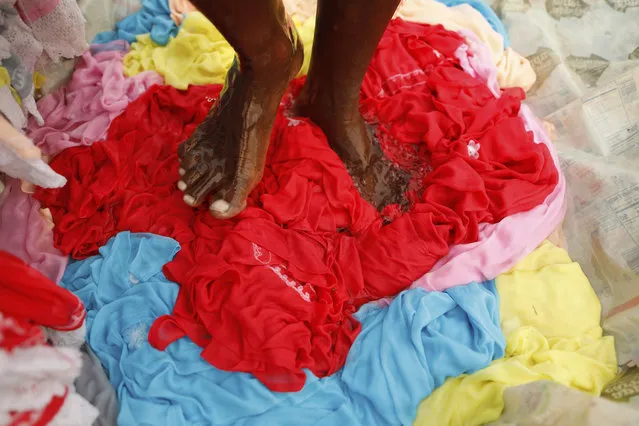
A dhobi, or a washerman washes cloths on the banks of the River Gomti in Lucknow, India, Saturday, September 12, 2020. Dhobis are traditional laundry workers who wash clothes by hand and dry them in the sun, an occupation which has been in existence for generations. Most cities in India have a Dhobi Ghat, or washermen's area, where the city's pile of clothes is laundered. This practice is still popular in India, despite of modern technology. Around 1,000 families work in Lucknow's Dhobi Ghat. However, in light of the novel coronavirus, their wages have decreased drastically. With each family earning around US$100-200 per month. (Photo by Rajesh Kumar Singh/AP Photo)

A dhobi, or a washerman washes cloths on the banks of the River Gomti in Lucknow, India, Saturday, September 12, 2020. Dhobis are traditional laundry workers who wash clothes by hand and dry them in the sun, an occupation which has been in existence for generations. Most cities in India have a Dhobi Ghat, or washermen's area, where the city's pile of clothes is laundered. This practice is still popular in India, despite of modern technology. Around 1,000 families work in Lucknow's Dhobi Ghat. However, in light of the novel coronavirus, their wages have decreased drastically. With each family earning around US$100-200 per month. (Photo by Rajesh Kumar Singh/AP Photo)
Details
25 Sep 2020 00:03:00
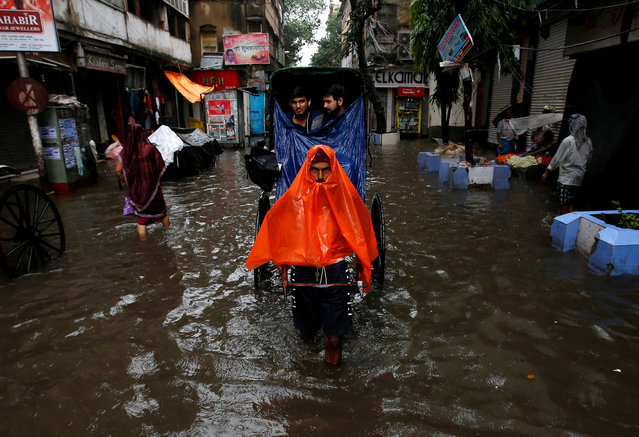
A rickshaw puller transports passengers through a water-logged street after heavy rain in Kolkata, India on June 26, 2018. (Photo by Rupak De Chowdhuri/Reuters)

A rickshaw puller transports passengers through a water-logged street after heavy rain in Kolkata, India on June 26, 2018. (Photo by Rupak De Chowdhuri/Reuters)
Details
03 Jul 2018 00:05:00
Evangelia Platanioti of Greece competes in the Solo Technical Routine at the Glasgow 2018 European Synchronised Swimming Championships, Glasgow, Britain, 06 August 2018. (Photo by Neil Hall/EPA/EFE)

Evangelia Platanioti of Greece competes in the Solo Technical Routine at the Glasgow 2018 European Synchronised Swimming Championships, Glasgow, Britain, 06 August 2018. (Photo by Neil Hall/EPA/EFE)
Details
07 Aug 2018 07:43:00
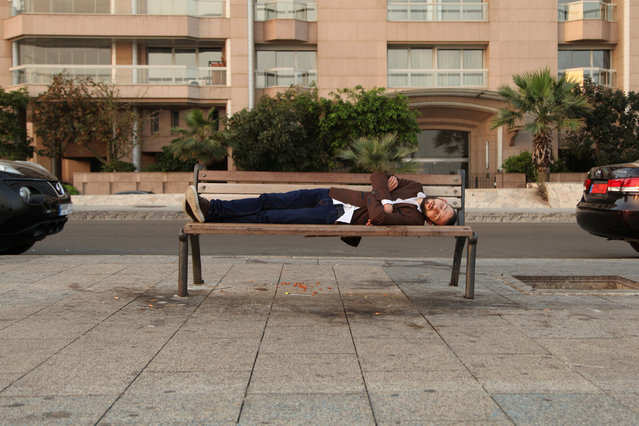
A man sleeps at Beirut's Corniche, a seaside promenade, in Lebanon May 2, 2016. (Photo by Alia Haju/Reuters)

A man sleeps at Beirut's Corniche, a seaside promenade, in Lebanon May 2, 2016. (Photo by Alia Haju/Reuters)
Details
12 Oct 2018 00:01:00
An Indigenous schoolchild dressed in traditional attire takes part in a rally to commemorate Indigenous Resistance Day in Catarina town, Nicaragua October 12, 2016. (Photo by Oswaldo Rivas/Reuters)

An Indigenous schoolchild dressed in traditional attire takes part in a rally to commemorate Indigenous Resistance Day in Catarina town, Nicaragua October 12, 2016. This holiday coincides with Columbus Day which commemorates Christopher Columbus landing in America in 1492. But rather than celebrating the discovery of the Americas, the Nicaraguans observe Indigenous Resistance Day to celebrate the bravery of the indigenous population in the fight against the Spanish conquistadors. (Photo by Oswaldo Rivas/Reuters)
Details
14 Oct 2016 12:04:00