Loading...
Done
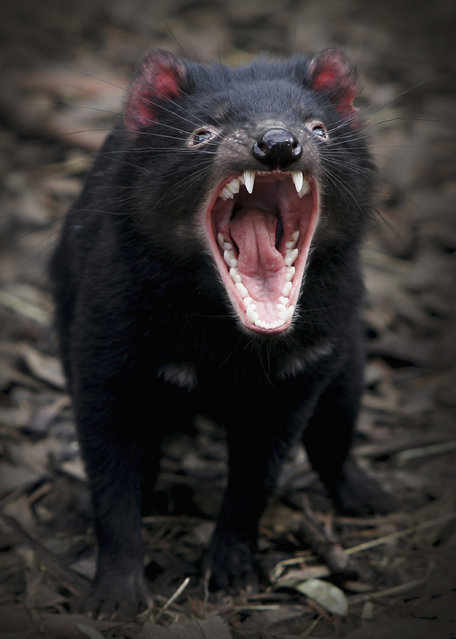
A Tasmanian Devil bears it's teeth at a quarantine facility August 31, 2005 in Hobart, Australia. The Devil, a native marsupial unique to Tasmania, is under threat from Devil Facial Tumor Disease (DFTD) which is decimating numbers throughout Tasmania. (Photo by Ian Waldie/Getty Images)

“The Tasmanian devil (Sarcophilus harrisii) is a carnivorous marsupial of the family Dasyuridae now found in the wild only in the Australian island state of Tasmania. The size of a small dog, it became the largest carnivorous marsupial in the world following the extinction of the thylacine in 1936. It is characterised by its stocky and muscular build, black fur, pungent odour, extremely loud and disturbing screech, keen sense of smell, and ferocity when feeding”. – Wikipedia. Photo: A Tasmanian Devil bears it's teeth at a quarantine facility August 31, 2005 in Hobart, Australia. (Photo by Ian Waldie/Getty Images)
Details
27 Jan 2014 09:45:00
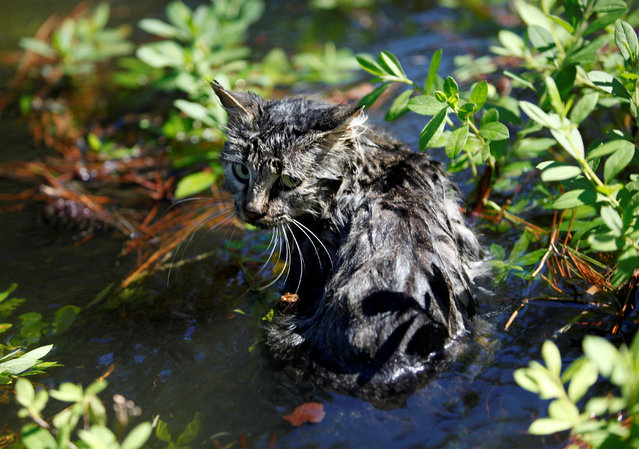
A cat sits in the flooding waters from Hurricane Matthew in downtown Nichols, South Carolina, October 10, 2016. (Photo by Randall Hill/Reuters)

A cat sits in the flooding waters from Hurricane Matthew in downtown Nichols, South Carolina, October 10, 2016. (Photo by Randall Hill/Reuters)
Details
14 Dec 2016 08:03:00
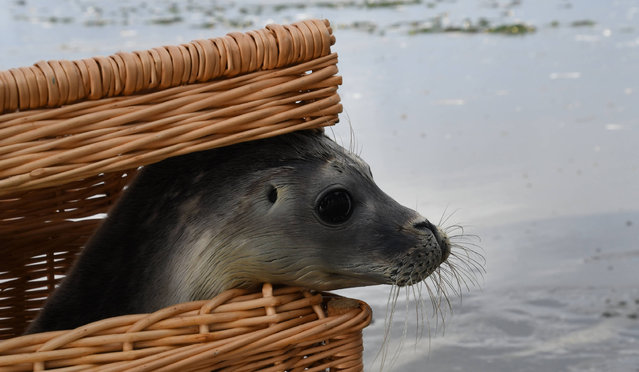
In this picture taken Thursday, August 4, 2016, seal Tristan looks out of a basket while being released into the North Sea together with others at the beach of the island Juist, Germany. He is part of the first group of released seals of the seal breeding station Norddeich this year. (Photo by Carmen Jaspersen/DPA via AP Photo)

In this picture taken Thursday, August 4, 2016, seal Tristan looks out of a basket while being released into the North Sea together with others at the beach of the island Juist, Germany. He is part of the first group of released seals of the seal breeding station Norddeich this year. (Photo by Carmen Jaspersen/DPA via AP Photo)
Details
07 Aug 2016 09:08:00
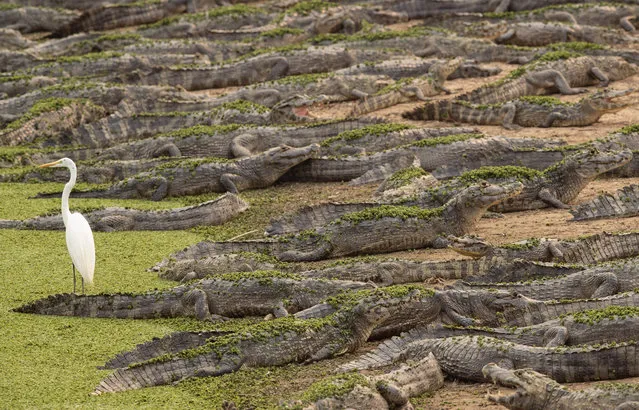
Alligators and an egret stand on the banks of the Bento Gomes river next to the Transpantaneira road at the Pantanal wetlands near Pocone, Mato Grosso state, Brazil, Monday, September 14, 2020. A vast swath of the vital wetlands is burning in Brazil, sweeping across several national parks and obscuring the sun behind dense smoke. (Photo by Andre Penner/AP Photo)

Alligators and an egret stand on the banks of the Bento Gomes river next to the Transpantaneira road at the Pantanal wetlands near Pocone, Mato Grosso state, Brazil, Monday, September 14, 2020. A vast swath of the vital wetlands is burning in Brazil, sweeping across several national parks and obscuring the sun behind dense smoke. (Photo by Andre Penner/AP Photo)
Details
20 Sep 2020 00:03:00
A man with henna-dyed hair rests on a road near the port area in Karachi, Pakistan on July 3, 2019. (Photo by Akhtar Soomro/Reuters)

A man with henna-dyed hair rests on a road near the port area in Karachi, Pakistan on July 3, 2019. (Photo by Akhtar Soomro/Reuters)
Details
13 Jul 2019 00:01:00
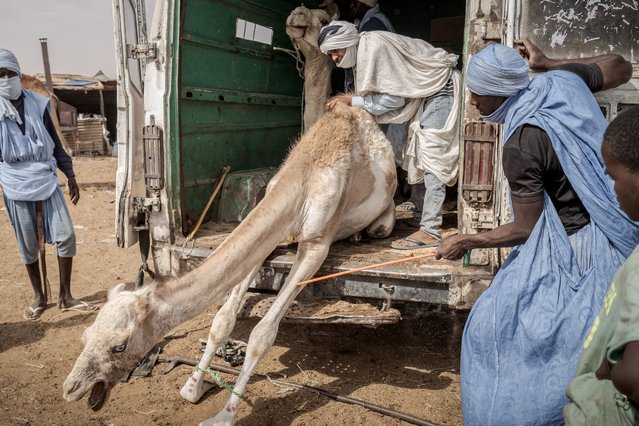
Sellers prepare the camel for “huge camel market” where hundreds of camels are sold in Nauakchott, the capital of Mauritania on May 16, 2023. Camels, being the main source of livelihood in Arab countries, are used for transportation and nutrition. (Photo by Annika Hammerschlag/Anadolu Agency via Getty Images)

Sellers prepare the camel for “huge camel market” where hundreds of camels are sold in Nauakchott, the capital of Mauritania on May 16, 2023. Camels, being the main source of livelihood in Arab countries, are used for transportation and nutrition. (Photo by Annika Hammerschlag/Anadolu Agency via Getty Images)
Details
06 Jun 2023 04:45:00
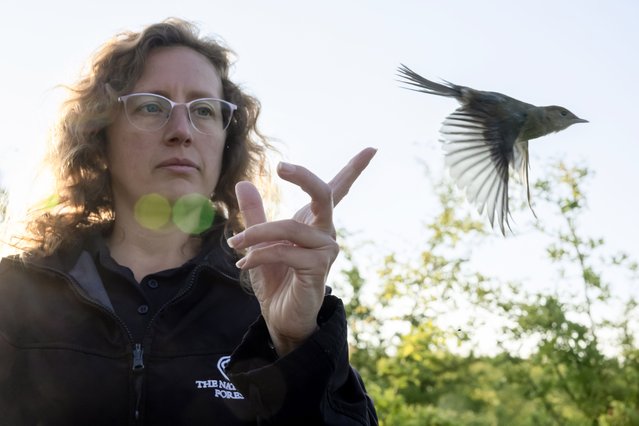
A juvenile blackcap is recorded in the soft light of morning at Minorca, UK, a former open-cast mine near Moira in the National Forest on June 18, 2025. Dr Heather Gilbert, research and evidence manager, checks mist nets among wildflowers and young trees as part of long-term monitoring that shows bird numbers have increased by 48 per cent over 30 years. (Photo by Rod Kirkpatrick/RKP Photography)

A juvenile blackcap is recorded in the soft light of morning at Minorca, UK, a former open-cast mine near Moira in the National Forest on June 18, 2025. Dr Heather Gilbert, research and evidence manager, checks mist nets among wildflowers and young trees as part of long-term monitoring that shows bird numbers have increased by 48 per cent over 30 years. (Photo by Rod Kirkpatrick/RKP Photography)
Details
29 Jun 2025 03:58:00
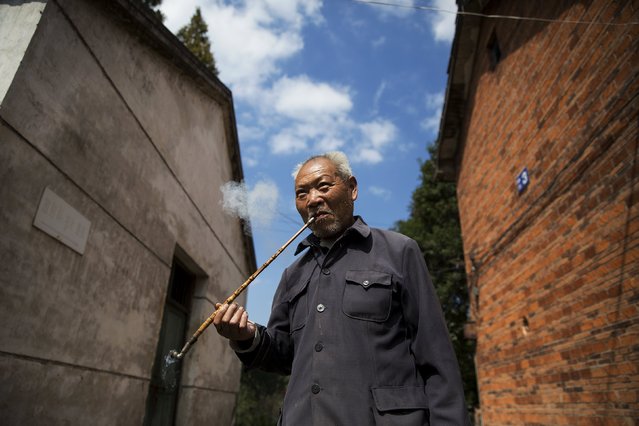
Wang Zhengqing, a 74 year old pneumoconiosis patient, smokes his pipe at Yangjia Hospital in Wuyi County, Zhejiang Province, China October 19, 2015. Former miner Wang was diagnosed with the disease, which is caused by dust inhalation, when he was 24 and has lived at Yangjia Hospital for ten years. (Photo by Damir Sagolj/Reuters)

Wang Zhengqing, a 74 year old pneumoconiosis patient, smokes his pipe at Yangjia Hospital in Wuyi County, Zhejiang Province, China October 19, 2015. Former miner Wang was diagnosed with the disease, which is caused by dust inhalation, when he was 24 and has lived at Yangjia Hospital for ten years. (Photo by Damir Sagolj/Reuters)
Details
31 Oct 2015 08:00:00