Loading...
Done
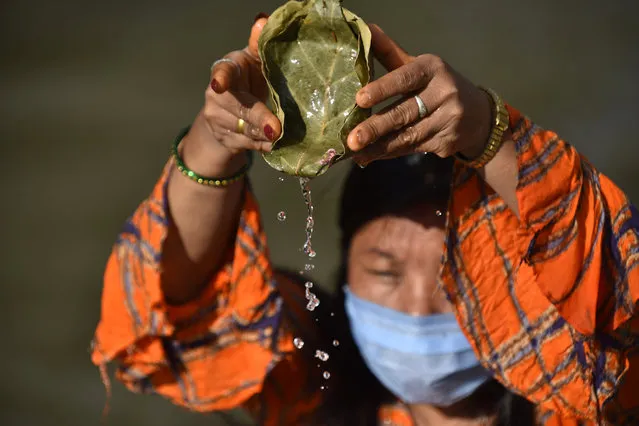
A Nepalese devotee offers ritual prayer at the Bank of Bagmati River of Pashupatinath Temple during Rishi Panchami Festival celebrations at Kathmandu, Nepal on Sunday, August 23, 2020. Rishi Panchami festival is  celebrated as the last day of three-day long Teej Festival. The Teej festival is celebrated by Hindu women in Nepal as well as in some parts of India. During the three-day long festival, women observe a day-long fast and pray for the long life of their husbands as well as for a happy family. Those who are unmarried pray for a good husband and a long life. Due to prohibitory order lockdown in Kathmandu valley for a week-long, as rapid increase in the number of COVID-19 cases. (Photo by Narayan Maharjan/NurPhoto via Getty Images)

A Nepalese devotee offers ritual prayer at the Bank of Bagmati River of Pashupatinath Temple during Rishi Panchami Festival celebrations at Kathmandu, Nepal on Sunday, August 23, 2020. Rishi Panchami festival is celebrated as the last day of three-day long Teej Festival. The Teej festival is celebrated by Hindu women in Nepal as well as in some parts of India. (Photo by Narayan Maharjan/NurPhoto via Getty Images)
Details
20 Sep 2020 00:01:00
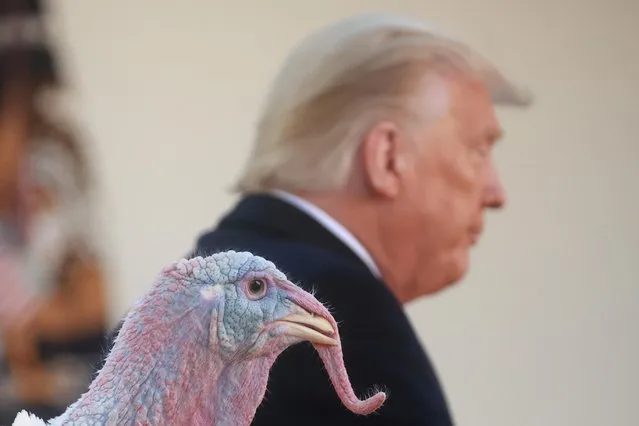
The National Thanksgiving Turkey Corn stands by as President Donald Trump speaks during the 73rd annual presentation and pardoning in the Rose Garden at the White House in Washington, November 24, 2020. In the Rose Garden, Trump pardoned the 42-pound turkey named Corn as part of an annual presidential ritual, the sparing of a turkey from American dinner tables on the Thanksgiving holiday. (Photo by Hannah McKay/Reuters)

The National Thanksgiving Turkey Corn stands by as President Donald Trump speaks during the 73rd annual presentation and pardoning in the Rose Garden at the White House in Washington, November 24, 2020. In the Rose Garden, Trump pardoned the 42-pound turkey named Corn as part of an annual presidential ritual, the sparing of a turkey from American dinner tables on the Thanksgiving holiday. (Photo by Hannah McKay/Reuters)
Details
30 Nov 2020 00:01:00
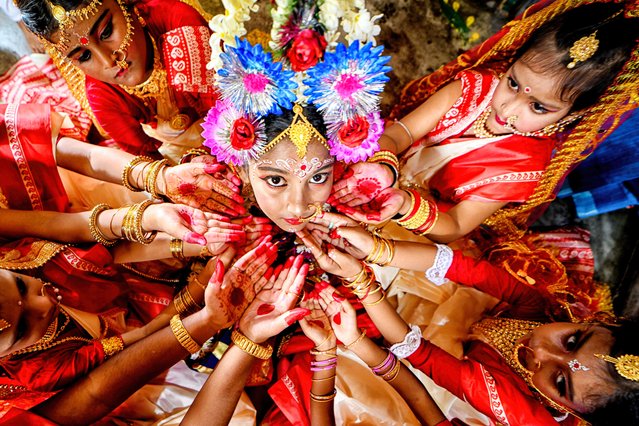
Young girls pose for a photo during the Kumari Puja Ritual on the 9th day of the Durga puja festival at a Pandal (Temporary place for worship) in Kolkata on October 4, 2022. Kumari Puja is an Indian Hindu Tradition mainly celebrated during the Durga Puja according to the Hindu Calendar. The philosophical basis of Kumari Puja is to establish the value of women. Devotees believe it will overcome all barriers, dangers for the young girls in the coming future and also, they will be empowered to handle any stress and obstruction in their coming life. (Photo by Avishek Das/SOPA Images/Rex Features/Shutterstock)

Young girls pose for a photo during the Kumari Puja Ritual on the 9th day of the Durga puja festival at a Pandal (Temporary place for worship) in Kolkata on October 4, 2022. Kumari Puja is an Indian Hindu Tradition mainly celebrated during the Durga Puja according to the Hindu Calendar. The philosophical basis of Kumari Puja is to establish the value of women. Devotees believe it will overcome all barriers, dangers for the young girls in the coming future and also, they will be empowered to handle any stress and obstruction in their coming life. (Photo by Avishek Das/SOPA Images/Rex Features/Shutterstock)
Details
13 Oct 2022 04:25:00
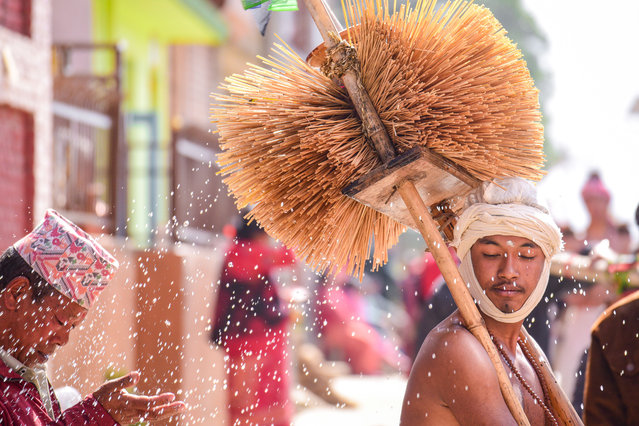
Devotees perform religious rituals by splashing holy water during the Madhav Narayan Festival, a month-long event dedicated to Lord Madhav Narayan, an incarnation of Lord Vishnu in Thacho, Lalitpur, Nepal on February 10, 2025. Devotees also carry butter lamps and blow conch shells (shankha) as part of the sacred observance. (Photo by Safal Prakash Shrestha/ZUMA Press Wire)

Devotees perform religious rituals by splashing holy water during the Madhav Narayan Festival, a month-long event dedicated to Lord Madhav Narayan, an incarnation of Lord Vishnu in Thacho, Lalitpur, Nepal on February 10, 2025. Devotees also carry butter lamps and blow conch shells (shankha) as part of the sacred observance. (Photo by Safal Prakash Shrestha/ZUMA Press Wire)
Details
08 Mar 2025 03:54:00
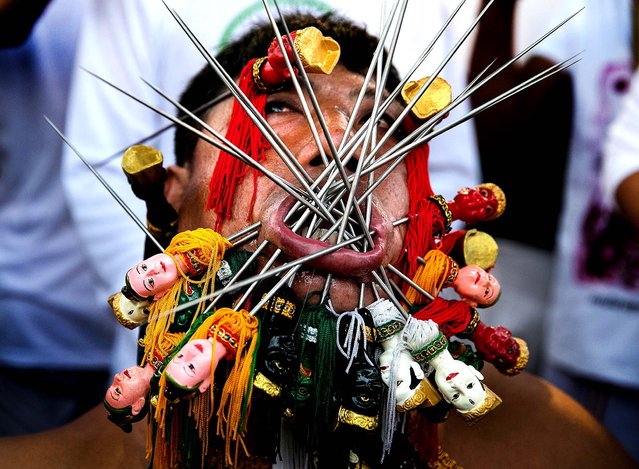
A devotee gest pierced at the Bang Neow shrine in Phuket. (Photo by Paula Bronstein/Getty Images)

“The Nine Emperor Gods Festival is a nine-day Taoist celebration beginning on the eve of 9th lunar month of the Chinese calendar, which is observed primarily in Southeast Asian countries like Myanmar, Singapore, Malaysia, Thailand and also the Riau Islands. In Thailand, this festival is called Tesagan Gin Je, the Vegetarian Festival. It is celebrated throughout the entire country, but the festivities are at their height in Phuket, where about 35% of the population is Chinese. It attracts crowds of spectators because of many of the unusual religious rituals that are performed”. – Wikipedia. Photo: A devotee gest pierced at the Bang Neow shrine in Phuket. (Photo by Paula Bronstein)
Details
11 Oct 2013 07:49:00
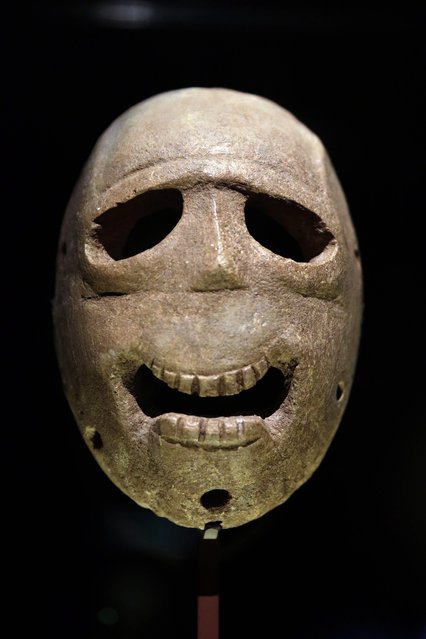
In this  Monday, March 10, 2014 photo, a 9,000 year-old mask is on display at the Israel Museum in Jerusalem.  (Photo by Tsafrir Abayov/AP Photo)

In this Monday, March 10, 2014 photo, a 9,000 year-old mask is on display at the Israel Museum in Jerusalem. The exhibition called “Face To Face” shows eleven stone masks, said to have been discovered in the Judean desert and hills near Jerusalem, which date back 9,000 years and offer a rare glimpse at some of civilization's first communal rituals. (Photo by Tsafrir Abayov/AP Photo)
Details
14 Mar 2014 08:25:00
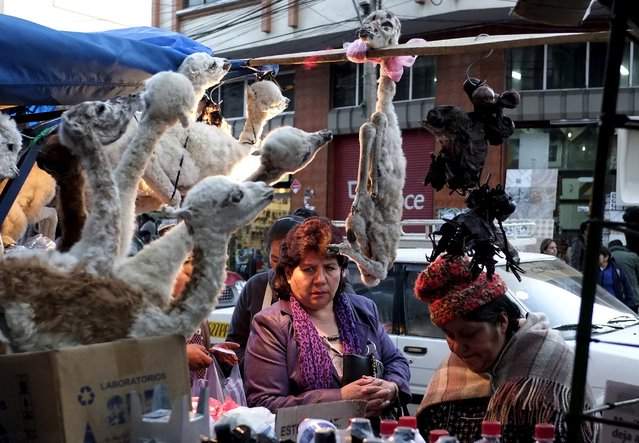
A woman (C) shops for an offering at the witch doctor's street in La Paz, July 31, 2015. (Photo by David Mercado/Reuters)

A woman (C) shops for an offering at the witch doctor's street in La Paz, July 31, 2015. According to Andean culture, the all the month of August is a time to give offerings to “Pachamama” to give thanks for their farms and health. The Aymaras use coca leaves, candies, animal fat, llama fetuses, some dried fruits, powdered minerals and alcohol during these rituals. (Photo by David Mercado/Reuters)
Details
02 Aug 2015 12:27:00
A Tasmanian Devil bears it's teeth at a quarantine facility August 31, 2005 in Hobart, Australia. The Devil, a native marsupial unique to Tasmania, is under threat from Devil Facial Tumor Disease (DFTD) which is decimating numbers throughout Tasmania. (Photo by Ian Waldie/Getty Images)

“The Tasmanian devil (Sarcophilus harrisii) is a carnivorous marsupial of the family Dasyuridae now found in the wild only in the Australian island state of Tasmania. The size of a small dog, it became the largest carnivorous marsupial in the world following the extinction of the thylacine in 1936. It is characterised by its stocky and muscular build, black fur, pungent odour, extremely loud and disturbing screech, keen sense of smell, and ferocity when feeding”. – Wikipedia. Photo: A Tasmanian Devil bears it's teeth at a quarantine facility August 31, 2005 in Hobart, Australia. (Photo by Ian Waldie/Getty Images)
Details
27 Jan 2014 09:45:00