Loading...
Done
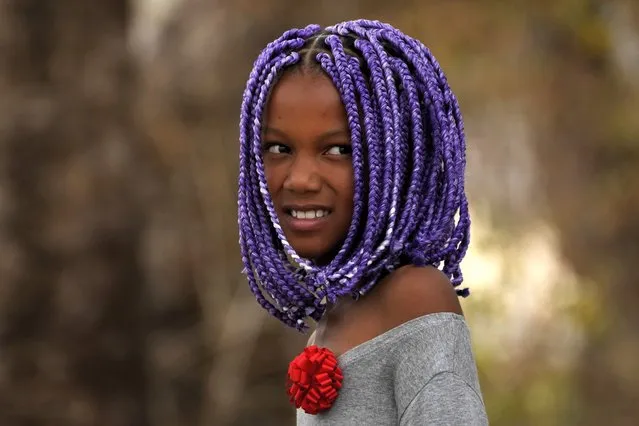
Sophia Fernandes, a member of the Kalunga quilombo, the descendants of runaway slaves, dons traditional afro braids, during the culmination of the week-long pilgrimage and celebration for the patron saint “Nossa Senhora da Abadia” or Our Lady of Abadia, in the rural area of Cavalcante in Goias state, Brazil, Saturday, August 13, 2022.  Devotees celebrate Our Lady of Abadia at this time of the year with weddings, baptisms and by crowning distinguished community members, as they maintain cultural practices originating from Africa that mix with Catholic traditions. (Photo by Eraldo Peres/AP Photo)

Sophia Fernandes, a member of the Kalunga quilombo, the descendants of runaway slaves, dons traditional afro braids, during the culmination of the week-long pilgrimage and celebration for the patron saint “Nossa Senhora da Abadia” or Our Lady of Abadia, in the rural area of Cavalcante in Goias state, Brazil, Saturday, August 13, 2022. Devotees celebrate Our Lady of Abadia at this time of the year with weddings, baptisms and by crowning distinguished community members, as they maintain cultural practices originating from Africa that mix with Catholic traditions. (Photo by Eraldo Peres/AP Photo)
Details
21 Aug 2022 03:48:00
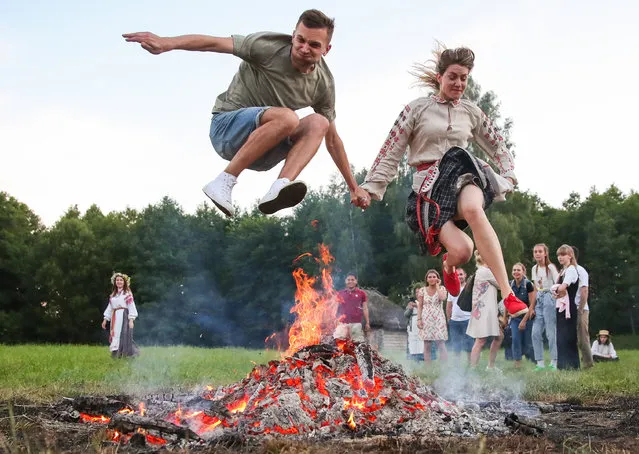
A man and a woman jump over a bonfire during Ivan Kupala Day celebrations held by the Belarusian State Museum of Folk Architecture and Rural Lifestyle in the village of Ozertso near Minsk, Belarus on July 4, 2020. Ivan Kupala Day, also known as Ivana-Kupala or Kupala Night, is a traditional pagan holiday celebrated in eastern Slavic cultures. Various rituals are traditionally performed on Kupala Night, including making flower wreaths, fortune-telling, jumping over bonfires, and burning a wheel-like effigy symbolizing the sun. (Photo by Natalia Fedosenko/TASS)

A man and a woman jump over a bonfire during Ivan Kupala Day celebrations held by the Belarusian State Museum of Folk Architecture and Rural Lifestyle in the village of Ozertso near Minsk, Belarus on July 4, 2020. Ivan Kupala Day, also known as Ivana-Kupala or Kupala Night, is a traditional pagan holiday celebrated in eastern Slavic cultures. Various rituals are traditionally performed on Kupala Night, including making flower wreaths, fortune-telling, jumping over bonfires, and burning a wheel-like effigy symbolizing the sun. (Photo by Natalia Fedosenko/TASS)
Details
07 Jul 2020 00:07:00
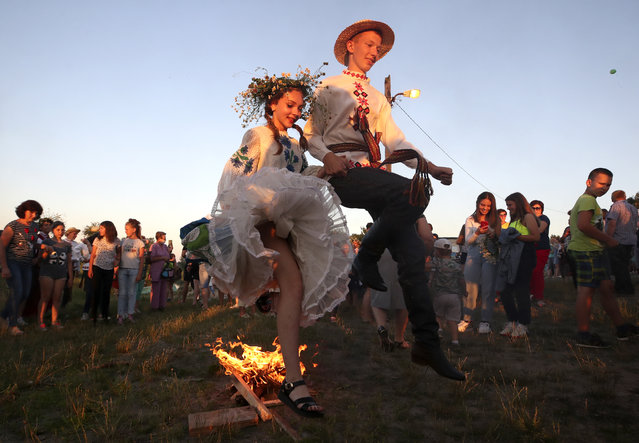
People in ethnic costumes jump over a bonfire during Ivan Kupala Day celebrations held by the Pripyat River in the town of Turauin Gomel Region, Belarus on July 6, 2020. Ivan Kupala Day, also known as Ivana-Kupala or Kupala Night, is a traditional pagan holiday celebrated in eastern Slavic cultures. Various rituals are traditionally performed on Kupala Night, including making flower wreaths, fortune-telling, jumping over bonfires, and burning a wheel-like effigy symbolizing the sun. (Photo by Natalia Fedosenko/TASS)

People in ethnic costumes jump over a bonfire during Ivan Kupala Day celebrations held by the Pripyat River in the town of Turauin Gomel Region, Belarus on July 6, 2020. Ivan Kupala Day, also known as Ivana-Kupala or Kupala Night, is a traditional pagan holiday celebrated in eastern Slavic cultures. Various rituals are traditionally performed on Kupala Night, including making flower wreaths, fortune-telling, jumping over bonfires, and burning a wheel-like effigy symbolizing the sun. (Photo by Natalia Fedosenko/TASS)
Details
19 Jul 2020 00:01:00
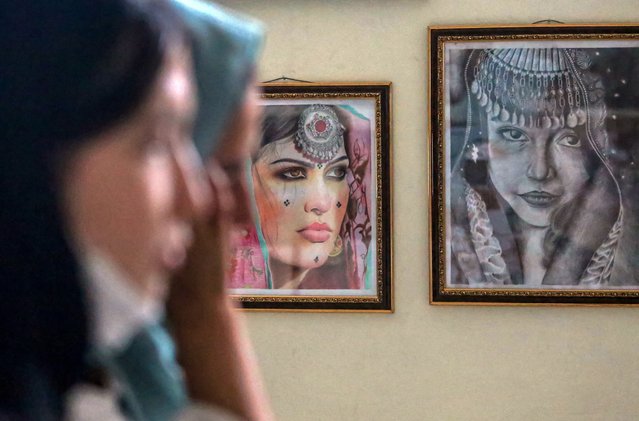
Shakar Rustami (L) and Zulaikha Amini, organizers of the “Smart Way” book and painting exhibition stand in front of painting in Kabul, Afghanistan, 21 August 2023. Young female artists in Kabul held a painting exhibition to express the restrictions imposed by the Taliban on women and girls. The exhibition also featured books displayed by students to promote reading culture. Some of the girls called for the Taliban to lift the restrictions against women and girls. Many female students turned to painting and drawing after schools and universities closed. (Photo by Samiullah Popal/EPA/EFE)

Shakar Rustami (L) and Zulaikha Amini, organizers of the“'Smart Way” book and painting exhibition stand in front of painting in Kabul, Afghanistan, 21 August 2023. Young female artists in Kabul held a painting exhibition to express the restrictions imposed by the Taliban on women and girls. The exhibition also featured books displayed by students to promote reading culture. Some of the girls called for the Taliban to lift the restrictions against women and girls. Many female students turned to painting and drawing after schools and universities closed. (Photo by Samiullah Popal/EPA/EFE)
Details
09 Sep 2023 02:33:00
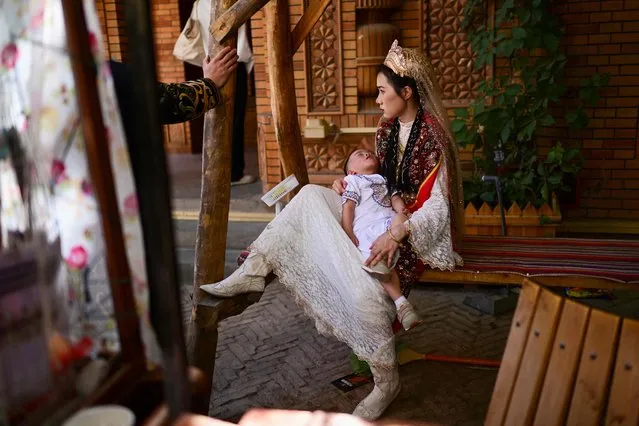
This photo taken on July 13, 2023 shows a woman wearing traditional Uyghur attire posing for photos in the Old Kashgar tourist area in China's northwestern Xinjiang region. Chinese travellers throng the bazaars of old Kashgar, munching mutton kebabs and soaking up heavily commodified Uyghur culture – part of a government push to remould troubled Xinjiang into a tourism paradise. (Photo by Pedro Pardo/AFP Photo)

This photo taken on July 13, 2023 shows a woman wearing traditional Uyghur attire posing for photos in the Old Kashgar tourist area in China's northwestern Xinjiang region. Chinese travellers throng the bazaars of old Kashgar, munching mutton kebabs and soaking up heavily commodified Uyghur culture – part of a government push to remould troubled Xinjiang into a tourism paradise. (Photo by Pedro Pardo/AFP Photo)
Details
27 Sep 2023 02:44:00
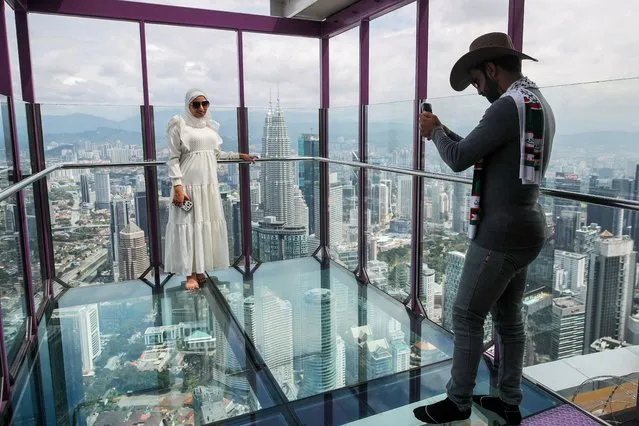
Visitors take pictures inside Kuala Lumpur Tower's “Sky Box”, one of the city's touristic attractions, in Kuala Lumpur, Malaysia, 05 January 2024. Malaysian Tourism Minister Tiong King Sing recently said that the tourism industry “is not just an engine for economic growth but also a bridge for cultural exchange and international friendship”. (Photo by Fazry Ismail/EPA/EFE)

Visitors take pictures inside Kuala Lumpur Tower's “Sky Box”, one of the city's touristic attractions, in Kuala Lumpur, Malaysia, 05 January 2024. Malaysian Tourism Minister Tiong King Sing recently said that the tourism industry “is not just an engine for economic growth but also a bridge for cultural exchange and international friendship”. (Photo by Fazry Ismail/EPA/EFE)
Details
23 Jan 2024 09:41:00
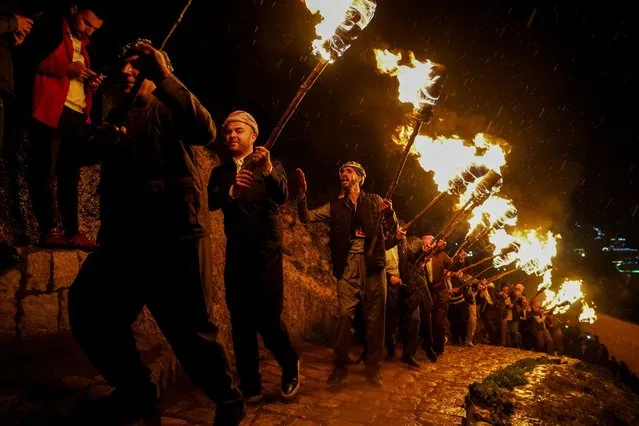
Iraqi Kurds carry fire torches as they celebrate Nowruz Day, a festival marking the first day of spring, Kurdish and Persian New Year in Akre, Iraq on March 20, 2024. Newroz or Nowruz means “new day” in Persian, and is celebrated to mark the arrival of spring and the first day of the Iranian calendar. It is widely celebrated in Persian and neighboring regions and is recognized on UNESCO's Intangible Cultural Heritage of Human List. (Photo by Ismael Adnan/SOPA Images/Rex Features/Shutterstock)

Iraqi Kurds carry fire torches as they celebrate Nowruz Day, a festival marking the first day of spring, Kurdish and Persian New Year in Akre, Iraq on March 20, 2024. Newroz or Nowruz means “new day” in Persian, and is celebrated to mark the arrival of spring and the first day of the Iranian calendar. It is widely celebrated in Persian and neighboring regions and is recognized on UNESCO's Intangible Cultural Heritage of Human List. (Photo by Ismael Adnan/SOPA Images/Rex Features/Shutterstock)
Details
29 Mar 2024 05:30:00
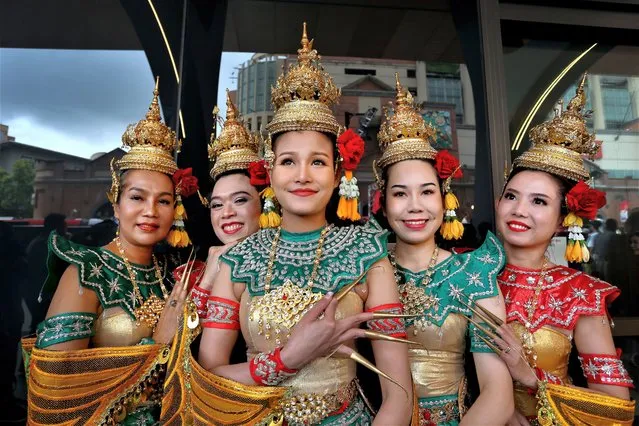
Members of Siam Classic Dance Studio perform for onlookers at Haymarket on January 21, 2023 in Sydney, Australia. The Lunar New Year or Spring Festival marks the transition of the Chinese zodiac sign from one animal to the next. 2023 sees in the Year of the Rabbit, which begins on January 22. In Chinese culture, the Rabbit is a symbol of longevity, peace and prosperity. The festival is celebrated in Australia by the country's significant Chinese-origin minority, who follow much of the same traditions as the Chinese diaspora in the rest of the world. (Photo by Lisa Maree Williams/Getty Images)

Members of Siam Classic Dance Studio perform for onlookers at Haymarket on January 21, 2023 in Sydney, Australia. The Lunar New Year or Spring Festival marks the transition of the Chinese zodiac sign from one animal to the next. 2023 sees in the Year of the Rabbit, which begins on January 22. In Chinese culture, the Rabbit is a symbol of longevity, peace and prosperity. The festival is celebrated in Australia by the country's significant Chinese-origin minority, who follow much of the same traditions as the Chinese diaspora in the rest of the world. (Photo by Lisa Maree Williams/Getty Images)
Details
13 Apr 2024 05:28:00