Loading...
Done


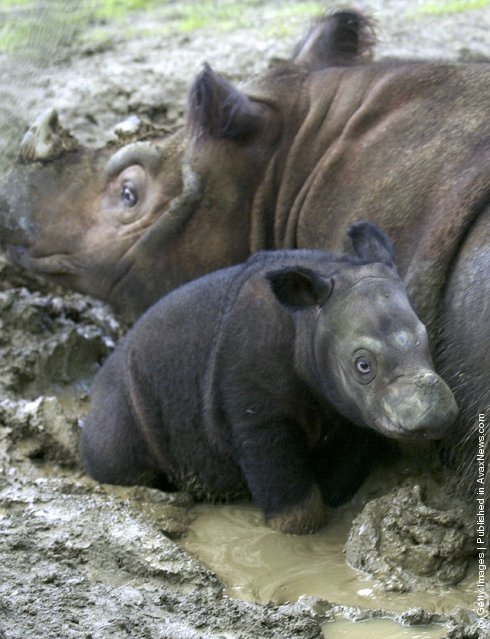
“The Sumatran Rhinoceros (Dicerorhinus sumatrensis) is a member of the family Rhinocerotidae and one of five extant rhinoceroses. It is the only extant species of the genus Dicerorhinus. It is the smallest rhinoceros, standing about 120–145 centimetres (3.9–4.76 ft) high at the shoulder, with a body length of 250 centimetres (8.2 ft) and weight of 500–800 kilograms (1,100–1,800 lb). Like the African species, it has two horns; the larger is the nasal horn, typically 15–25 centimetres (5.9–9.8 in), while the other horn is typically a stub. A coat of reddish-brown hair covers most of the Sumatran Rhino's body”. – Wikipedia

Photo: Emi, a Sumatran rhinoceros lies in the mud with her three-week-old female calf at the Cincinnati Zoo and Botanical Garden August 19, 2004 in Cincinnati, Ohio. Emi made history by becoming the first Sumatran rhino to produce two calves in captivity. (Photo by Mike Simons/Getty Images)
Details
22 Jun 2011 12:37:00


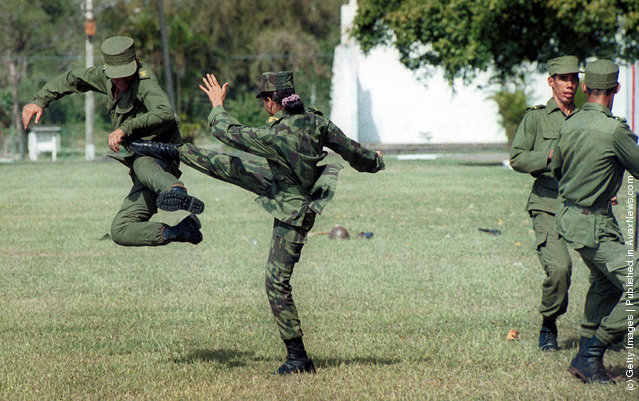
Cuban soldiers receive combat training at the Cadets School “Antonio Maceo” November 28, 2001, 30 kilometers East of Havana. (Photo by Jorge Rey/Getty Images)
Details
25 Jul 2011 12:12:00
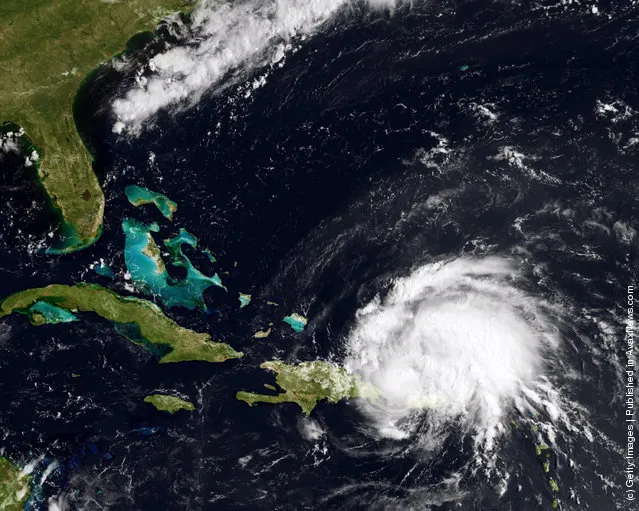
Hurricane Irene

In this handout GOES satellite image provided by the National Oceanic and Atmospheric Administration (NOAA), Irene reaches hurricane strength as it moves across Puerto Rico towards Hispaniola August 22, 2011 in the Caribbean Sea. Irene, the first hurricane of the Atlantic storm season, brought torrential rains and winds to Puerto Rico, downing trees and powerlines and flooding streets. The expected path will bring Irene through the Bahamas and is likely to hit Florida and up the east coast of the U.S. (Photo by NOAA via Getty Images)
Details
23 Aug 2011 12:47:00
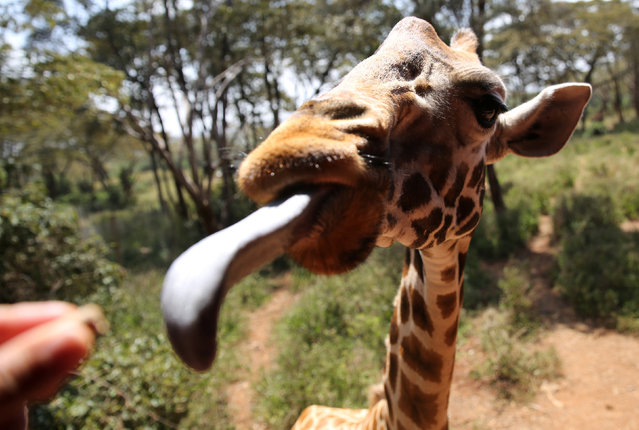
A visitor feeds a food pellet to a giraffe in the Giraffe Centre in Nairobi, Kenya January 15, 2017. (Photo by Goran Tomasevic/Reuters)

A visitor feeds a food pellet to a giraffe in the Giraffe Centre in Nairobi, Kenya January 15, 2017. (Photo by Goran Tomasevic/Reuters)
Details
22 Jan 2017 10:01:00
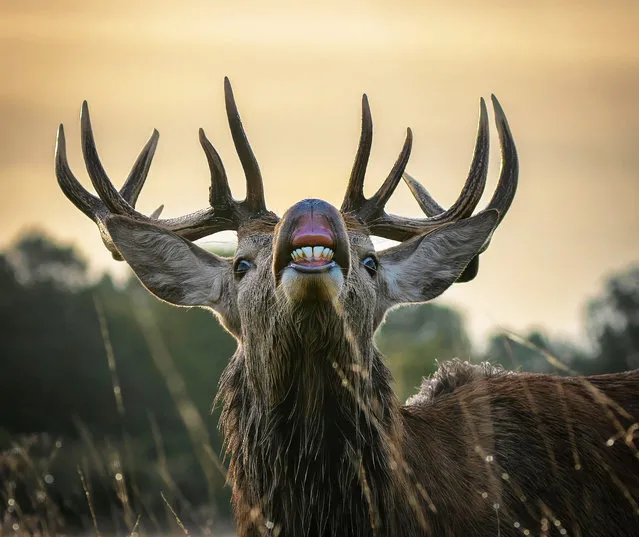
A red deer stag in Bushy Park, southwest London, pulls a comical face for the camera in the second decade of November 2023. (Photo by Andrew Wood/Caters News Agency)

A red deer stag in Bushy Park, southwest London, pulls a comical face for the camera in the second decade of November 2023. (Photo by Andrew Wood/Caters News Agency)
Details
03 Dec 2023 03:22:00
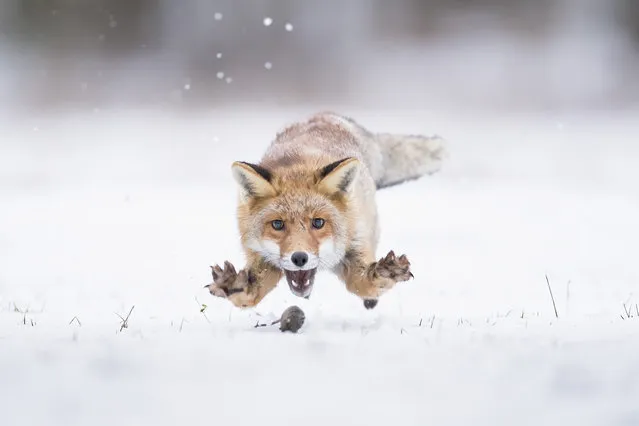
A fox pounces on a mouse in the snowy hills on the border of the Czech Republic and Slovakia. (Photo by Johnny Krüger/Mediadrumimages)

A fox pounces on a mouse in the snowy hills on the border of the Czech Republic and Slovakia. (Photo by Johnny Krüger/Mediadrumimages)
Details
16 Apr 2024 06:28:00
The Lun-class Ekranoplane was used by the Soviet Navy starting in 1987, and wasn't retired until the late 1990s, after the Soviet Union's fall. (Igor113)

“The Lun-class ekranoplan (NATO reporting name Duck) was a ground effect vehicle (GEV) designed by Rostislav Evgenievich Alexeev and used by the Soviet and Russian navies from 1987 until sometime in the late 1990s. It “flew” using the lift generated by the ground effect of its large wings when close to the surface of the water – about four metres or less. Although they might look similar and/or have related technical characteristics, ekranoplans like the Lun are not aircraft, seaplanes, hovercraft, or hydrofoils – ground effect is a separate technology altogether. The International Maritime Organization classifies these vehicles as maritime ships. The name Lun comes from the Russian for harrier”. – Wikipedia (Photo by Igor113)
Details
08 Aug 2014 10:51:00
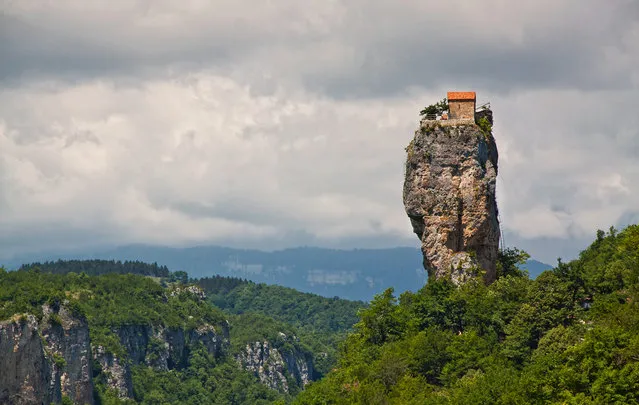
Katskhi Pillar In Georgia

The Katskhi pillar is a natural limestone monolith located at the village of Katskhi in western Georgian region of Imereti, near the town of Chiatura. It is approximately 40 metres (130 ft) high, and overlooks the small river valley of Katskhura, a right affluent of the Q'virila.
Details
13 Jun 2014 12:01:00