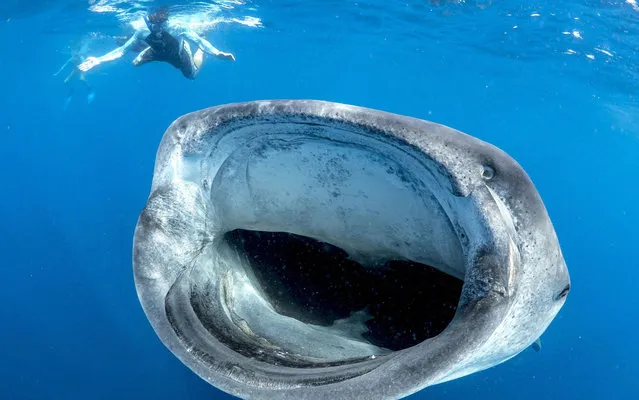
Marine biologist Simon Pierce, who studies whale sharks, happened to be in the right place at the right time to capture amazing photo off Cancun, Mexico. (Photo by Simon Pierce/Mercury Press/Caters News)
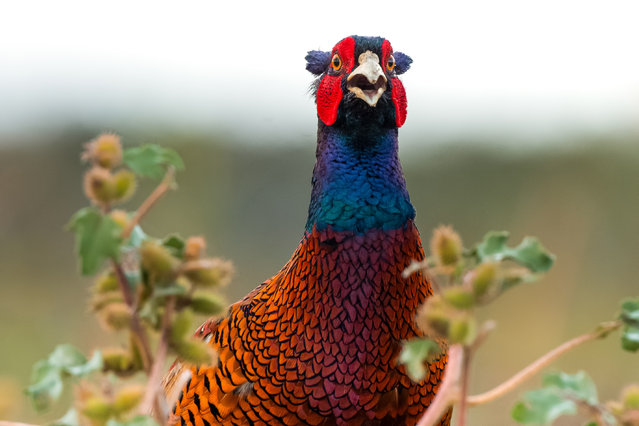
A pheasant is seen among grasses in Bursa, Turkiye on October 07, 2024. Pheasants mostly live in forested areas, thickets and wetlands. Unlike females, male pheasants have a much more remarkable structure with their long tails and feathers in bright and variable colors. Also, they feed on fruits, grains, seeds and invertebrates. (Photo by Alper Tuydes/Anadolu via Getty Images)
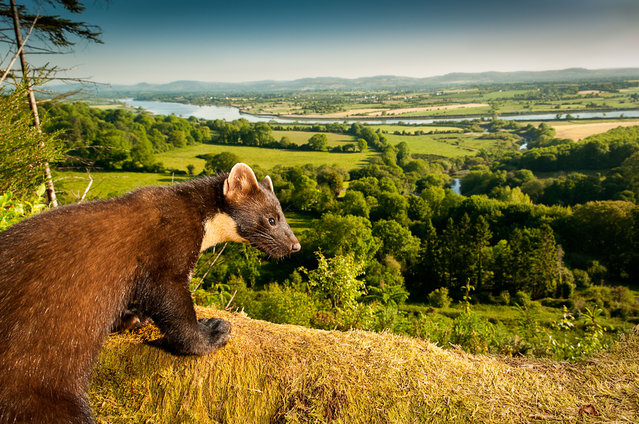
A pine marten – one of a few wild mammals doing well in Britain (although they number just 3,700). A fifth of the country’s wild mammals are at high risk of extinction, research shows. (Photo by Maurice Flynn/The Mammal Society)
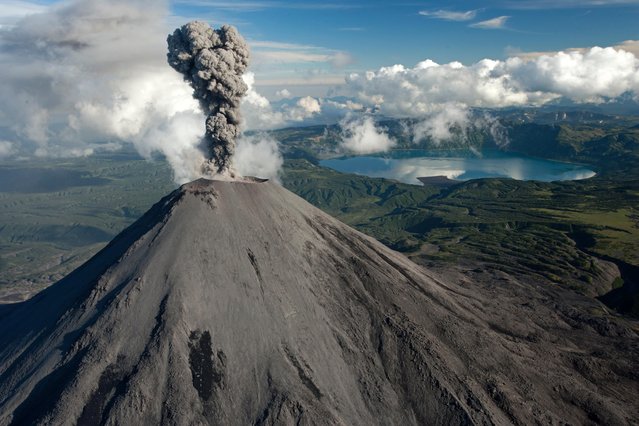
Since 2003, photographer Sergey Fomin has been shooting Russia’s most attractive natural, historical, and architectural objects from different aircrafts. Photo: “An Explosive Scene”. The 1,486-meter-high Karymskii Volcano in Kamchatka. (Photo by Sergey Fomin)
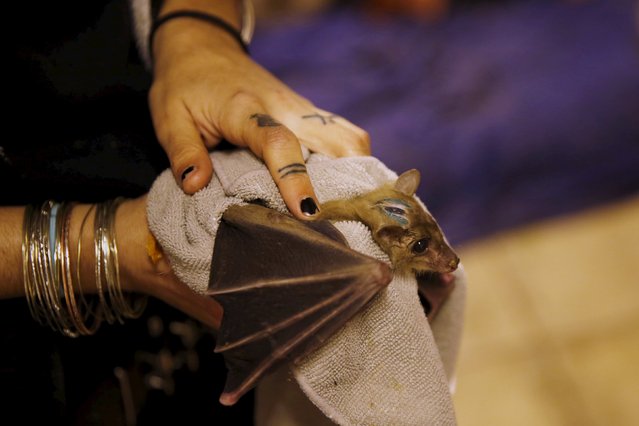
Israeli woman, Nora Lifschitz, 28, holds an injured Egyptian fruit bat at her home in Tel Aviv February 22, 2016. Lifschitz says that she began caring for injured fruit bats from her home two years ago and now has some 70 of the flying mammals which she plans to release back into nature once they are healthy. (Photo by Baz Ratner/Reuters)
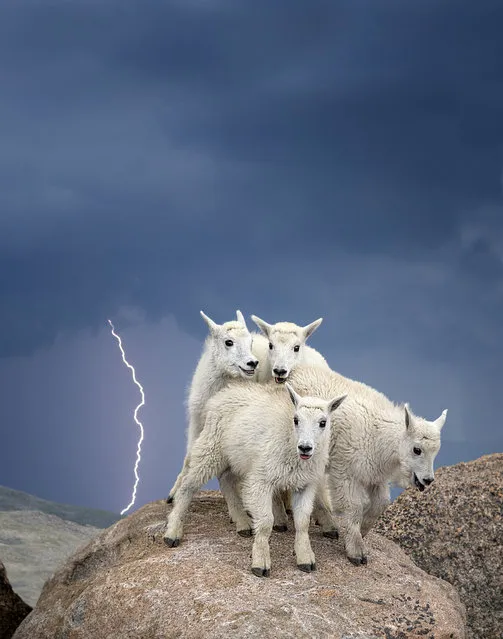
“Mountain Goats, Colorado”. A herd of mountain goats huddle together on top of Mount Evans, Colorado during a lightning storm. This photo was selected out of more than 5,000 entries to go on display in “Wilderness Forever: 50 Years of Protecting America’s Wild Places”, a new photo exhibition at the Smithsonian’s National Museum of Natural History, which will run through summer 2015. (Photo by Verdon Tomajko/Smithsonian Wilderness Forever Photo Contest)