Loading...
Done
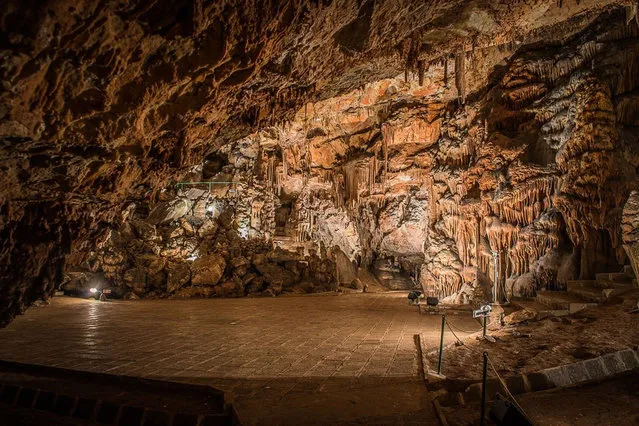
Saeva Dupka Cave

Saeva dupka (Bulgarian: Съева дупка) is a cave in Northern Bulgaria near the village of Brestnitsa, Lovech Province (43°2′N 24°11′E). Its five halls and 400 metres of corridors offer some of the most beautiful cave formations in the country. Besides that the cave has hosted many Choral music performances, thanks to the excellent acoustic conditions. Saeva dupka was named after two brothers Seyu and Sae who used it as a hiding place during the Ottoman occupation of Bulgaria. Recent excavations have showed the cave was inhabited since Roman times. Currently Saeva dupka is one of the 100 Tourist Sites of Bulgaria.
Details
20 Feb 2013 11:30:00
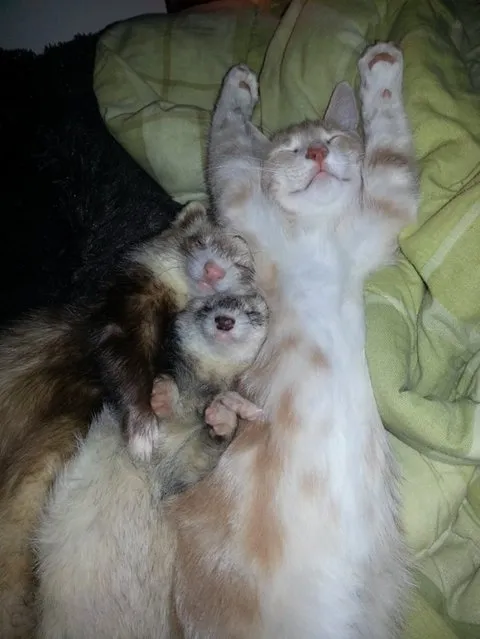
Unlikely Friendship Of A Kitten And Ferrets

In June, Mallory Gaudet picked up a little ginger kitten on the street and took him home. Mallory worried that the baby will not be able to get along with her ​​two other pets – ferrets, and they will hurt him. But it turned out that the new member of the family, named Ned, could get used to this neighborhood very fast. Moreover – these three animals became really best friends. Now kitten and ferrets play, eat and sleep all together. But the most touching thing is when Ned “washes” the ferrets. Interspecific and intergeneric animals’ friendship – is a rare phenomenon. But ginger kitten and two of his fellows break all the stereotypes.
Details
16 Apr 2014 15:24:00
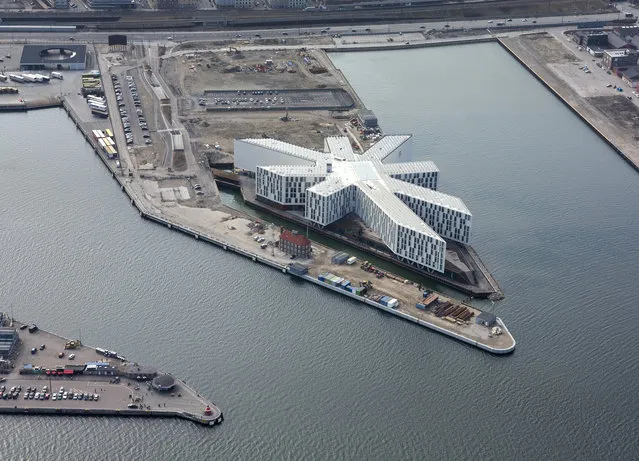
UN City In Copenhagen

Cooperation is key to success. This motto was used by the Government of Denmark when they decided to create a project that bore the name of UN City. This compound was designed to house all nine Copenhagen based UN agencies under a single roof. This embodies the core idea of the United Nations, since this project allows for better efficiency and practicality thanks to joint effort. The first plans for the UN City were hatched in 2002. After 11 years, in 2013 the first stage of the project was finally finished. Presently, Campus 1 of UN City accommodates 1,300 staff member, while Campus 2 is going to become the largest humanitarian warehouse in the whole world.
Details
28 Feb 2015 16:17:00
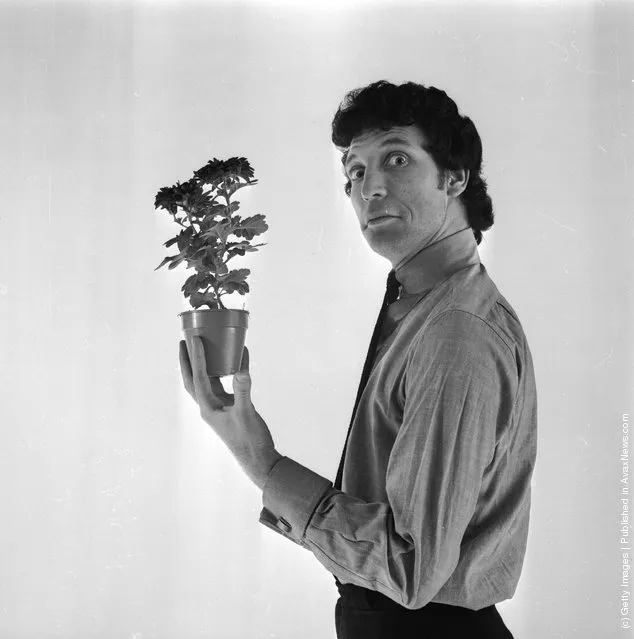
Tom Jones

“Sir Thomas John Woodward, Officer of the Most Excellent Order of the British Empire (OBE), (born 7 June 1940), known by his stage name Tom Jones, is a Welsh singer, particularly noted for his powerful voice. Since the mid 1960s, Jones has sung many styles of popular music – pop, rock, R&B, show tunes, country, dance, techno, soul and gospel – and sold over 100 million records”. – Wikipedia

Photo: Singer Tom Jones with a small potted plant, 17th February 1965. (Photo by Bob Haswell/Express/Getty Images)
Details
30 Aug 2011 14:00:00
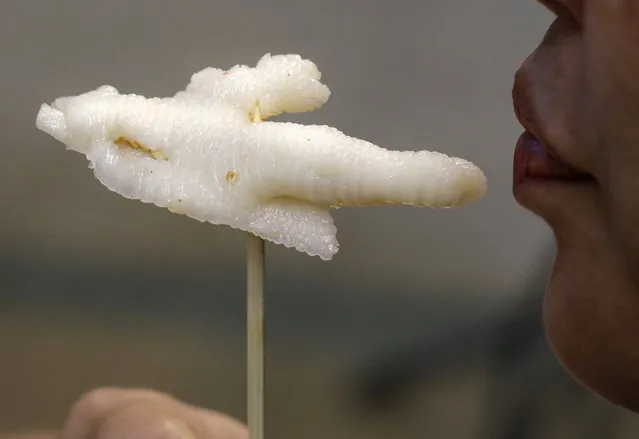
In this Monday, January 23, 2017 photo, chicken feet snacks shop owner Leung Kin-kung testes a chicken feet in Hong Kong. (Photo by Vincent Yu/AP Photo)

In this Monday, January 23, 2017 photo, chicken feet snacks shop owner Leung Kin-kung testes a chicken feet in Hong Kong. Saturday marks the start of the lunar Year of the Rooster and families in China will reunite for festivities, fireworks and food. While tradition calls for feasting on “auspicious” foods, many will also munch on staple snacks like “phoenix claws”, the Chinese name for chicken feet. (Photo by Vincent Yu/AP Photo)
Details
30 Jan 2017 08:08:00
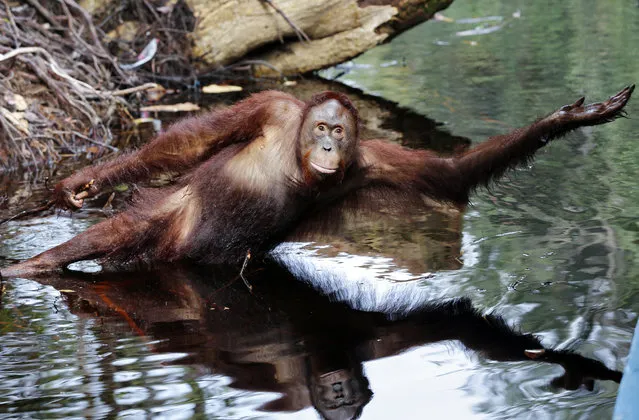
Male orangutan Percy is reflected in the Sekonyer River as he reaches over to try and touch a wooden klotok boat carrying crew and tourists, in Tanjung Puting National Park, in Kalimantan (Indonesian Borneo), Indonesia, September 4, 2013. Percy is a son, born and living in the wild, of a female orangutan named Princess, a freed former captive orangutan that anthropologist Dr Birute Galdikas rescued, rehabilitated and returned to the wild. (Photo by Barbara Walton/EPA)

Male orangutan Percy is reflected in the Sekonyer River as he reaches over to try and touch a wooden klotok boat carrying crew and tourists, in Tanjung Puting National Park, in Kalimantan (Indonesian Borneo), Indonesia, September 4, 2013. Percy is a son, born and living in the wild, of a female orangutan named Princess, a freed former captive orangutan that anthropologist Dr Birute Galdikas rescued, rehabilitated and returned to the wild. (Photo by Barbara Walton/EPA)
Details
03 Jul 2014 12:26:00
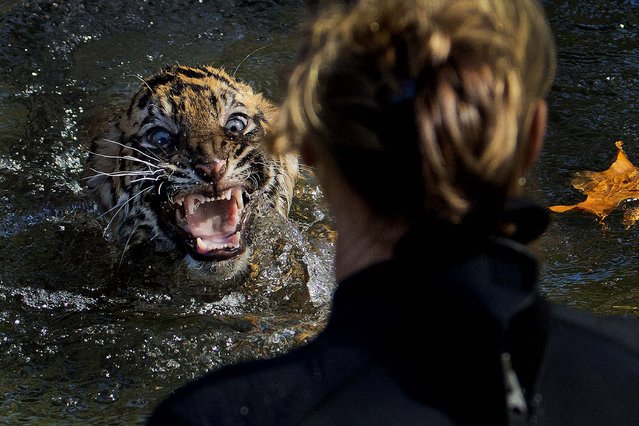
A three-month-old Sumatran tiger cub named “Bandar” shows his displeasure after being dunked in the tiger exhibit moat for a swim reliability test at the National Zoo in Washington, on November 6, 2013. All cubs born at the zoo must take a swim test before being allowed to roam in the exhibit. Bandar passed his test. (Photo by Manuel Balce Ceneta/Associated Press)

A three-month-old Sumatran tiger cub named “Bandar” shows his displeasure after being dunked in the tiger exhibit moat for a swim reliability test at the National Zoo in Washington, on November 6, 2013. All cubs born at the zoo must take a swim test before being allowed to roam in the exhibit. Bandar passed his test. (Photo by Manuel Balce Ceneta/Associated Press)
Details
09 Nov 2013 12:51:00
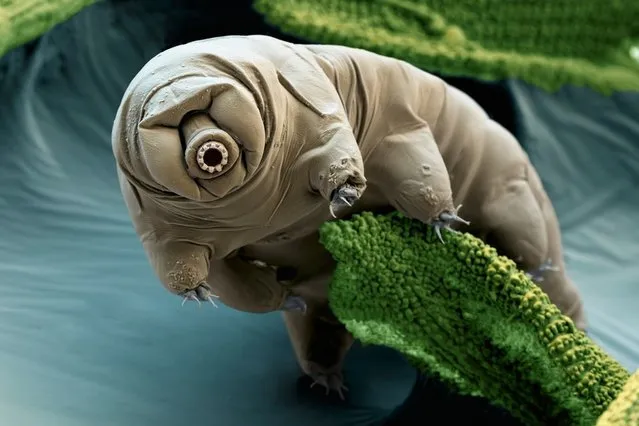
Tardigrades (commonly known as waterbears or moss piglets). (Photo by SPL/East News)

“Tardigrades (commonly known as waterbears or moss piglets) are small, water-dwelling, segmented animals with eight legs. Tardigrades were first discovered in 1773 by Johann August Ephraim Goeze, who called them kleiner Wasserbär, meaning “little water bear” in German. The name Tardigrada means “slow walker” and was given by Lazzaro Spallanzani in 1777. The name water bear comes from the way they walk, reminiscent of a bear's gait. The biggest adults may reach a body length of 1.5 millimetres (0.059 in), the smallest below 0.1 mm. Freshly hatched tardigrades may be smaller than 0.05 mm”. – Wikipedia. Photo: Tardigrades. (Photo by SPL/East News)
Details
26 Sep 2012 09:55:00