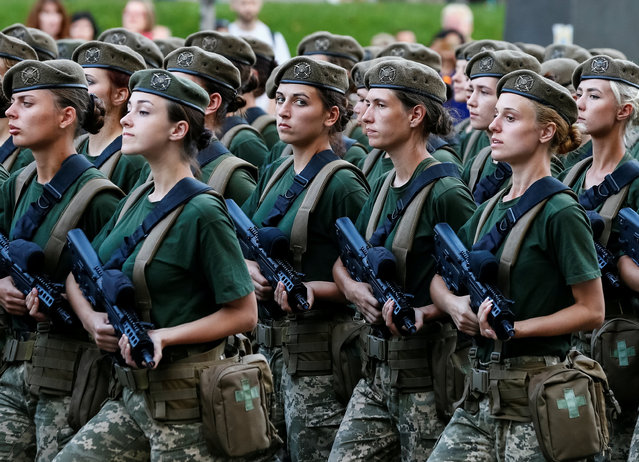
Servicewomen march during a rehearsal for the Independence Day military parade in central Kiev, Ukraine on August 20, 2018. (Photo by Gleb Garanich/Reuters)
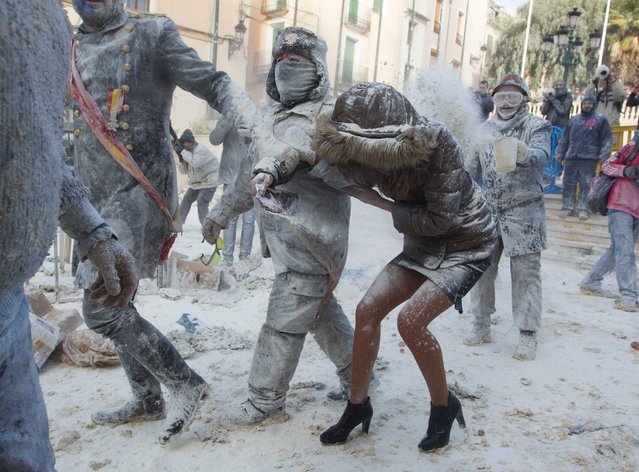
Revellers dressed in mock military garb take part in the “Els Enfarinats” battle in the southeastern Spanish town of Ibi on December 28, 2017. During this 200-year-old traditional festival participants known as Els Enfarinats (those covered in flour) dress in military clothes and stage a mock coup d'etat as they battle using flour, eggs and firecrackers outside the town hall as part of the celebrations of the Day of the Innocents. (Photo by Jaime Reina/AFP Photo)
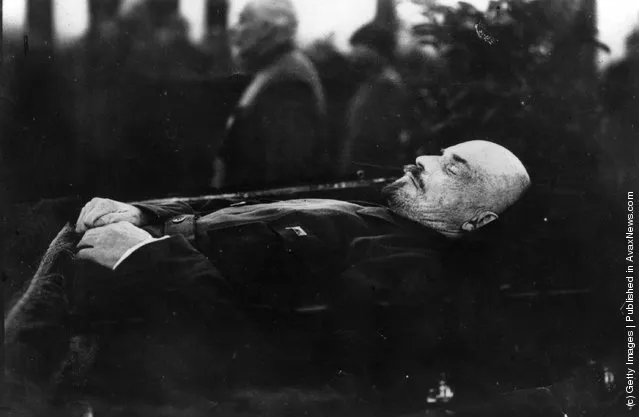
Photo: Vladimir Ilyich Lenin (1870 – 1924) lying in state in the Kremlin. (Photo by Hulton Archive/Getty Images). 1924
Important! For the same article in Russian language click here.
Something quite intriguing is happening within Russian-speaking internet during the last few – should you type a fully academic inquiry (at least, according to Russian academic requirements) in national search engines for "Lenin's mausoleum" – the first thing you get (even in top 10 searches) is website pages talking about black magic and occult. Website authors view this construction differently, but unconditionally agree on one thing: the mausoleum of the "leader of the world proletariat” – the essence of a magical artifact, a sort of “energy vampire”. It was built with a certain purpose: to drain the energy out of miserable Soviet citizens on one hand; and to poison the anthroposphere of one-sixth part of the earth with its vibes (the exact territory that was occupied by the former Soviet Union), depriving the Russian people of will to resist on the other hand. Complete nonsense? No doubt. Nevertheless, an intriguing one. Well, probably because some oddities do exist in mausoleum's history. These oddities are the thing we are going to discuss this time. First, let me refresh you memory on the subject.
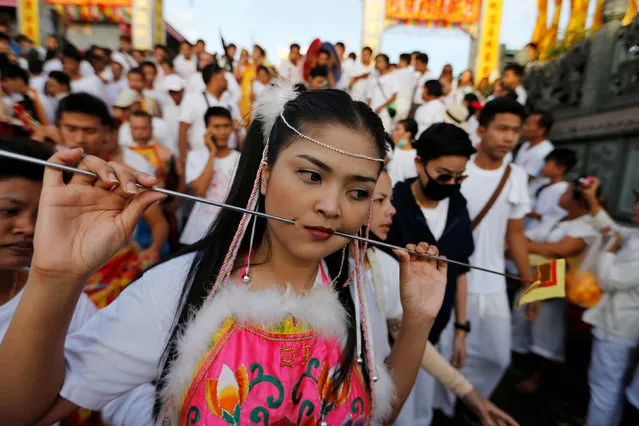
A devotee of the Chinese Jui Tui shrine takes with his mouth pierced with spikes takes part in a procession celebrating the annual vegetarian festival in Phuket, Thailand October 7, 2016. (Photo by Jorge Silva/Reuters)
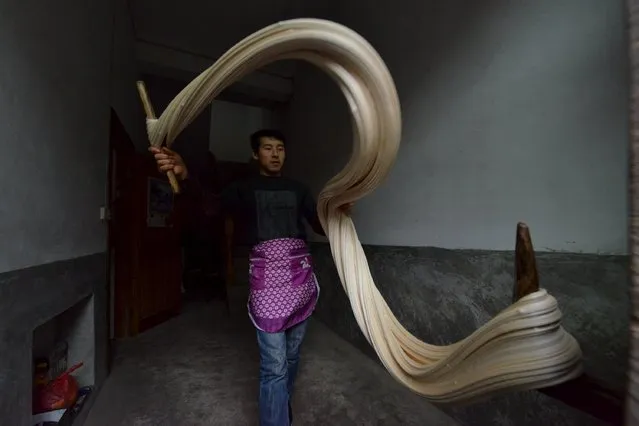
A man makes traditional candy “Matang” in preparation for the upcoming Chinese Lunar New Year in Yuqing County, Zunyi, Guizhou Province, China, January 18, 2016. (Photo by Reuters/China Daily)
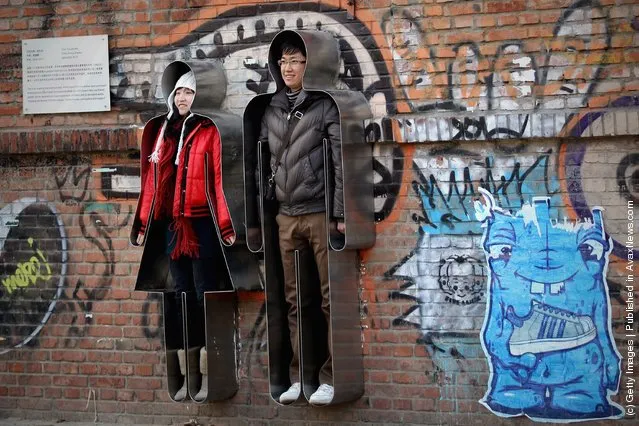
A Chinese couple take pictures in an interactive installation art work named “You and Me” on Valentine's Day at 798 Art Zone on February 14, 2012 in Beijing, China. (Photo by Feng Li/Getty Images)
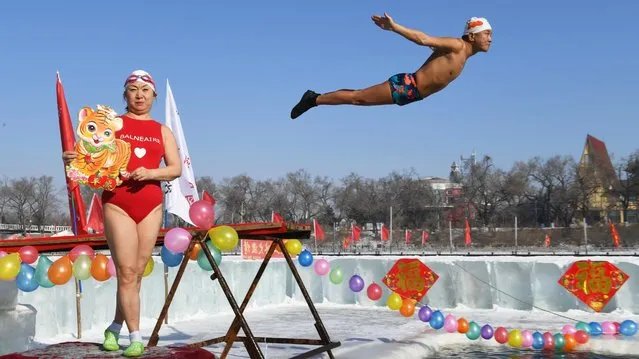
A winter swimmer jumps into a pool in the frozen Songhua River during an activity for welcoming the Chinese New Year on January 30, 2022 in Harbin, Heilongjiang Province of China. (Photo by Liu Yang/VCG via Getty Images)