Loading...
Done
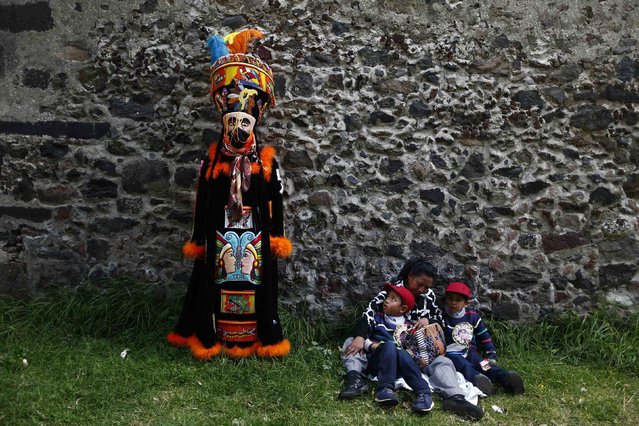
A boy sitting with his family looks up at a traditional Chinelo costumed dancer during a celebration 40 days after the birth of Jesus, in Xochimilco on the outskirts of Mexico City, February 2, 2015. (Photo by Edgard Garrido/Reuters)

A boy sitting with his family looks up at a traditional Chinelo costumed dancer during a celebration 40 days after the birth of Jesus, in Xochimilco on the outskirts of Mexico City, February 2, 2015. The tradition of the Chinelo dates back to colonial times and the outfits and masks, which are supposed to resemble the faces of the Europeans and always sport an uptilted beard, became more elaborate between the 1800s and 1900s to make fun of the upper social classes. (Photo by Edgard Garrido/Reuters)
Details
03 Feb 2015 13:09:00
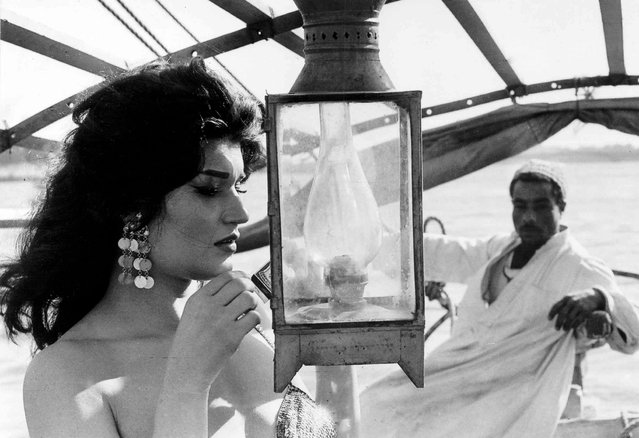
Belly dancer Nagwa Fouad sailing on the river Nile, 1972. Farouk Ibrahim was a society photographer, capturing Egyptian’s political and cultural elite, including presidents Nasser, Sadat and Mubarak. (Photo by Farouk Ibrahim)

Belly dancer Nagwa Fouad sailing on the river Nile, 1972. Egypt is one of 23 countries represented at the Dubai Photo Exhibition, showing off photography that dates to the 1920s. Dubai Photo Exhibition is in various venues of Dubai’s design district from 16-19 March. (Photo by Farouk Ibrahim)
Details
17 Mar 2016 15:09:00
Artist Steve Casino creates celebrity sculptures from peanut shells in New York City. (Photo by Steve Casino)

US based toy inventor Steve Casino, 48, has spent almost two years turning peanut shells into these tiny figures. He has made almost 100 of the tiny four-inch statuettes to date- including well-known stars like Elton John and Johnny Depp. The intricate designs can often take up to 20 hours to create. Steve has even turned his unusual passion into a business, selling privately commissioned peanut statuettes as gifts and wedding cake toppers. (Photo by Steve Casino)
Details
05 May 2014 09:03:00
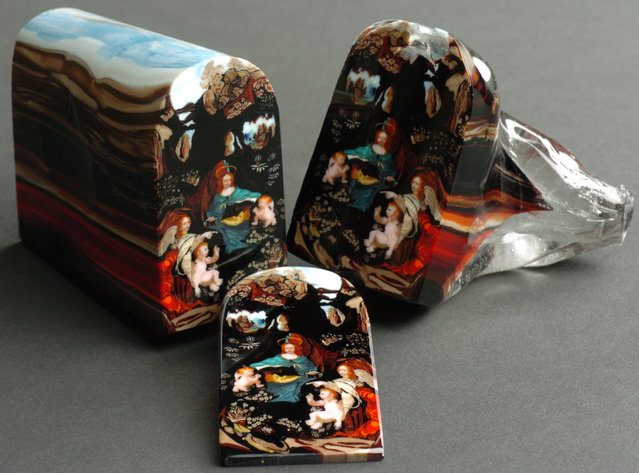
Glass Paintings By Loren Stump

California-based glass artist Loren Stump specializes in a form of glasswork called murrine, where rods of glass are melted together and then sliced to reveal elaborate patterns and forms. While the murrina process appeared in the Mideast some 4,000 years ago, Stump has perfected his own technique over the past 35 years to the point where he can now layer entire portraits and paintings in glass before slicing them to see the final results. His most complex piece to date is a detailed interpretation of Leonardo da Vinci’s Virgin of the Rocks, which involved hundreds of glass components that were melted into a final piece.
Details
11 Jun 2014 14:11:00
Runner-up. “The City of London, looking towards the Royal Exchange and the Bank of England. The ever-changing London skyline provides many excellent opportunities for cityscape photography, none more exciting than the ebb and flow of traffic at night”. MICK RYAN, JUDGE: “Sophisticated new camera sensors, sharp lenses and the ability to take hundreds of shots in a session and check your work have made night photography much easier than it ever used to be. The results, like this scene, can be spectacular”. (Photo by Mark Caldon/The Guardian)

Runner-up. “The City of London, looking towards the Royal Exchange and the Bank of England. The ever-changing London skyline provides many excellent opportunities for cityscape photography, none more exciting than the ebb and flow of traffic at night”. (Photo by Mark Caldon/The Guardian)
Details
10 Dec 2018 00:03:00


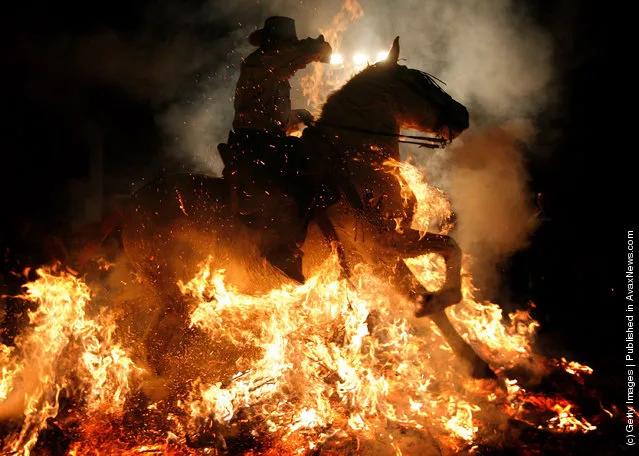
A man rides a horse through a bonfire on January 16, 2009 in the small village of San Bartolome de Pinares, Spain. In honor of San Anton, the patron saint of animals, horses are riden trough the bonfires on the night before the official day of honoring animals in Spain. (Photo by Denis Doyle/Getty Images)
Details
13 Apr 2011 13:00:00
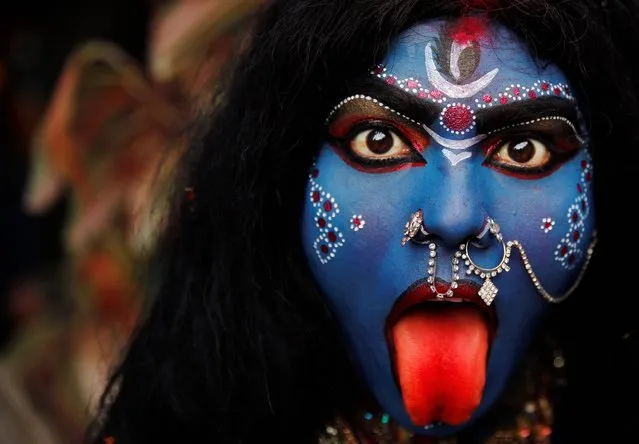
An Indian woman dressed as Hindu Goddess Kali participates in a “Shivratri” procession in Allahabad, India, Thursday, Feb. 27, 2014. “Shivaratri”, or the night of Shiva, is dedicated to the worship of Lord Shiva, the Hindu god of death and destruction. (Photo by Rajesh Kumar SinghAP Photo)

An Indian woman dressed as Hindu Goddess Kali participates in a “Shivratri” procession in Allahabad, India, Thursday, Feb. 27, 2014. “Shivaratri”, or the night of Shiva, is dedicated to the worship of Lord Shiva, the Hindu god of death and destruction. (Photo by Rajesh Kumar SinghAP Photo)
Details
01 Mar 2014 12:58:00


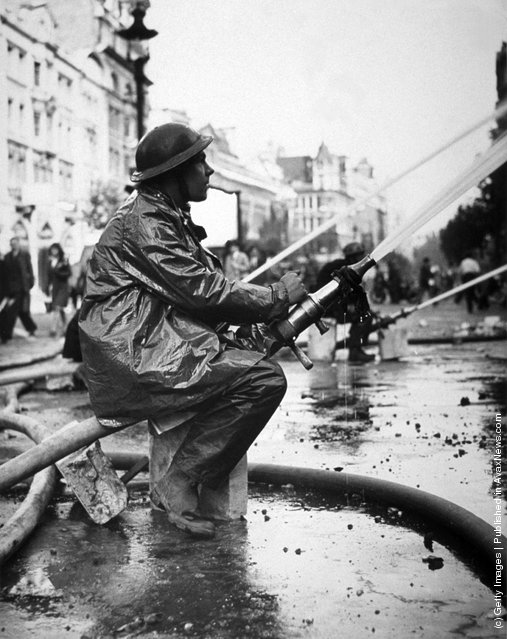
“The Blitz (from German, “Lightning”) was the sustained strategic bombing of Britain by Nazi Germany between 7 September 1940 and 10 May 1941, during the Second World War. The city of London was bombed by the Luftwaffe for 76 consecutive nights and many towns and cities across the country followed. More than one million London houses were destroyed or damaged, and more than 40,000 civilians were killed, half of them in London”. – Wikipedia

Photo: A fireman attempts to check the flames from a gas explosion, after an air raid in Central London the previous night. (Photo by Central Press/Getty Images). 1940
Details
21 Jun 2011 12:08:00