Loading...
Done
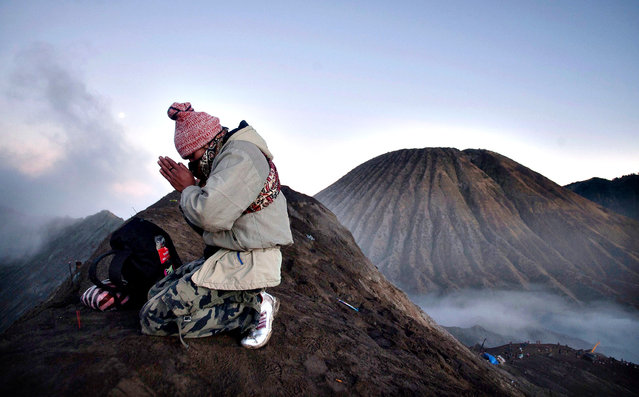
A Tengger tribesman prays at Mount Bromo during the annual Kasada ceremony in East Java on August 12, 2014. The Kasada ceremony is a festival held every 14th day of the Kasada month in the traditional Hindu lunar calender to honour Sang Hyang Widhi (God Almighty) and is based on the legend of Roro Anteng and Joko Seger from the Majapahit Kingdom, from which their Tengger tribe name originates. (Photo by Juni Kriswanto/AFP Photo)

A Tengger tribesman prays at Mount Bromo during the annual Kasada ceremony in East Java on August 12, 2014. The Kasada ceremony is a festival held every 14th day of the Kasada month in the traditional Hindu lunar calender to honour Sang Hyang Widhi (God Almighty) and is based on the legend of Roro Anteng and Joko Seger from the Majapahit Kingdom, from which their Tengger tribe name originates. Hundreds of worshippers from the Tengger tribe offer food and livestock as a symbolic sacrifice which they throw into the crater for the blessings of safety and prosperity to their familyies and community. (Photo by Juni Kriswanto/AFP Photo)
Details
16 Aug 2014 11:19:00
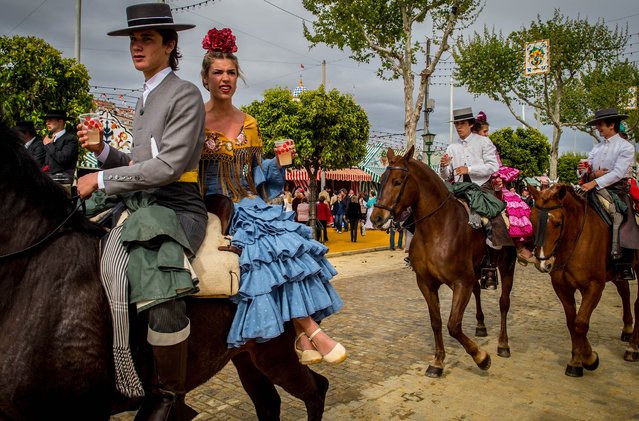
Participants in traditional dress ride on horseback as they enjoy the atmosphere at the Feria de Abril (April's Fair) on April 12, 2016 in Seville, Spain. The Feria de Abril has a history that dates back to 1857 and takes place a fortnight after Easter each year. The origin of the fair was a cattle market but the event quickly turned its goal from commerce to having fun. More than 1 million local and international participants are expected to attend the Feria de Abril. (Photo by David Ramos/Getty Images)

Participants in traditional dress ride on horseback as they enjoy the atmosphere at the Feria de Abril (April's Fair) on April 12, 2016 in Seville, Spain. The Feria de Abril has a history that dates back to 1857 and takes place a fortnight after Easter each year. The origin of the fair was a cattle market but the event quickly turned its goal from commerce to having fun. More than 1 million local and international participants are expected to attend the Feria de Abril. (Photo by David Ramos/Getty Images)
Details
14 Apr 2016 12:25:00
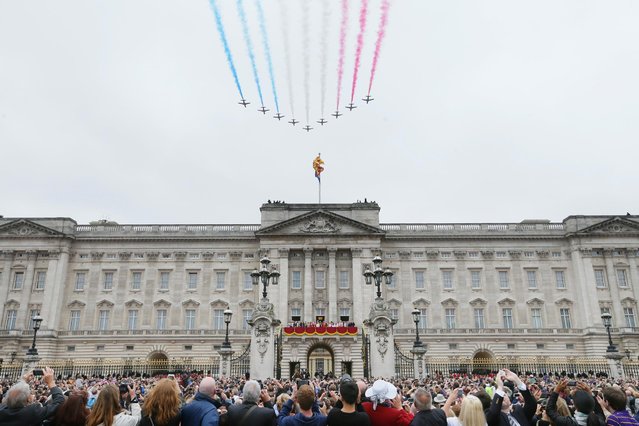
The Red Arrows make a flypast during the Trooping The Colour parade at Buckingham Palace, in London, Saturday, June 13, 2015. Hundreds of soldiers in ceremonial dress have marched in London in the annual Trooping the Color parade to mark the official birthday of Queen Elizabeth II. The Trooping the Color tradition originates from preparations for battle, when flags were carried or "trooped" down the rank for soldiers to see. (AP Photo/Tim Ireland)

The Red Arrows make a flypast during the Trooping The Colour parade at Buckingham Palace, in London, Saturday, June 13, 2015. Hundreds of soldiers in ceremonial dress have marched in London in the annual Trooping the Color parade to mark the official birthday of Queen Elizabeth II. The Trooping the Color tradition originates from preparations for battle, when flags were carried or "trooped" down the rank for soldiers to see. (AP Photo/Tim Ireland)

Details
17 Jun 2015 13:50:00
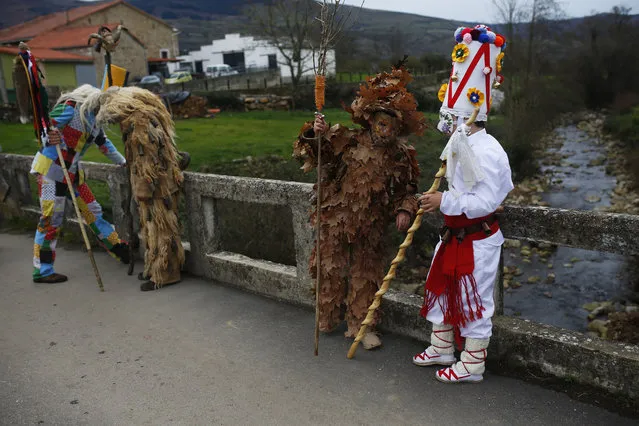
People dressed in costumes have a break while marching during the Vijanera Festival, in the small village of Silio, northern Spain, Sunday, January 3, 2016. The Vijanera masquerade, of pre-Roman origin, is the first carnival of the year in Europe symbolizing the triumph of good over evil and involving the participation of crowds of residents wearing different masks, animal skins and brightly coloured clothing with its own complex function and symbolism and becoming the living example of the survival of archaic cults to nature. (Photo by Francisco Seco/AP Photo)

People dressed in costumes have a break while marching during the Vijanera Festival, in the small village of Silio, northern Spain, Sunday, January 3, 2016. The Vijanera masquerade, of pre-Roman origin, is the first carnival of the year in Europe symbolizing the triumph of good over evil and involving the participation of crowds of residents wearing different masks, animal skins and brightly coloured clothing with its own complex function and symbolism and becoming the living example of the survival of archaic cults to nature. (Photo by Francisco Seco/AP Photo)
Details
04 Jan 2016 10:17:00
A general view of the residential area is pictured during dusk at Jodhpur in Rajasthan, April 5, 2015. Jodhpur, also known as the blue city in the desert Indian state of Rajasthan, which residents say originally, was used to show where the highest caste of priestly Hindus live, who wanted to set them apart from the rest of the population. Later the rest of the population followed suit. Another reason for the city to be blue is to keep the buildings cool during the summers, local residents said. (Photo by Adnan Abidi/Reuters)

A general view of the residential area is pictured during dusk at Jodhpur in Rajasthan, April 5, 2015. Jodhpur, also known as the blue city in the desert Indian state of Rajasthan, which residents say originally, was used to show where the highest caste of priestly Hindus live, who wanted to set them apart from the rest of the population. Later the rest of the population followed suit. Another reason for the city to be blue is to keep the buildings cool during the summers, local residents said. (Photo by Adnan Abidi/Reuters)
Details
12 Apr 2015 08:27:00
Realistic Hair Art By Roberto Perez Part 1

When Roberto Perez (also known as Rob The Original) gives you a haircut, it’s probably not going to be just a haircut.

Please Subscribe To: Our Youtube Channel
Details
03 Dec 2016 23:04:00
WWII: Women And The War Effort

These stunning color portraits, produced by the U.S. Office of War Information during World War II depict the role of women in the US war effort. All of the images were shot on 4x5 color transparency film by Howard R. Hollem and Alfred T. Palmer during 1942 and 1943 and were turned over to the Library of Congress Prints and Photographs Division in 1944. They are seen here with their original captions.
Details
18 Aug 2013 13:26:00
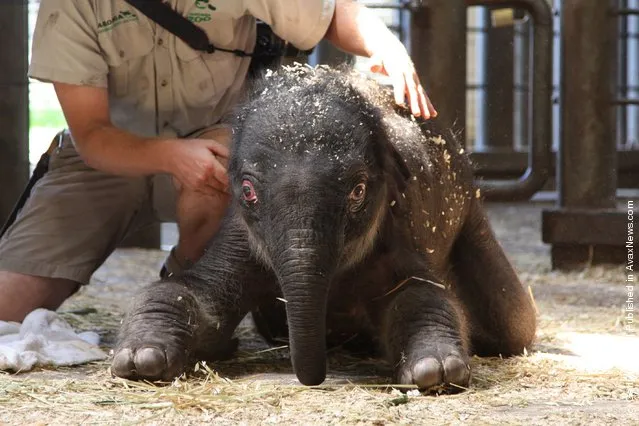
Baby Elephant

Taronga Zoo's elephant baby, as yet unnamed, is seen at Taronga Zoo on March 12, 2010 in Sydney, Australia. The Asian Elephant calf has continued to make progress following a protracted labour that spanned six days. The calf was originally believed to have died in the womb during labour but surprised veterinarians and zoo staff with an unexpected delivery early Wednesday morning. (Photo by Bobby-Jo Vial/Taronga Zoo via Getty Images)
Details
13 Sep 2011 13:22:00