Loading...
Done
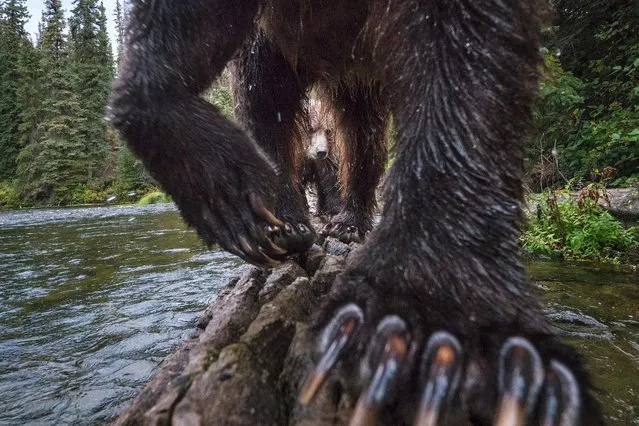
“The Salmon Catchers”. Terrestrial Wildlife. To capture this view of a mother grizzly bear and her cub, photographer Peter Mather set up a camera trap on a log that he knew the bears tended to traverse while fishing for salmon, in the Yukon River watershed in Canada. (Photo by Peter Mather/BigPicture Natural World Photography Competition 2017)

The fourth annual BigPicture Natural World Photography Competition aims to celebrate the diversity of life on Earth, and encourages people to protect and conserve it. Here: “The Salmon Catchers”. Terrestrial Wildlife. To capture this view of a mother grizzly bear and her cub, photographer Peter Mather set up a camera trap on a log that he knew the bears tended to traverse while fishing for salmon, in the Yukon River watershed in Canada. (Photo by Peter Mather/BigPicture Natural World Photography Competition 2017)
Details
02 Jul 2017 07:25:00
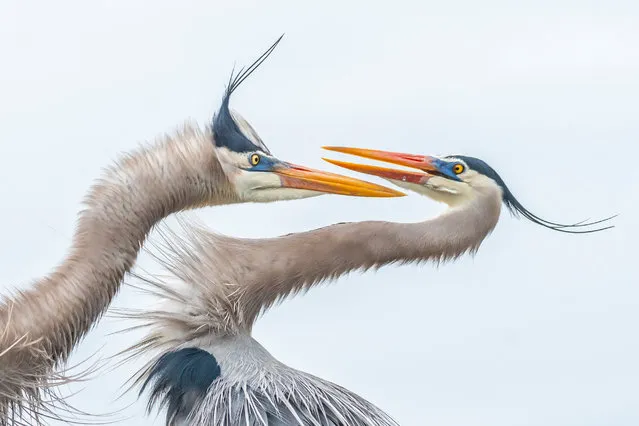
Melissa Rowell, amateur honourable mention. Wakodahatchee wetlands, Delray Beach, Florida, US. Equipped with sinewy necks and spear-like bills, great blue herons can lunge with fearsome speed to strike their aquatic prey. Adults will also employ rapid stabbing motions as one aspect of their complex courtship displays; they’re seemingly dangerous moves, but fitting to the intensity of mating season. (Photo by Melissa Rowell/Audubon photography awards)

Wakodahatchee wetlands, Delray Beach, Florida, US. Equipped with sinewy necks and spear-like bills, great blue herons can lunge with fearsome speed to strike their aquatic prey. Adults will also employ rapid stabbing motions as one aspect of their complex courtship displays; they’re seemingly dangerous moves, but fitting to the intensity of mating season. (Photo by Melissa Rowell/Audubon Photography Awards)
Details
17 Jul 2019 00:03:00
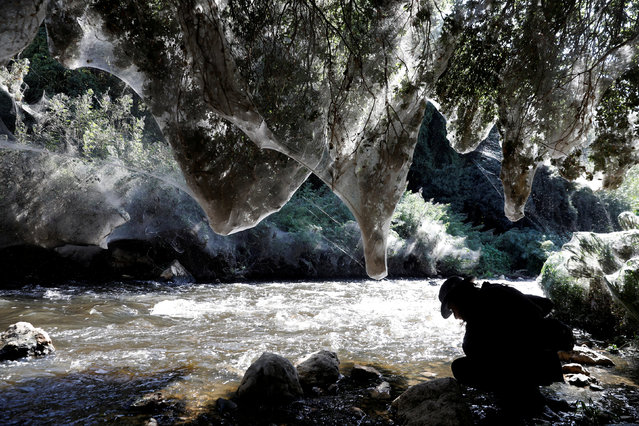
Igor Armicach, a doctoral student at Hebrew University's Arachnid Collection, looks onto giant spider webs, spun by long-jawed spiders (Tetragnatha), covering sections of the vegetation along the Soreq creek bank, near Jerusalem, Israel on November 7, 2017. (Photo by Ronen Zvulun/Reuters)

Igor Armicach, a doctoral student at Hebrew University's Arachnid Collection, looks onto giant spider webs, spun by long-jawed spiders (Tetragnatha), covering sections of the vegetation along the Soreq creek bank, near Jerusalem, Israel on November 7, 2017. (Photo by Ronen Zvulun/Reuters)
Details
08 Nov 2017 08:56:00
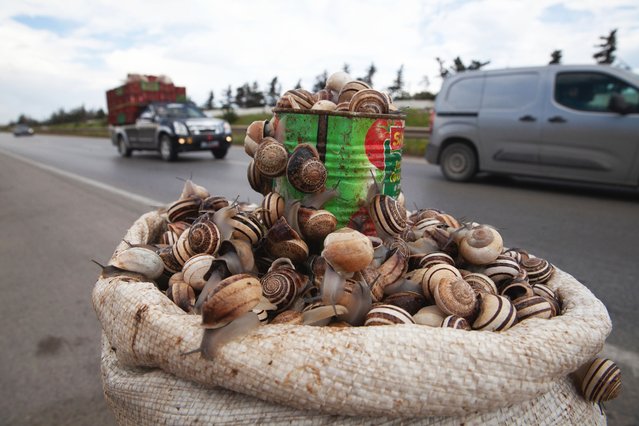
Snails are displayed to be sold on the side of a highway, in Sousse, Tunisia, March 27, 2025. (Photo by Ons Abid/AP Photo)

Snails are displayed to be sold on the side of a highway, in Sousse, Tunisia, March 27, 2025. (Photo by Ons Abid/AP Photo)
Details
08 Jan 2026 15:01:00
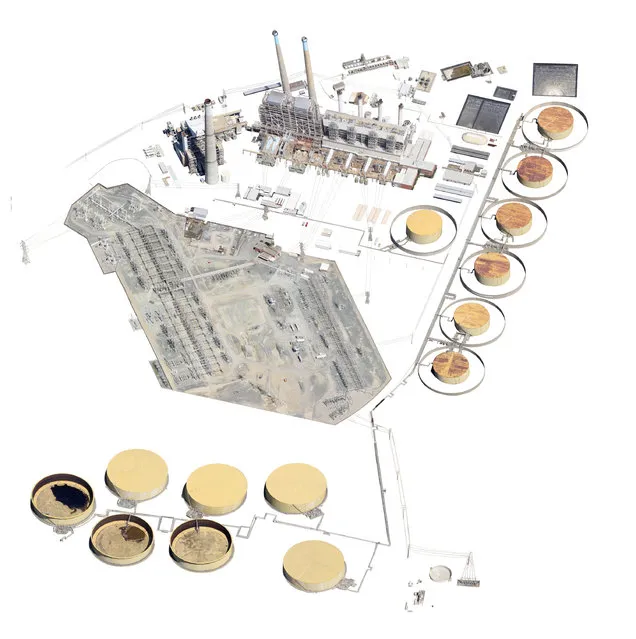
Natural gas plant in Pittsburg, CA (detail of Power Landscape), 2013. (Photo by Jenny Odell)

Jenny Odell repurposes online imagery mostly from Google Maps, but also from YouTube, Craigslist, and other sites. In her “Satellite Collections”, for example, she incorporated aerial views of swimming pools, basketball courts, parking lots, and other recognizable structures, seen from space. Her more recent series, “Satellite Landscapes”, includes painstakingly isolated Google Maps imagery of oil refineries, wastewater treatment plants, solar farms, etc. This work is meant as a reminder of our physically determined and vulnerable existence, since we depend on many of these things for survival and maintenance of our way of life. Photo: Natural gas plant in Pittsburg, CA (detail of Power Landscape), 2013. (Photo by Jenny Odell)
Details
19 Mar 2014 07:28:00
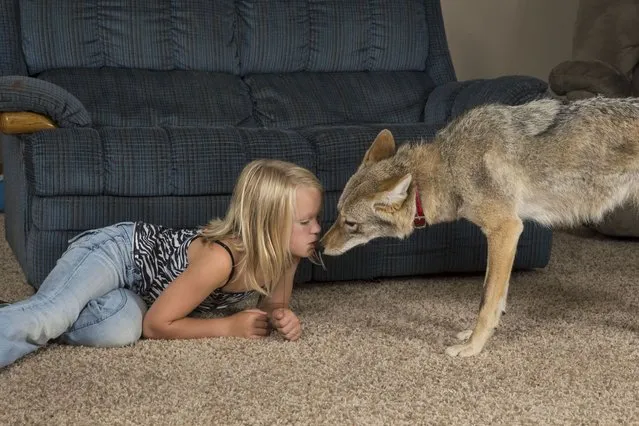
Coyote Wiley sniffs Hailey, 8, at their home. (Photo by Barcroft Media)

Hailey Hanestad thinks nothing about nuzzling up to the animal, called Wiley, and even dozes off with him on her bed. Wiley has been a treasured member of the family since being rescued by Hailey's dad, Rick, three years ago. Today he's thought to be just one of two coyotes in the US that have become domesticated after being born in the wild. Photo: Coyote Wiley sniffs Hailey, 8, at their home. (Photo by Barcroft Media)
Details
15 Jan 2014 11:00:00


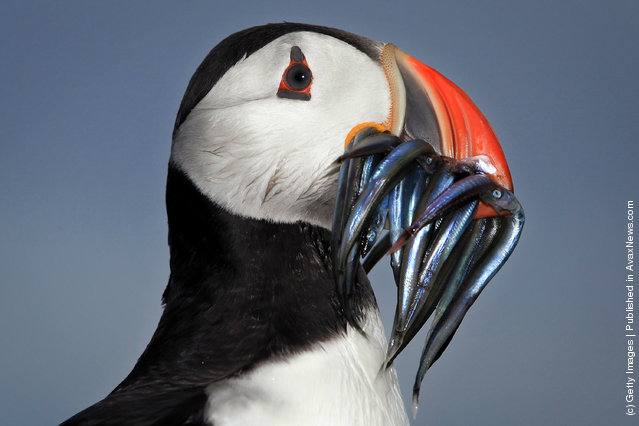
A Puffin returns to it's nest with a beak full of sand eels on June 25, 2011 on Inner Farne, England. The Farne Islands, which are run by the National Trust, are situated two to three miles off the Northumberland coastline. The archipeligo of 16-28 separate islands (depending on the tide) make the summer home to approximately 100,000 pairs of breeding seabirds including around 36,000 Puffins, 32,000 Guillemots and 2,000 pairs of Arctic Terns. The species of birds which nest in internationally important numbers include Shag, Sandwich Tern and Arctic Tern. The coastline around The Farnes are also the breeding ground to one of Europe's largest Grey Seal colonies with around 4,000 adults giving birth to 1500 pups every year. (Photo by Dan Kitwood/Getty Images)
Details
27 Jun 2011 12:58:00
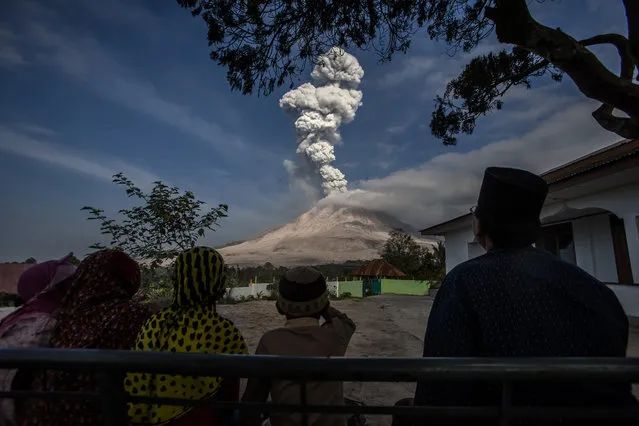
Residents watch volcanic smoking and ashes rising from Mount Sinabung during an eruption in Karo, North Sumatra, Indonesia, February 24, 2016. Authorities have repeatedly called on local residents to remain patient in dealing with the impact of Sinabung's eruptions, which some experts have predicted will continue for five more years. (Photo by Xinhua/Barcroft Media)

Residents watch volcanic smoking and ashes rising from Mount Sinabung during an eruption in Karo, North Sumatra, Indonesia, February 24, 2016. Authorities have repeatedly called on local residents to remain patient in dealing with the impact of Sinabung's eruptions, which some experts have predicted will continue for five more years. (Photo by Xinhua/Barcroft Media)
Details
28 Feb 2016 11:36:00