Loading...
Done
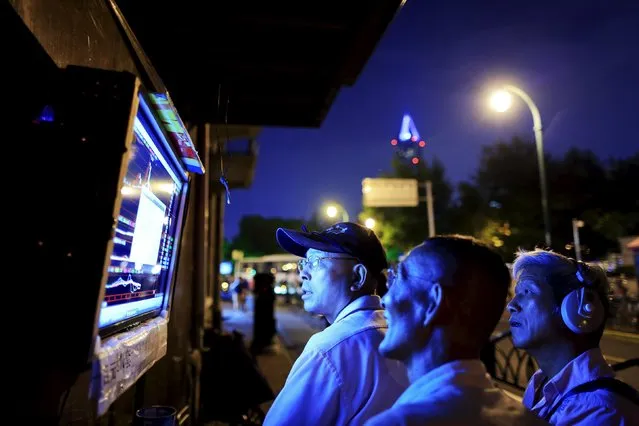
Shen Yuxi (L), introduces analysis software to investors at a “street stock salon” in central Shanghai, China, September 5, 2015. Shen carries a TV screen on his electronic bike to the "salon" every weekends where he sets it up on the wall outside a brokerage house. Shen's been selling analysis software at "the salon" for more than 10 years. (Photo by Aly Song/Reuters)

Some are in it just for the money, others to help buy a meal. Then there are those who trade for fun or to spend time among friends. Millions of investors – pensioners, security guards, high-school students – dominate China's stock markets, conducting about 80 percent of all trades. Retirees gather in brokerage houses dotted around China also to enjoy some company and savour the air conditioning on hot days. Some start as young as 13, trading from home with an eye on future careers in finance. Winning isn't guaranteed. This year, among the most turbulent in China's financial history, its stock markets more than doubled in the six months to May, only to crash amid concerns that growth in the country, which makes everything from cars to steel, is slowing faster than previously thought. (Photo by Aly Song/Reuters)
Details
13 Oct 2015 08:00:00
People take part in the “The Burial of the Sardine” funeral procession, which marks the end of carnival festivities, in Madrid, Spain, February 10, 2016. (Photo by Juan Medina/Reuters)

People take part in the “The Burial of the Sardine” funeral procession, which marks the end of carnival festivities, in Madrid, Spain, February 10, 2016. “Mourners” carry a coffin with a mock sardine through the streets to celebrate the countdown to Lent. Spanish painter Francisco de Goya's painting “El entierro de la sardina” (The Burial of the Sardine) was inspired by this tradition, which started in Madrid in the 18th century, around the time of Spanish King Carlos III. (Photo by Juan Medina/Reuters)
Details
11 Feb 2016 12:29:00
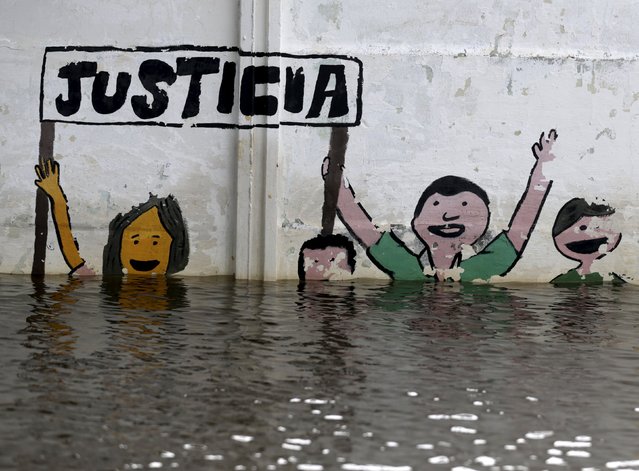
Graffiti saying “justice” partially seen above flood waters in Asuncion, December 27, 2015. (Photo by Jorge Adorno/Reuters)

Graffiti saying “justice” partially seen above flood waters in Asuncion, December 27, 2015. More than 100,000 people have had to evacuate from their homes in the bordering areas of Paraguay, Uruguay, Brazil and Argentina due to severe flooding in the wake of heavy summer rains brought on by El Nino, authorities said on Saturday. (Photo by Jorge Adorno/Reuters)
Details
29 Dec 2015 08:02:00
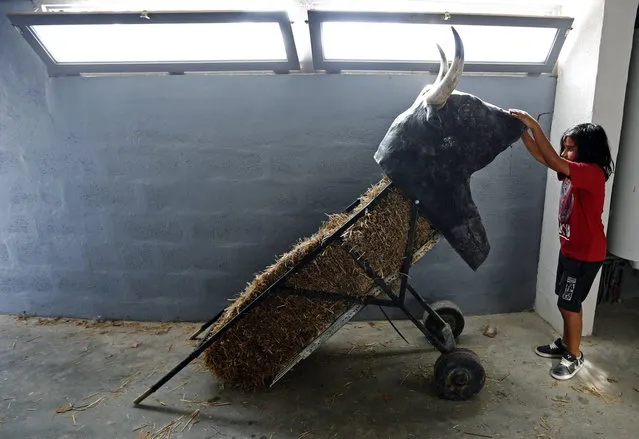
Nino, a ten-year-old toreador apprentice of the French Tauromachy Centre, nicknamed El Nino, touches a practice bull at the bullring of Garons, near Nimes, September 25, 2013. (Photo by Jean-Paul Pelissier/Reuters)

Nino, a ten-year-old toreador apprentice of the French Tauromachy Centre, nicknamed El Nino, touches a practice bull at the bullring of Garons, near Nimes, September 25, 2013. Since 1983, the French Tauromachy Centre in Nimes has trained some 1,000 youths in the art of bullfighting. Twenty of them have gone on to become professional matadors, facing fighting bulls in the arena. Twice a week, students take courses with a matador to learn the movements and gestures of the bullfighter in the ring, but without an animal present. Students train with calves in the surrounding fields during spring, and regularly participate in beginner's bullfights (becerradas) without killing calves. Solal has been taking courses for three years and Nino, for just a year now. Both are normally enrolled in French public schools, but have one thought in mind – bullfighting. They share a passion linked to the city of Nimes, famous for its ferias and bullring. (Photo by Jean-Paul Pelissier/Reuters)
Details
06 Nov 2013 10:12:00
A sculptural artwork depicting former Chilean dictator Augusto Pinochet and headless presidents shot by a hooded high school student (not pictured) is seen at the Contemporary Art Museum in Santiago, December 2, 2014. (Photo by Ivan Alvarado/Reuters)

A sculptural artwork depicting former Chilean dictator Augusto Pinochet and headless presidents shot by a hooded high school student (not pictured) is seen at the Contemporary Art Museum in Santiago, December 2, 2014. The artwork, part of the “El ladrillo angular” (The angular brick) exhibition, portrays a student fighting against the ongoing continuity of dictatorship because of a political and economic system which has been impossible to destroy, according to “Papas Fritas” the artwork's creator. (Photo by Ivan Alvarado/Reuters)
Details
03 Dec 2014 14:45:00
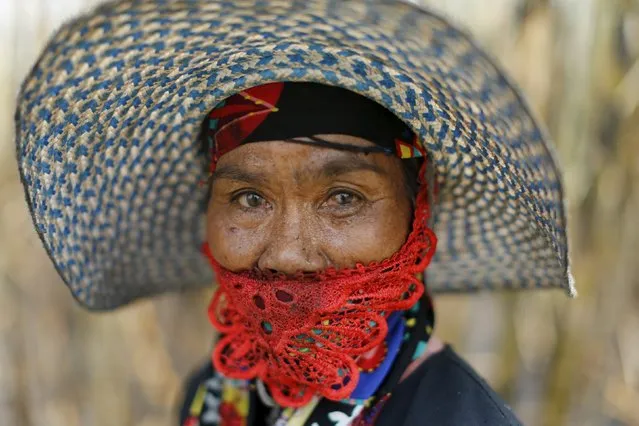
A sugar cane worker poses while working in a field at Pakchong district in Ratchaburi province, Thailand March 22, 2016. (Photo by Jorge Silva/Reuters)

A sugar cane worker poses while working in a field at Pakchong district in Ratchaburi province, Thailand March 22, 2016. The El Nino weather phenomenon has played havoc with crops across Southeast Asia and beyond. Thailand, the world's second-largest sugar exporter, will ship 20 percent less of the sweetener to international markets this year than last, and farmers fear the damage already inflicted on young cane plants could make next year worse. (Photo by Jorge Silva/Reuters)
Details
02 Apr 2016 09:49:00
 Marble Caves, Patagonia, Chile

The Marble Caves of Patagonia, Chile, are beautiful vibrant blue caverns, partially submerged in the equally stunning turquoise waters of Carrera Lake. The lake itself is on the border of Argentina and Chile, with the caves located on the Chilean side. The caves are comprised of three main caverns: the Chapel (La Capilla), the Cathedral (El Catedral), and the Cave (La Cueva). Visitors to the caves can explore them in a small boat or kayak, but only when Carrera Lake’s waters are calm and gentle. A rare and invaluable natural wonder, the existence of these caves is currently threatened by plans to build five large dams in the area. If you visit these caves, please treat them with the utmost respect and care.
Details
15 Aug 2012 11:25:00
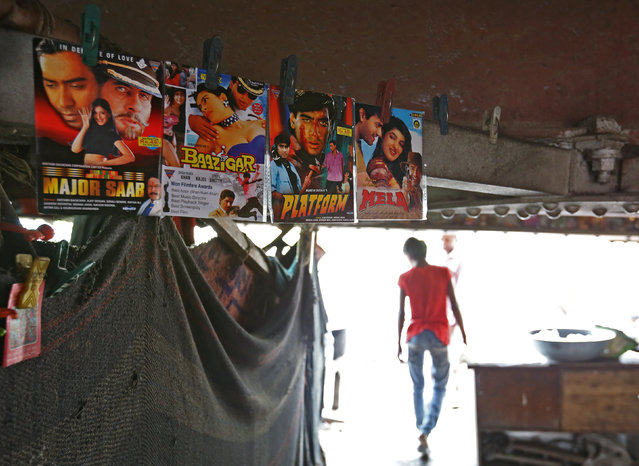
Films that are being screened are advertised in a makeshift cinema located under a bridge in the old quarters of Delhi, India May 25, 2016. (Photo by Cathal McNaughton/Reuters)

Films that are being screened are advertised in a makeshift cinema located under a bridge in the old quarters of Delhi, India May 25, 2016. A makeshift cinema hall under a 140-year-old bridge in the Indian capital is allowing poor rickshaw pullers and migrant labourers to escape daily hardship and sweltering heat into a world of Bollywood song, dance and romance. With the rusty iron floor of the bridge as its ceiling and some old rags acquired on the cheap from a nearby crematorium serving as curtains and floor mats, the cinema shows four films a day. (Photo by Cathal McNaughton/Reuters)
Details
28 May 2016 12:21:00