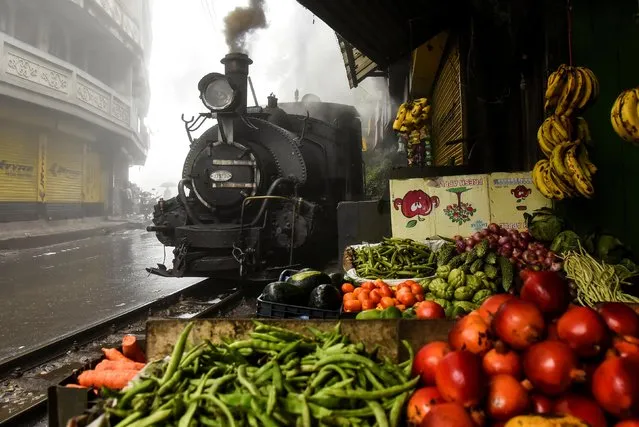
A Darjeeling Himalayan Railway steam train, which runs on a 2 foot gauge railway and is a UNESCO World Heritage Site, passes by a market in Ghum, India, June 27, 2019. (Photo by Ranita Roy/Reuters)
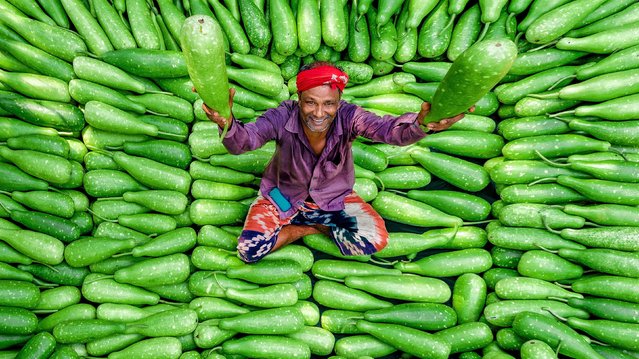
A market trader in Gaibandha in Bangladesh on September 25, 2019, surrounded by bottle gourd vegetables, which sell for around 3p ($ 0.04) each. (Photo by Solent News)
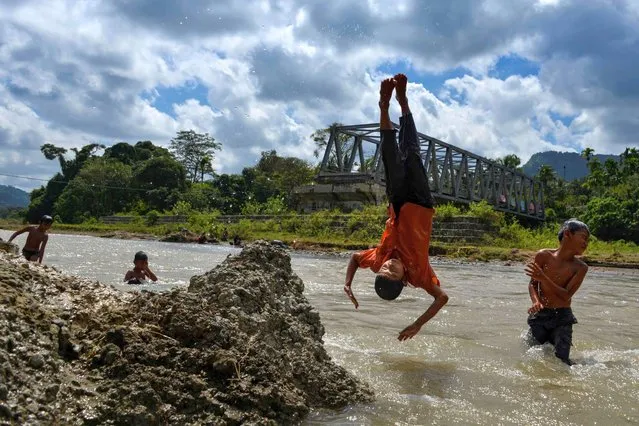
Students on their way home from school play in a river which has risen due to recent seasonal rains, in a remote village in Panca, Aceh province on January 22, 2021. (Photo by Chaideer Mahyuddin/AFP Photo)
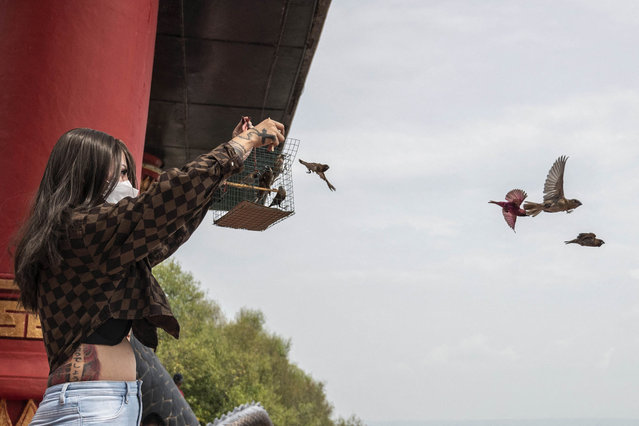
A woman releases birds as people celebrate the start of the Lunar New Year in Surabaya on February 1, 2022, which ushers in the Year of the Tiger. (Photo by Juni Kriswanto/AFP Photo)
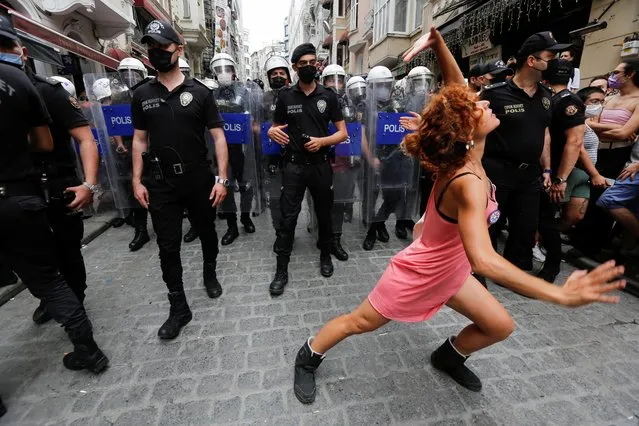
A demonstrator dances as riot police try to prevent LGBT rights activists gather for a Pride parade, which was banned by local authorities, in central in Istanbul, Turkey on June 26, 2021. (Photo by Dilara Senkaya/Reuters)
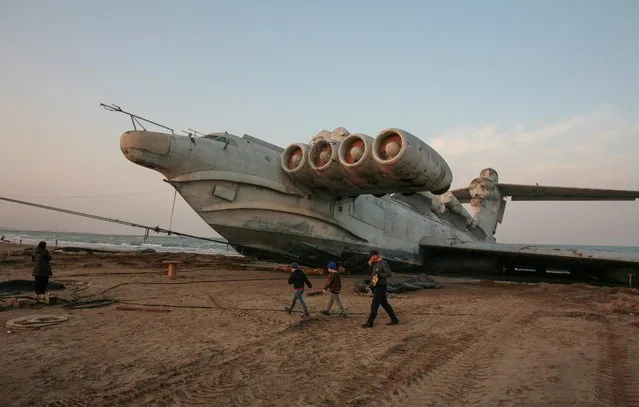
A view shows a Lun-class Soviet-made ekranoplan, which is a naval craft and a ground-effect vehicle, on the Caspian Sea coastline in Derbent in the Republic of Dagestan, Russia on November 3, 2020. (Photo by Kazbek Basayev/Reuters)
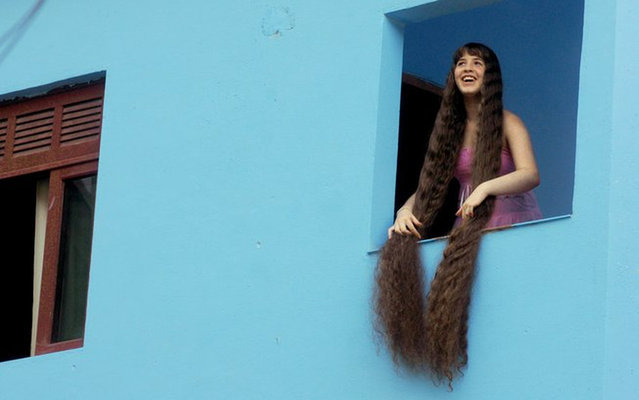
Nicknamed “Rapunzel” by her schoolmates, Natasha has not cut her hair – which at 5 feet, 2 inches long was only one inch shorter than her petite frame – since she was a baby.
And while Natasha currently sleeps in a tiny, windowless room, she got R$9,000 (about £3,000) from selling the hair for extensions which she has put towards a new home for her family.
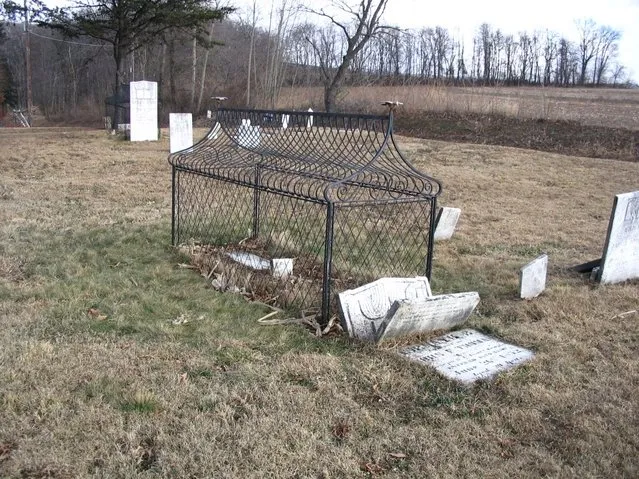
Mortsafes were contraptions designed to protect graves from disturbance. Resurrectionists had supplied the schools of anatomy in Scotland since the early 18th century. This was due to the necessity for medical students to learn anatomy by attending dissections of human subjects, which was frustrated by the very limited allowance of dead bodies – for example the corpses of executed criminals – granted by the government, which controlled the supply.