Loading...
Done
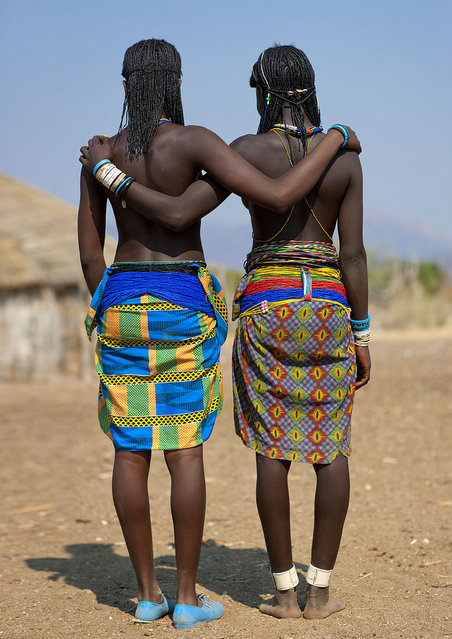
“Show us our butts! Mucawana tribe – Angola. In Soba village, the Muhacaona (Mucawana) tribe, perhaps the best place i have visited. They use cow dung and fat to make this so nice haircut, and love the beads. They asked me to make pictures of their backs... and butts to see on the camera screen if everything was perfect!”. (Eric Lafforgue)

“Show us our butts! Mucawana tribe – Angola. In Soba village, the Muhacaona (Mucawana) tribe, perhaps the best place i have visited. They use cow dung and fat to make this so nice haircut, and love the beads. They asked me to make pictures of their backs... and butts to see on the camera screen if everything was perfect!”. (Photo and comments by Eric Lafforgue)
Details
09 Nov 2012 15:04:00
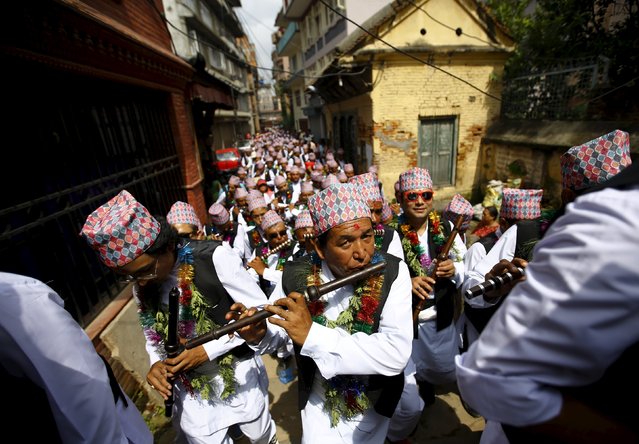
Devotees in traditional attire play flutes as they take part in a parade commemorating the Neku Jatra-Mataya festival, the Festival of Lights, in Lalitpur, Nepal August 31, 2015. Devotees celebrate the Buddhist festival which marks the victory of Sakyamuni Buddha over Mara, by praying for the souls of departed family members and holding parades throughout the city. (Photo by Navesh Chitrakar/Reuters)

Devotees in traditional attire play flutes as they take part in a parade commemorating the Neku Jatra-Mataya festival, the Festival of Lights, in Lalitpur, Nepal August 31, 2015. Devotees celebrate the Buddhist festival which marks the victory of Sakyamuni Buddha over Mara, by praying for the souls of departed family members and holding parades throughout the city. (Photo by Navesh Chitrakar/Reuters)
Details
18 Nov 2015 08:01:00
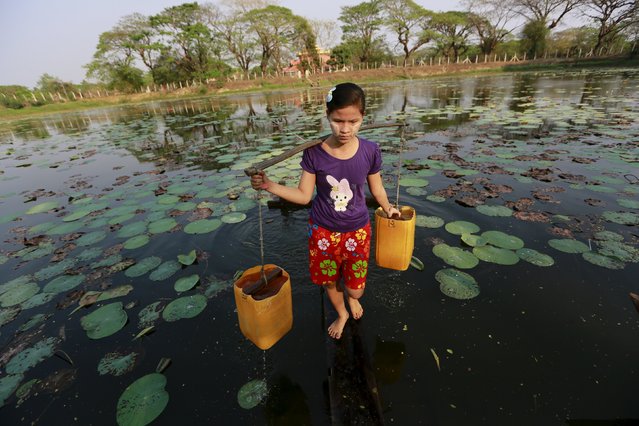
A girl collects drinking water at Dala river outside Yangon, Myanmar March 3, 2016. (Photo by Soe Zeya Tun/Reuters)

A girl collects drinking water at Dala river outside Yangon, Myanmar March 3, 2016. Some 650 million people, or one in 10 of the world's population, have no access to safe water, putting them at risk of infectious diseases and premature death. Dirty water and poor sanitation can cause severe diarrhoeal diseases in children, killing 900 under-five a day across the world, according to United Nations estimates. (Photo by Soe Zeya Tun/Reuters)
Details
18 Mar 2016 12:27:00
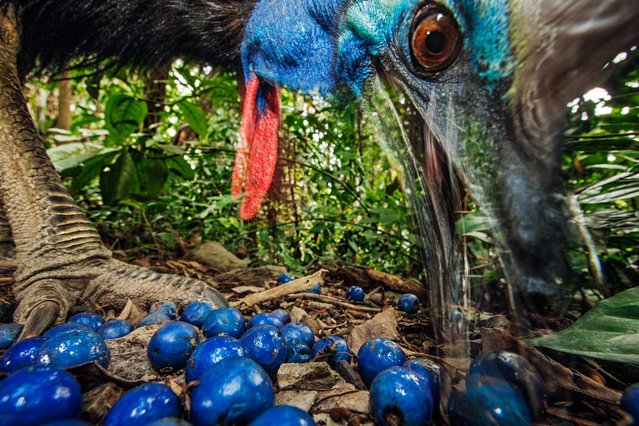
“Cassowaries are large, flightless birds related to emus and (more distantly) to ostriches, rheas, and kiwis”, writes Olivia Judson in the September issue of National Geographic magazine. (Photo by Christian Ziegler/National Geographic)

“Cassowaries are large, flightless birds related to emus and (more distantly) to ostriches, rheas, and kiwis”, writes Olivia Judson in the September issue of National Geographic magazine. How large? People-size: Adult males stand well over five foot five and top 110 pounds. Females are even taller, and can weigh more than 160 pounds. Dangerous when roused, they’re shy and peaceable when left alone. But even birds this big and tough are prey to habitat loss. The dense New Guinea and Australia rain forests where they live have dwindled. Today cassowaries might number 1,500 to 2,000. And because they help shape those same forests – by moving seeds from one place to another – “if they vanish”, Judson writes, “the structure of the forest would gradually change” too. (Photo by Christian Ziegler/National Geographic)
Details
06 Jan 2014 12:21:00
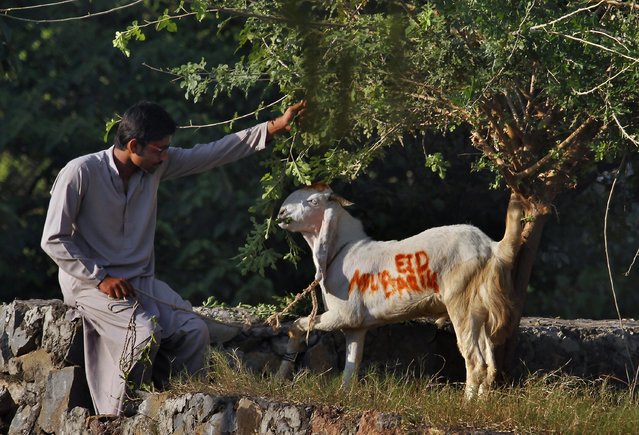
A Pakistani feeds his goat wearing the words “Eid Mubarak” or “Eid Greeting”, to be slaughtered on the Muslim holiday of Eid al-Adha, or “Feast of Sacrifice”, in Islamabad, Pakistan on Tuesday, October 15, 2013. Muslims all over the world are celebrating Eid al-Adha by sacrificing sheep, goats, cows and camels, to commemorate the Prophet Abraham's readiness to sacrifice his son, Ismail, on God's command. (Photo by Anjum Naveed/AP Photo)

A Pakistani feeds his goat wearing the words “Eid Mubarak” or “Eid Greeting”, to be slaughtered on the Muslim holiday of Eid al-Adha, or “Feast of Sacrifice”, in Islamabad, Pakistan on Tuesday, October 15, 2013. Muslims all over the world are celebrating Eid al-Adha by sacrificing sheep, goats, cows and camels, to commemorate the Prophet Abraham's readiness to sacrifice his son, Ismail, on God's command. (Photo by Anjum Naveed/AP Photo)
Details
17 Oct 2013 07:56:00
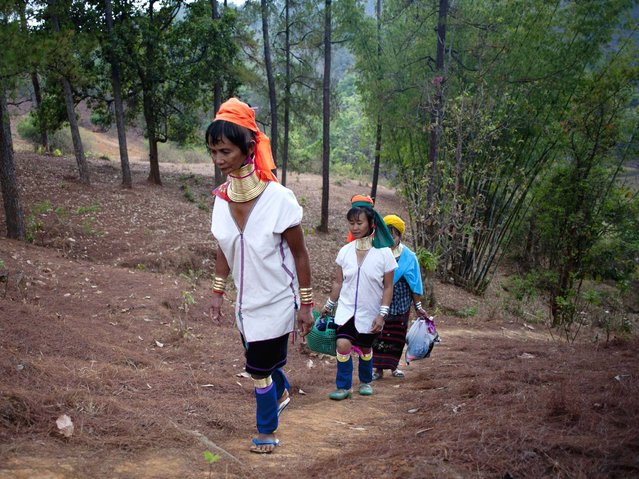
One of the theories says that the coils originate from the desire to look more attractive by exaggerating sexual dimorphism, as women have more slender necks than men. (Photo by Ye Aung Thu/AFP Photo)

This photo taken on April 16, 2014 shows ethnic Kayan women wearing traditional clothes and bronze rings around tbeir neck in Panpet village, Demoso township in Kayah state, eastern Myanmar. Some ethnic Kayan women, also known as Padaung, begin wearing the bronze rings on their neck and legs from a young age. Usually they start wearing six to ten rings when they are five to ten-years-old and then they put on one more ring a year for years after then. (Photo by Ye Aung Thu/AFP Photo)
Details
23 Apr 2014 08:56:00
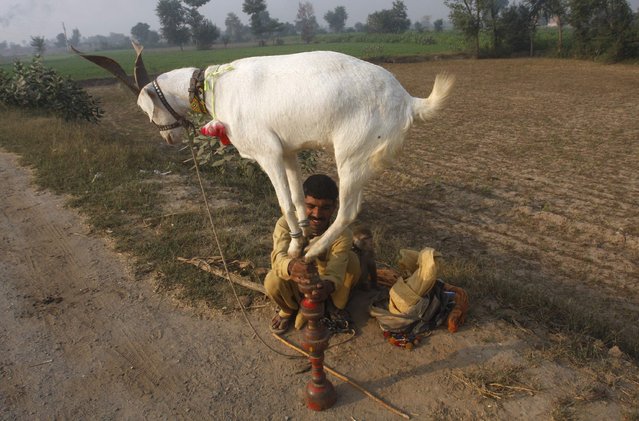
The goats are known to be good climbers, but this one is taking the climbing thing to a whole new level. It clambered on the tip of its owner’s stick, as a part of the roadside performance for a quick coin, on the outskirts of Faisalabad, Pakistan, November 5, 2012. (Photo by Fayyaz Hussain/Reuters)

The goats are known to be good climbers, but this one is taking the climbing thing to a whole new level. It clambered on the tip of its owner’s stick, as a part of the roadside performance for a quick coin, on the outskirts of Faisalabad, Pakistan, November 5, 2012. (Photo by Fayyaz Hussain/Reuters)
Details
10 Nov 2012 11:31:00
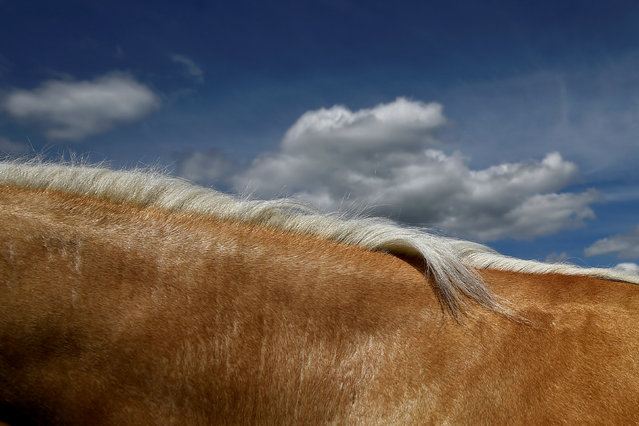
A palomino horse's mane is seen against the sky at Spancil Hill horse fair in Spancil Hill, Ireland June 23, 2018. (Photo by Clodagh Kilcoyne/Reuters)

A palomino horse's mane is seen against the sky at Spancil Hill horse fair in Spancil Hill, Ireland June 23, 2018. (Photo by Clodagh Kilcoyne/Reuters)
Details
01 Jul 2018 00:03:00